Hexaphonic and Polyphonic Pickups

Re: Hexaphonic and Polyphonic Pickups

"A hexaphonic guitar pickup (sometimes called a divided pickup) is a pickup with six outputs (one for each string on the guitar). Polyphonic pickups are pickups with multiple outputs of any number, including heptaphonic pickups for seven-stringed guitars, quadraphonic pickups for bass, and any other possibility. All of my pickups are passive and electromagnetic - these sound much better than piezo or active pickups, which are usually meant for MIDI applications, rather than direct audio output."
 
Re: Hexaphonic and Polyphonic Pickups

How does he plan to sell any if there's no a single photo of his products
 
Re: Hexaphonic and Polyphonic Pickups

How does he plan to sell any if there's no a single photo of his products

Good point, although, if you look at the guitars he has for sale, they are equipped with the pickups. I feel like this is such a complex product, there needs to be a whole easy to understand tutorial on what exactly it does. From what I gather it is like getting a stereo sound out of one amp, but instead of just two, up to 6 separate channels.
 
Re: Hexaphonic and Polyphonic Pickups

Good point, although, if you look at the guitars he has for sale, they are equipped with the pickups. I feel like this is such a complex product, there needs to be a whole easy to understand tutorial on what exactly it does. From what I gather it is like getting a stereo sound out of one amp, but instead of just two, up to 6 separate channels.

I'd imagine it's something that allows you to modify the volume/tone controls for each individual string. Which would be amazing. And complicated as all hell.
 
Re: Hexaphonic and Polyphonic Pickups

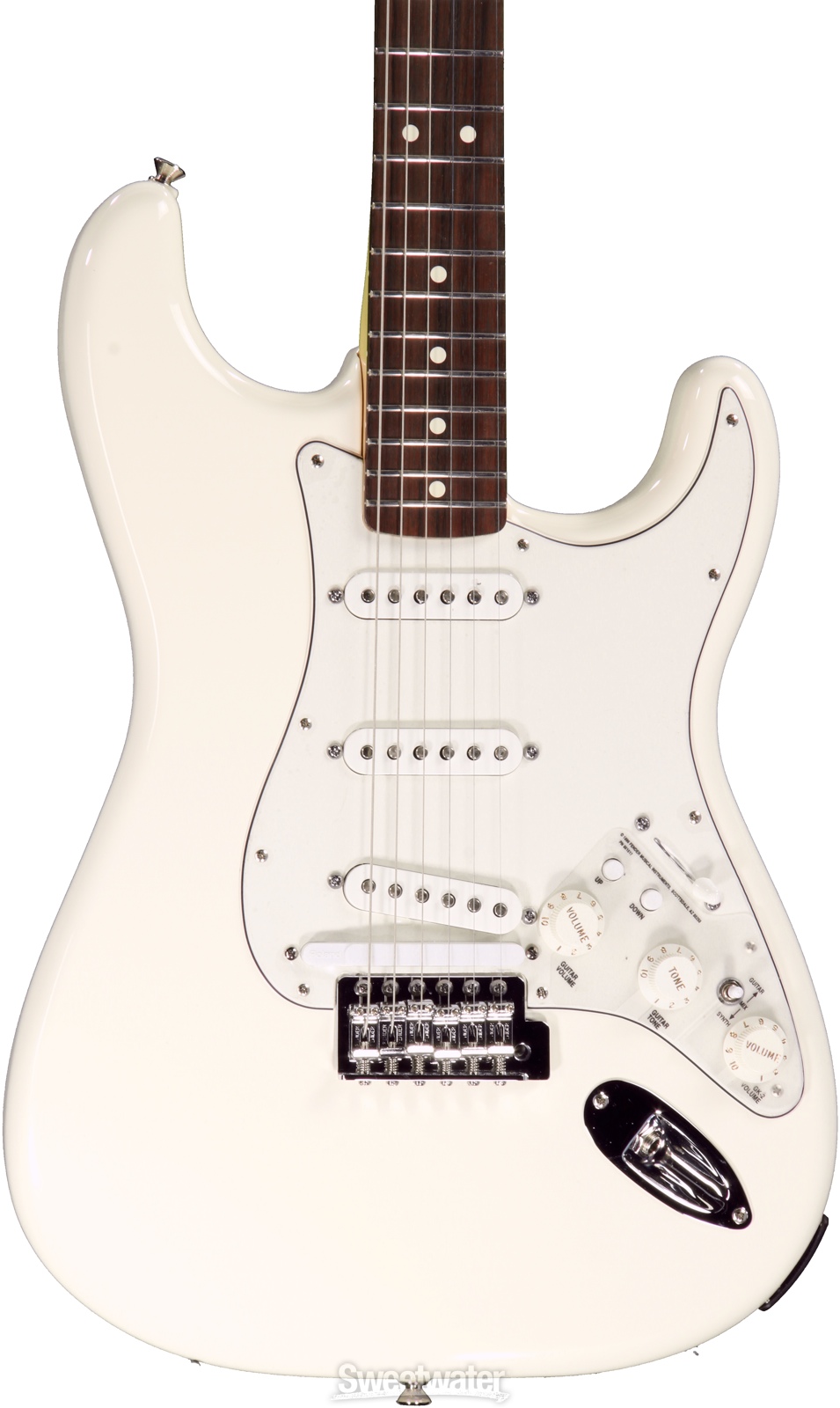
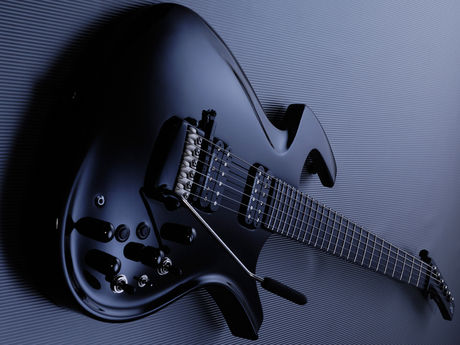
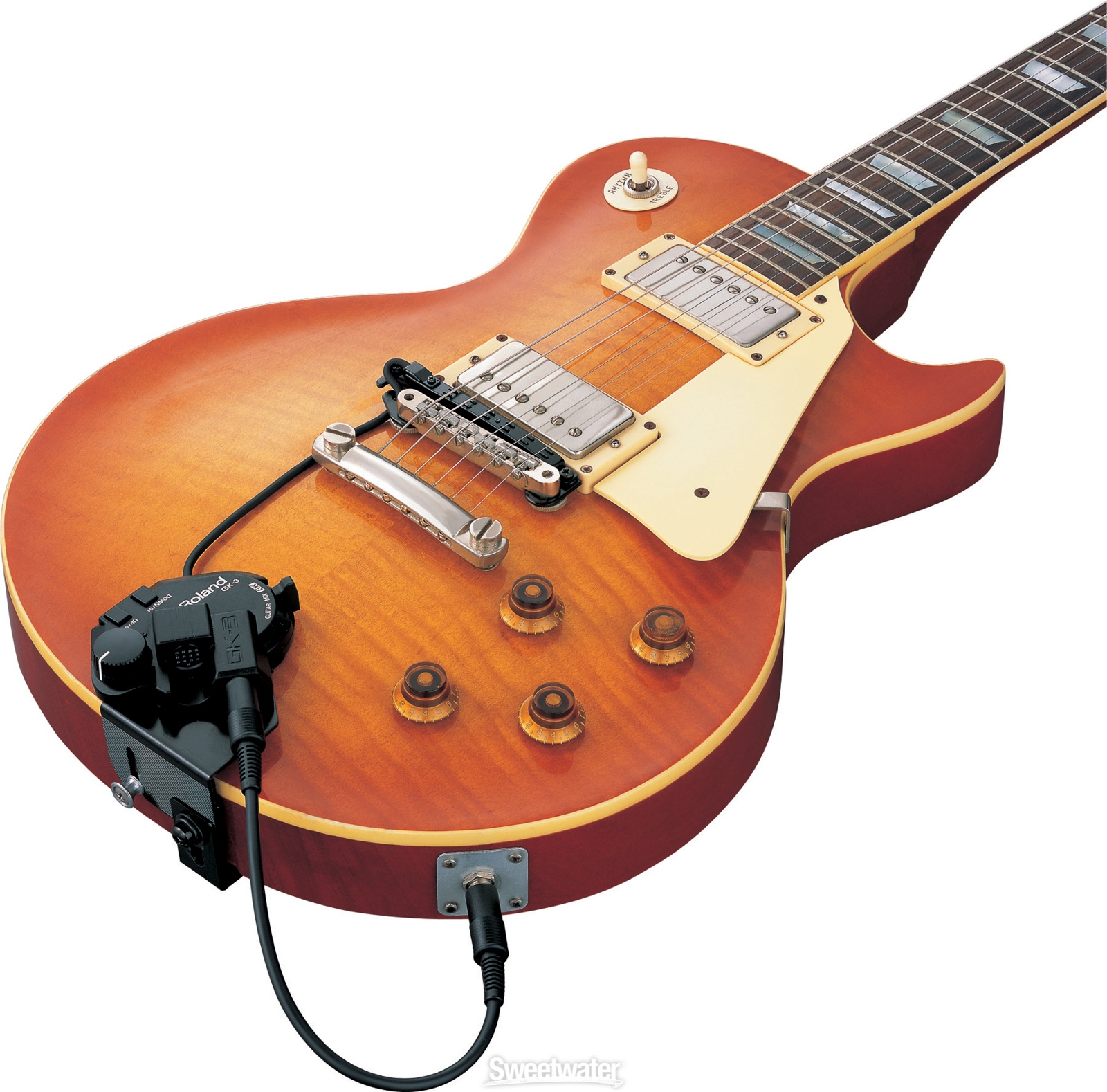
i'm pretty sure the roland midi pickups already did this years ago, and can interface the roland synth stuff. They used to have a strat, a parker, a Godin and a few others with the roland stuff, or they had a separate unit that could be fitted to most any guitar if you didn't mind it being ugly.

1600-StratRRAWT_body.jpg


parker-mojo-fly-main-460-80.jpg


1600-GK3_setup.jpg
 
Re: Hexaphonic and Polyphonic Pickups

The Dali is right... I do suck as a website designer. I didn't design the current look of the site, though. I just had it re-done by a pro, and we're still working out the bugs (like the lack of pics). It's only been up for two days. The old site had pics, but many of them are no longer accurate b/c the pickups have a different look now, and my photography skills are up there with my website designing. Oh well.

These pics are accurate and will be incorporated into the site soon, and until I have better pics:

hept_type2single.jpg

J-bass_hex_type1.jpg

P-bass_hex_type1.jpg

turboboxinsidealum.jpg

type1hbhex.jpg

type1single.jpg

type2hb.jpg

type2hb_single_case.jpg

type2singlehex.jpg

type2tele.jpg
 
Re: Hexaphonic and Polyphonic Pickups

Hey, welcome to the forum!

So I'm curious...what are, in you opinion, the benefits of this type of pickup design?

Thanks. The main difference between my pickups and other hex pickups (like the Roland GK-series) that are out there are mine are passive electromagnetic, just like regular mono pickups, so the sound is like a regular pickup. Other hex pickups are made with only MIDI in mind-- they're not thinking about tone at all, so they're either active, like the GK pups, or piezo like RMC. My pickups were designed to sound good as an audio signal-- that they work with guitar synths is just a happy accident.

The benefits are that you have control over each string as a separate signal. What you want to do with that is up to you. I like panning each string opposite (EDB left, AGe right). When you strum chords, it sounds like two people playing together, especially if you go through different sounding amps or distortion only on one side. One popular use is to split E and A to one side and DGBe to the other, and run E/A through an octave pedal. This is a favorite configuration of acoustic players, especially singer/songwriter types who play solo, because it gives them that extra bass that fills out the sound.

Another use is hexaphonic fuzz/distortion-- the reason complex chords sound crappy through distortion is because of the intermodulation distortion which occurs when you distort all the strings together. Distort them separately, and you avoid that, and your chords will sound fuzzed or distorted but still distinct, not muddy. Os Mutantes were the first to do that, for bass.

Hex panning can be great for fast metal arpeggios, or for folk fingerstyle.

Also, having a separate track for each string allows you to edit in ways you couldn't before-- you can cut out the strings that aren't playing at any given time and get rid of unwanted string noise.

There are all kinds of things you can do with these-- it all depends on what you want out of it. Everyone is different. I had one guy who just wanted to be able to mute all the strings except the high e. He would do all kinds of wild stuff on just that string but he'd end up with too much noise from the other strings. With a hex pickup, he could just flip a switch and only the high e would be on; flip it back and they're all on again.

So really it all just comes down to what you're looking for as a player.
 
Re: Hexaphonic and Polyphonic Pickups

The benefits are that you have control over each string as a separate signal. What you want to do with that is up to you. I like panning each string opposite (EDB left, AGe right). When you strum chords, it sounds like two people playing together, especially if you go through different sounding amps or distortion only on one side. One popular use is to split E and A to one side and DGBe to the other, and run E/A through an octave pedal. This is a favorite configuration of acoustic players, especially singer/songwriter types who play solo, because it gives them that extra bass that fills out the sound.

Another use is hexaphonic fuzz/distortion-- the reason complex chords sound crappy through distortion is because of the intermodulation distortion which occurs when you distort all the strings together. Distort them separately, and you avoid that, and your chords will sound fuzzed or distorted but still distinct, not muddy. Os Mutantes were the first to do that, for bass.

Hex panning can be great for fast metal arpeggios, or for folk fingerstyle.

Thanks for hoping on the forum and explaining! There is so much pickup talk here about articulation and note separation, etc. but this is literally a way to separate the notes/strings. I like the fact that you can create the two player effect through one amp. The distortion applications could be pretty cool, especially for solos. Hopefully someone on the forum buys one and gives us a review. I feel like most players are very wary of new technology, but usually just in terms of digital technology, which this clearly is not.
 
Re: Hexaphonic and Polyphonic Pickups

I like the fact that you can create the two player effect through one amp.

While you could do something like distort half the strings then sum all the signals to one amp, and it would give you a two player effect somewhat, it works much better in stereo-- just hard-panning half the strings left and the other half right (in a recording) or sending half the strings to one amp and the other half to another (for live) will give a much stronger two-player effect than anything you can do in mono.
 
Re: Hexaphonic and Polyphonic Pickups

Honestly, I really hope this catches on. With the right marketing this idea has a lot of potential, and I'm excited to see where it will be in 5-10 years, and what different people/companies have to add to it if it does come to that.
 
Re: Hexaphonic and Polyphonic Pickups

Is there feed over from adjacent strings?
I'm looking to design an instrument that incorporates the single button approach of an autoharp with the slide capability of a steel guitar.

Using 15 strings Using a one string group of E2, a two string group of B2 and C3, a four string group of D3, Eb3, E3, and Gb3, a three string group of G3, Ab3, and A3, and a five string group of B3, C4, Db4, D4, and D4, I plan to use one string from each group to create a five note chord or arpeggio, (dozens of combinations are possible) and a track mounted sliding capo to set the key.

Considering autoharp chord bars, the dozens of bars needed would be too unwieldy, so I'm considering, in place of the damper bars, push button switched, wired to the proper combination of piezo pick ups, to amplify the proper 5 strings, while leaving the unwanted strings unamplified, so I need to know, does each piezo pick up only it's string, or does some of the string vibrations from the next over come through?
 
Re: Hexaphonic and Polyphonic Pickups

Is there feed over from adjacent strings?
I'm looking to design an instrument that incorporates the single button approach of an autoharp with the slide capability of a steel guitar.

Using 15 strings Using a one string group of E2, a two string group of B2 and C3, a four string group of D3, Eb3, E3, and Gb3, a three string group of G3, Ab3, and A3, and a five string group of B3, C4, Db4, D4, and D4, I plan to use one string from each group to create a five note chord or arpeggio, (dozens of combinations are possible) and a track mounted sliding capo to set the key.

Considering autoharp chord bars, the dozens of bars needed would be too unwieldy, so I'm considering, in place of the damper bars, push button switched, wired to the proper combination of piezo pick ups, to amplify the proper 5 strings, while leaving the unwanted strings unamplified, so I need to know, does each piezo pick up only it's string, or does some of the string vibrations from the next over come through?


OK, I found the answer on Uber's site.
Thanks.
 
Back
Top