Inflames626
New member
Hello tone gods,
A couple questions/thoughts:
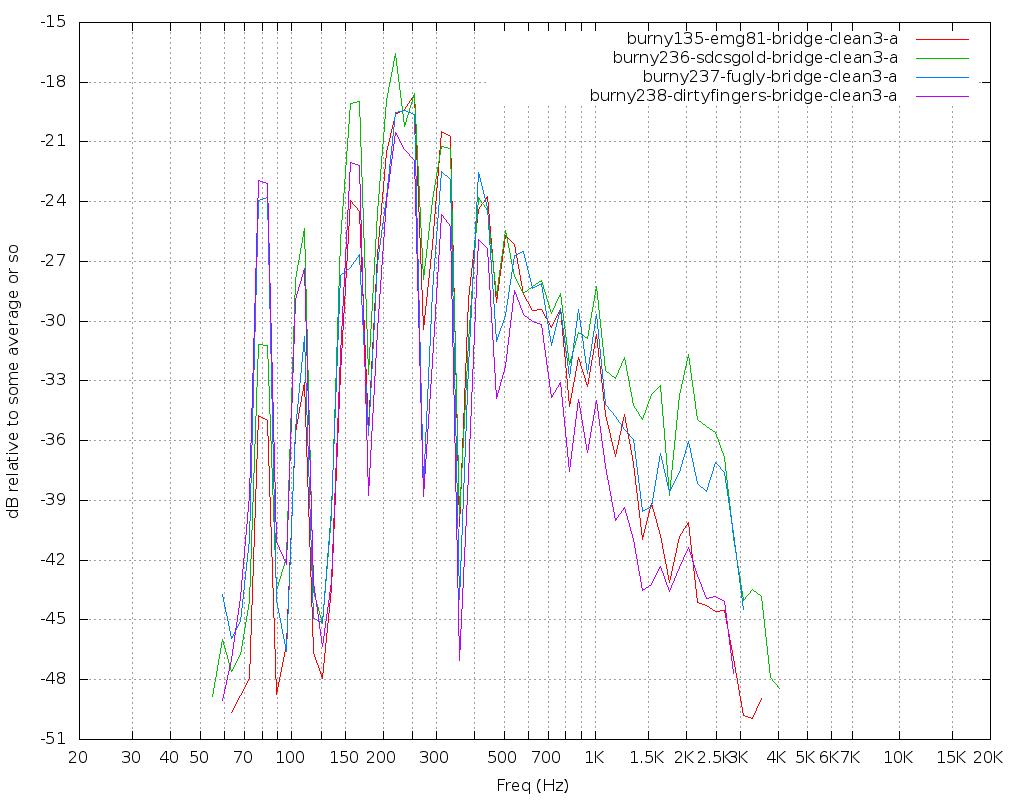
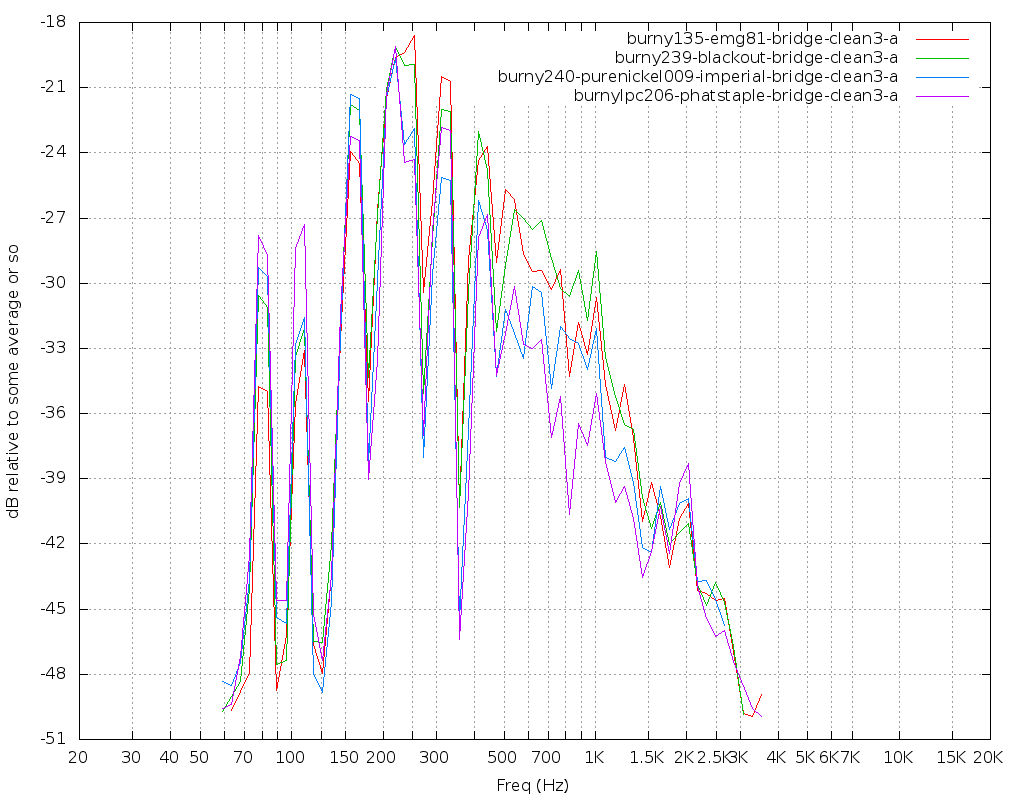
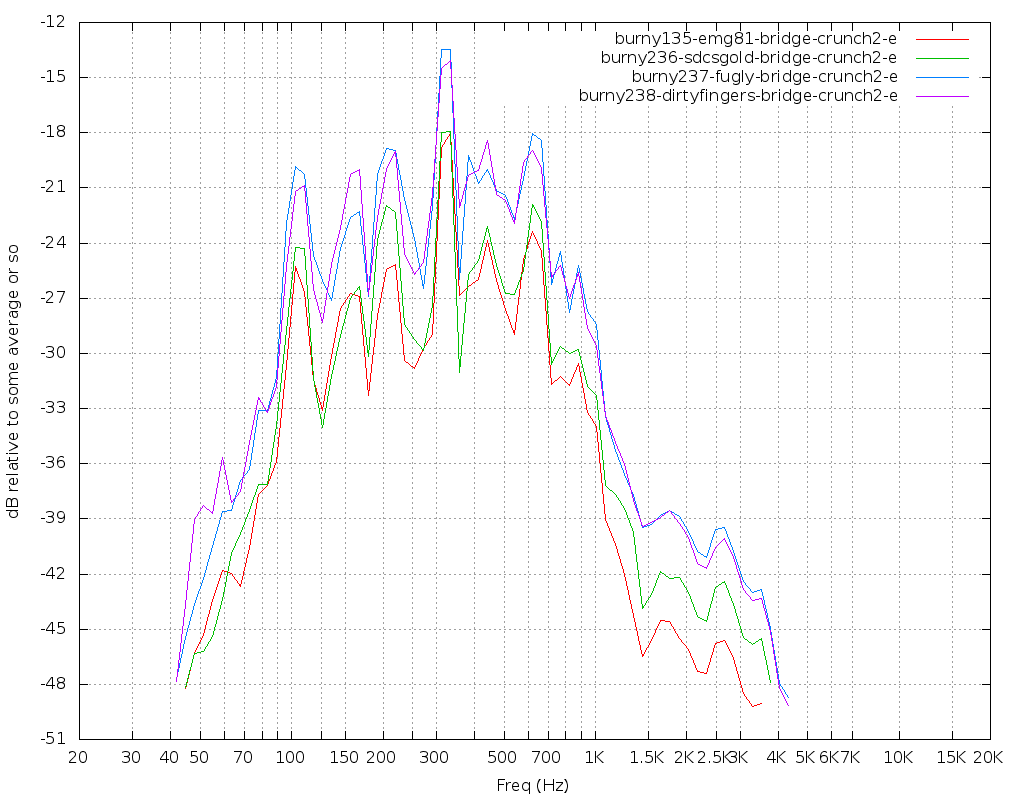
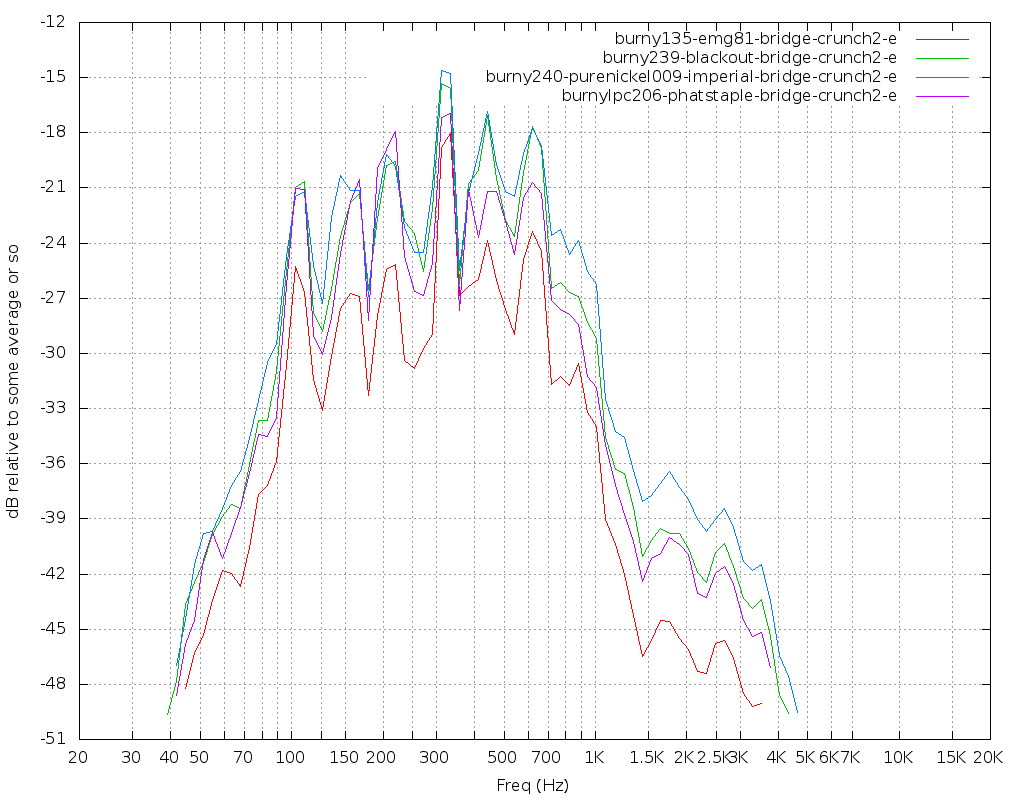
1) Something I've noticed that's troubling is that pickup manufacturers used to publish more technical data about their pickups than they do now. EMG back in the 90s used to actually print EQ curves in their literature (back in the EMGinc days with the old block letter logo). Being able to see this curve would be very helpful in helping me judge a tone without hearing it and would give me a better idea of its sound than judging by videos.
I realize that it isn't easy--woods, string gauge, amp settings, note position on the neck, all make a difference, and there's no substitute for playing a pickup yourself, but most of us usually end up spending a lot of money on used and new pickups just to try them. The return policy helps, but I would feel a lot better being able to see a curve.
And then of course there's the similar winds/magnet/construction rumor that companies use to speed up production and sell similar rebadged products. If players knew just how negligible the differences among some pickups actually were, they wouldn't shell out so much money for the newest or highly similar models, would they?
That said, has anyone run a tone from a signal generator somehow through various pickups and recorded the results visually on an oscilloscope or EQ curve? I use Voxengo SPAN to capture screen shots of me playing a direct signal in various places and then compare the shapes. I found out, for example, that a JB and an EMG HZ H4 are very similar, save the JB has a bulge around 150 hz that the EMG doesn't have. But it doesn't solve everything. I can definitely hear the HZ4 has more upper mids, but it doesn't show up on the shapes noticeably.
2) Has anyone discovered a "flat" pickup that colors the sound the least amount possible (besides the Lightwave pickup)? Of everything I've heard, the Lace Alumitones sound really even to me, almost like actives. Sometimes I like to color the sound with the pickup, but other times I want it to be more about the amp settings.
Thanks guys.
A couple questions/thoughts:
1) Something I've noticed that's troubling is that pickup manufacturers used to publish more technical data about their pickups than they do now. EMG back in the 90s used to actually print EQ curves in their literature (back in the EMGinc days with the old block letter logo). Being able to see this curve would be very helpful in helping me judge a tone without hearing it and would give me a better idea of its sound than judging by videos.
I realize that it isn't easy--woods, string gauge, amp settings, note position on the neck, all make a difference, and there's no substitute for playing a pickup yourself, but most of us usually end up spending a lot of money on used and new pickups just to try them. The return policy helps, but I would feel a lot better being able to see a curve.
And then of course there's the similar winds/magnet/construction rumor that companies use to speed up production and sell similar rebadged products. If players knew just how negligible the differences among some pickups actually were, they wouldn't shell out so much money for the newest or highly similar models, would they?
That said, has anyone run a tone from a signal generator somehow through various pickups and recorded the results visually on an oscilloscope or EQ curve? I use Voxengo SPAN to capture screen shots of me playing a direct signal in various places and then compare the shapes. I found out, for example, that a JB and an EMG HZ H4 are very similar, save the JB has a bulge around 150 hz that the EMG doesn't have. But it doesn't solve everything. I can definitely hear the HZ4 has more upper mids, but it doesn't show up on the shapes noticeably.
2) Has anyone discovered a "flat" pickup that colors the sound the least amount possible (besides the Lightwave pickup)? Of everything I've heard, the Lace Alumitones sound really even to me, almost like actives. Sometimes I like to color the sound with the pickup, but other times I want it to be more about the amp settings.
Thanks guys.