

JeffB
Let it B
Excuse the length. I used to do equipment reviews in the archery industry and I tend to overwrite without some editing/outside restraint (and I'm not being a stickler for grammar or punctuation like I used to, so deal :biglaugh: )
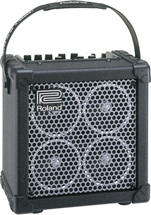
So I’ve had a new amp for the past few weeks. I really wanted to put it though the paces and let any “honeymoon period” fade until I posted about it. My Vox Valvetronix AD15 has just about given up the ghost and I was on the lookout for a modeling amp, tube or SS for at home practice use. Something for late nights or some more volume during the day if need be.I also wanted something I could use with my IPOD to jam along with. A few months ago I saw the demo and announcement of the new Roland Microcube RX and had been waiting to try one while I tried some other amps. Finally the RX became available, I tried it, and brought it home for a test-drive.
OVERVIEW
I’d not been a huge fan of the Cube modelers that I’d tried, which was basically all of them including the original Microcube. I found them overly digital and/or poorly matched for the speakers they were using (i.e lower volumes just sounded awful). The RX is unique in that the modeling (amp and effects) has been tweaked over previous versions, its uses 4 proprietary 4” speakers (4x4) that were designed specifically with this amp in mind, is stereo (2.5 watts per side), and has a Rhythm machine built in (a drum machine with 33 pre-sets, adjustable tempo, and a metronome). It also has the AUX input for an IPOD/CD player, can handle a mic, built in tuner, etc. And is selling for $229.00! I figured this thing would be a dream practice amp with all those features, if the dang thing actually sounded decent.
The models are typical for the CUBE series: An Acoustic sim, Roland Jazz Chorus, Fender Blackface, Vox AC30, Marshall 1987 Plexi, Peavey 5150, a MESA Rectifier, and a Mic setting for plugging in a Mic and singing through.
Effects are divided into two areas: a Delay and Reverb section (choose one or the other but not both), and the modulations are Chorus, Flange, Phaser, and a Tremelo (one usable at a time in combo with delay or reverb).
There is also a “boost” button. The manual basically is useless here, only telling one to try it as it will vary in effect and tone with each amp model, and it does. At times it sounds like you are kicking in a BOSS OD-1, at other times a DS-1, and others a Tubescreamer or even a mid-cut/clearer overall EQ. For some models it actually lowers the volume instead of increasing it. Very strange. However I’ve found it VERY useful for tone-shaping.
The Rhythm machine has 11 different “genres” (rock 1, rock 2, blues 1, jazz1, etc) and there is a variation switch that adds in two more drumbeat variations to the selected “genre”. There is a separate volume control from the modeling section, on/off , and a tap-tempo for this section to vary speed. It also has a metronome/click setting. A footswitch (not included), can be plugged into the back to vary tempo and turn on/of .
Finally it includes a well written if brief manual, the power supply (it also runs on batteries), and a carry strap. The amp back is closed and overall it’s very portable. Prolly about a foot or so high-10 inches wide…8 inches deep or thereabouts.
Contd.
So I’ve had a new amp for the past few weeks. I really wanted to put it though the paces and let any “honeymoon period” fade until I posted about it. My Vox Valvetronix AD15 has just about given up the ghost and I was on the lookout for a modeling amp, tube or SS for at home practice use. Something for late nights or some more volume during the day if need be.I also wanted something I could use with my IPOD to jam along with. A few months ago I saw the demo and announcement of the new Roland Microcube RX and had been waiting to try one while I tried some other amps. Finally the RX became available, I tried it, and brought it home for a test-drive.
OVERVIEW
I’d not been a huge fan of the Cube modelers that I’d tried, which was basically all of them including the original Microcube. I found them overly digital and/or poorly matched for the speakers they were using (i.e lower volumes just sounded awful). The RX is unique in that the modeling (amp and effects) has been tweaked over previous versions, its uses 4 proprietary 4” speakers (4x4) that were designed specifically with this amp in mind, is stereo (2.5 watts per side), and has a Rhythm machine built in (a drum machine with 33 pre-sets, adjustable tempo, and a metronome). It also has the AUX input for an IPOD/CD player, can handle a mic, built in tuner, etc. And is selling for $229.00! I figured this thing would be a dream practice amp with all those features, if the dang thing actually sounded decent.
The models are typical for the CUBE series: An Acoustic sim, Roland Jazz Chorus, Fender Blackface, Vox AC30, Marshall 1987 Plexi, Peavey 5150, a MESA Rectifier, and a Mic setting for plugging in a Mic and singing through.
Effects are divided into two areas: a Delay and Reverb section (choose one or the other but not both), and the modulations are Chorus, Flange, Phaser, and a Tremelo (one usable at a time in combo with delay or reverb).
There is also a “boost” button. The manual basically is useless here, only telling one to try it as it will vary in effect and tone with each amp model, and it does. At times it sounds like you are kicking in a BOSS OD-1, at other times a DS-1, and others a Tubescreamer or even a mid-cut/clearer overall EQ. For some models it actually lowers the volume instead of increasing it. Very strange. However I’ve found it VERY useful for tone-shaping.
The Rhythm machine has 11 different “genres” (rock 1, rock 2, blues 1, jazz1, etc) and there is a variation switch that adds in two more drumbeat variations to the selected “genre”. There is a separate volume control from the modeling section, on/off , and a tap-tempo for this section to vary speed. It also has a metronome/click setting. A footswitch (not included), can be plugged into the back to vary tempo and turn on/of .
Finally it includes a well written if brief manual, the power supply (it also runs on batteries), and a carry strap. The amp back is closed and overall it’s very portable. Prolly about a foot or so high-10 inches wide…8 inches deep or thereabouts.
Contd.


