Floyd Rose tension

Coma

Well-known member
I'm somewhat confused here. I've got a 24.75" scale length guitar with a Floyd, a 25" one and a 25.5" one. The 24.75 is tuned down to C, came with three springs, to which I added a fourth when tuning down. The 25.5 also came loaded with three springs. I tuned that one down to C as well and added a fourth spring. Tension is, well, normal, I suppose. More stiff than the Les Paul I was used to at the time, but that's to be expected, because longer scale length. All in all, it retained roughly the same stiffness tuned to E as it does tuned to C (with thicker string gauge, naturally).

But the 25", that's a whole different story. Armed with 10-46, tuned to E, and it still needs five springs to balance out, and then the strings feel REAL stiff. And the claw is set pretty deep too. Pulling up the Floyd requires quite a bit of work. To me, this doesn't make any sense. Shouldn't the shorter scale length mean less tension on the strings -> less tension needed on the claw -> fewer springs needed?
 
Re: Floyd Rose tension

Play around with different string gauges and spring configurations until you find what's right for you.
 
Re: Floyd Rose tension

But the 25", that's a whole different story. Armed with 10-46, tuned to E, and it still needs five springs to balance out, and then the strings feel REAL stiff. And the claw is set pretty deep too. Pulling up the Floyd requires quite a bit of work. To me, this doesn't make any sense. Shouldn't the shorter scale length mean less tension on the strings -> less tension needed on the claw -> fewer springs needed?

IME string tension with 10s on a 25" is about the same as 9.5s on a 25.5". You can lookup some tension charts by daddario. http://stringtensionpro.com/
 
Re: Floyd Rose tension

IME string tension with 10s on a 25" is about the same as 9.5s on a 25.5". You can lookup some tension charts by daddario. http://stringtensionpro.com/

That's a neat tool, but all it does is confirm my suspicion that tension is lower for the same size strings on a shorter scale. Still doesn't explain the need for the full spring setup. :confused:
 
Re: Floyd Rose tension

I would think it could be set up to require a lot less work. I'd honestly start from scratch and try to get it to balance. You my investigate different springs, too.
 
Re: Floyd Rose tension

I did set it up from scratch. What do you have in mind when you say different springs?
 
Re: Floyd Rose tension

That's a neat tool, but all it does is confirm my suspicion that tension is lower for the same size strings on a shorter scale. Still doesn't explain the need for the full spring setup. :confused:

10's on 25" should not be so stiff and definitely not need 5 springs! Heck I have 3 springs on my 7-string 25.5" strung up with 9-60 drop-A
 
Re: Floyd Rose tension

That's my point exactly. I can't figure out what is causing it. It's very counter-intuitive. And I think too much back bow would cause fret-outs long before tension gets that high?
 
Re: Floyd Rose tension

I have 9-42 and 10-46 on 25.5 scale. I also have the same string gauges on 24.75. Tuned to E standard. Outside of 2 guitars, all have 3 springs in the average trapezoid/triangle setup.

The 2 that don't are the same make and model with identical setups that just seem to work better on 4 springs.

I have a 7-string that also works better on 4 springs. 9-54, tuned standard.

Really nothing to it. Just keep on playing around with it until you find something that works for you. All of them are regular no-frills springs.
 
Re: Floyd Rose tension

Yes it does, as the outer two springs are at a higher tension

they key to floyd rose setups is experimentation. simple as that. dont worry about charts or all that garbage. Time and feel.
 
Re: Floyd Rose tension

I've seen people use 2 springs on the bass side (outer-most block and claw) and 1 spring on the treble side with LTHB sets.
Other people do the triangle/W formation, still others do an inverted formation (3 springs hooked in the center 3 holes of the block but the outside 2 to the outer hooks of the claw).

And then some guitars just require more springs for whatever reason, probably due to the cavity not being as long as on other models/brands. In that event, the springs aren't able to pull as hard as the strings do, even with the claw cranked, so you need more springs, which will increase the overall tension, and instead of working together to balance the bridge, they're fighting.
 
Re: Floyd Rose tension

That's my point exactly. I can't figure out what is causing it. It's very counter-intuitive. And I think too much back bow would cause fret-outs long before tension gets that high?

There is no magic in string tension. Force is force and your fingers can sense it. The spaghetti feel on some floyds comes from the floating trem. Maybe those strings of yours are not really 10s? Or maybe they have considerable increased tension like the blue steels ? Blue Steels 10's would definitely feel like 11's+
 
Re: Floyd Rose tension

You can get springs of different tension. I have experimented with those too.
 
Re: Floyd Rose tension

You can get springs of different tension. I have experimented with those too.

But why? Springs with more tension would balance out the same way, wouldn't they? You'd have fewer springs or the claw set further out, but the actual overall tension wouldn't change, since the strings they're balancing against would still excert the same force on the bridge.
 
Re: Floyd Rose tension

And now for some facts...

On a floating Floyd, vintage trem or two point trem the float (meaning the zero point where the trem sits when at rest) works by matching the string tension (how hard they're pulling up the back edge of the trem) to the spring tension (how hard the springs are pulling in the other direction to counteract the pull of the strings, pulling down the back edge of the trem). You can not change the feel by angling springs, using more or less springs, different tension or length springs or anything like that because the force pulling one way (strings) must always equal the force pulling the other way (springs) for the trem to float and be level. It can be simplified using basic math, if we use simple random numbers, say the strings pull at a force of 9 then the springs need to pull at an equal force of 9 to create an even balance and float. So if each spring has a force of 3 when the claw is set 2" from the end of the cavity (random easy to follow number again) then you need three of them to balance out the float. If two of those springs equal a 4.5 force when pulled closer to the end of the cavity wall, say 1", then you'd only need two to create the float because both forces in opposite directions are equal to 9. If you had a magic super strong single spring that could pull at a force of 9 then that one spring would work to create the float too. If you change string gauges up or down this changes the amount of springs needed. A floating Floyd guitar with 9-42 strings will have less spring tension than a floating Floyd guitar with 10-46 so the bar will feel looser and easier to dive and pull up on since there's overall less tension in both directions that you're fighting against when you move the bar up or down.

Again, spring tension must always equal string tension to float a trem and everything else is BS. You can't magically change the feel by using less springs or more springs or difference springs because the trem wouldn't float anymore. Think of it as s seesaw, if you put a 200lb guy on one side and two 100lb girls on the other the balance would be equal, just as if you put two 100lb girls on one side and four 50lb kids on the other or two 200lb guys and so on, always needs to be equal in order to balance.

The reason it may feel stiffer would be, nut height, relief and neck angle. If the action is set a .060" (random easy number again) at the 12th on one guitar and the same on another but the neck angle is less on one where the 22nd fret action is .080" and more angle on the other one with a 22nd fret action of .070" then even though the 12th fret action is the same the one with the greater neck angle will feel looser than the one with less neck angle. Same goes for nut height, if the action at the nut is .020" on one and .030" on the other then the one with the lower nut height will feel looser. Again, same with relief, less relief will feel looser than more.
 
Re: Floyd Rose tension

Check one of the five springs while out (without tension) compared to a standard floyd spring,,,,,,,,,,I've seen springs of different lengths on various floyd-copy systems,,,,,,,and if you have slightly longer springs you would require more and/or cranking them nearly all the way in (stretched more while at neutral float),,,,,and that can cause a stiff feel relative to the cumulative-tension of the strings/springs.
 
Re: Floyd Rose tension

Springs of different length and tension can absolutely make a difference. I've experimented with this. It changes the 'feel', too. Mix and match with the number of springs in the right place, and you can find the correct feel and balance for that guitar.
 
Re: Floyd Rose tension

And now for some facts...

On a floating Floyd, vintage trem or two point trem the float (meaning the zero point where the trem sits when at rest) works by matching the string tension (how hard they're pulling up the back edge of the trem) to the spring tension (how hard the springs are pulling in the other direction to counteract the pull of the strings, pulling down the back edge of the trem). You can not change the feel by angling springs, using more or less springs, different tension or length springs or anything like that because the force pulling one way (strings) must always equal the force pulling the other way (springs) for the trem to float and be level. It can be simplified using basic math, if we use simple random numbers, say the strings pull at a force of 9 then the springs need to pull at an equal force of 9 to create an even balance and float. So if each spring has a force of 3 when the claw is set 2" from the end of the cavity (random easy to follow number again) then you need three of them to balance out the float. If two of those springs equal a 4.5 force when pulled closer to the end of the cavity wall, say 1", then you'd only need two to create the float because both forces in opposite directions are equal to 9. If you had a magic super strong single spring that could pull at a force of 9 then that one spring would work to create the float too. If you change string gauges up or down this changes the amount of springs needed. A floating Floyd guitar with 9-42 strings will have less spring tension than a floating Floyd guitar with 10-46 so the bar will feel looser and easier to dive and pull up on since there's overall less tension in both directions that you're fighting against when you move the bar up or down.

Again, spring tension must always equal string tension to float a trem and everything else is BS. You can't magically change the feel by using less springs or more springs or difference springs because the trem wouldn't float anymore. Think of it as s seesaw, if you put a 200lb guy on one side and two 100lb girls on the other the balance would be equal, just as if you put two 100lb girls on one side and four 50lb kids on the other or two 200lb guys and so on, always needs to be equal in order to balance.

The reason it may feel stiffer would be, nut height, relief and neck angle. If the action is set a .060" (random easy number again) at the 12th on one guitar and the same on another but the neck angle is less on one where the 22nd fret action is .080" and more angle on the other one with a 22nd fret action of .070" then even though the 12th fret action is the same the one with the greater neck angle will feel looser than the one with less neck angle. Same goes for nut height, if the action at the nut is .020" on one and .030" on the other then the one with the lower nut height will feel looser. Again, same with relief, less relief will feel looser than more.

Would have to semi-disagree here. You definitely have to exert more force when bending or dive bombing when using a stiffer set.

Consider 2 different sets of string at zero point:

F1 = F2

k1X1 = k2X2; k2>k1

--------------------------

When you dive bomb to a certain pitch, the trem moves forward more or less the same angle no matter the configuration (I MAY BE WRONG HERE). Similarly, the spring block moves the same distance, and consequently the strings are further stretched the same distance relative to their zero point.

Let's say the spring stretched by Y units of distance

(F1x = k(x1+y))

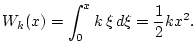
The work by the strings, from this equation:
img1339.png


is

W1 = 1/2 k1(2X1Y + Y)
W2 = 1/2 k1(2x2Y + y)

Or

W1 = F1(Y) + (k1Y)/2
W2 = F2(Y) + (k2Y/2)

F1 = F2, and Y is a constant

So,

Work varies with the stiffness (k) of the springs.
k2 > k1

Therefore more work is done by a set of stiffer springs.

The work done by the hand on the tremolo arm is... ah let's just keep it simple:

W = FS

Can be rewritten as

F = W/S
S is constant

So force varies with work.

Therefore, force required to stretch a configuration of a heavier of springs past the zero point is greater than the force required to stretch that of a lighter set.
Therefore bending on and dive bombing a trem with a stiffer set of springs will feel stiffer.

This has also been my experience.

Notably, this means that angling doesn't really change the feel of the trem, which has also been my experience.

Correct me if I'm wrong, though.
 
Re: Floyd Rose tension

Would have to semi-disagree here. You definitely have to exert more force when bending or dive bombing when using a stiffer set.

Consider 2 different sets of string at zero point:

F1 = F2

k1X1 = k2X2; k2>k1

--------------------------

When you dive bomb to a certain pitch, the trem moves forward more or less the same angle no matter the configuration (I MAY BE WRONG HERE). Similarly, the spring block moves the same distance, and consequently the strings are further stretched the same distance relative to their zero point.

Let's say the spring stretched by Y units of distance

(F1x = k(x1+y))

The work by the strings, from this equation:
img1339.png


is

W1 = 1/2 k1(2X1Y + Y)
W2 = 1/2 k1(2x2Y + y)

Or

W1 = F1(Y) + (k1Y)/2
W2 = F2(Y) + (k2Y/2)

F1 = F2, and Y is a constant

So,

Work varies with the stiffness (k) of the springs.
k2 > k1

Therefore more work is done by a set of stiffer springs.

The work done by the hand on the tremolo arm is... ah let's just keep it simple:

W = FS

Can be rewritten as

F = W/S
S is constant

So force varies with work.

Therefore, force required to stretch a configuration of a heavier of springs past the zero point is greater than the force required to stretch that of a lighter set.
Therefore bending on and dive bombing a trem with a stiffer set of springs will feel stiffer.

This has also been my experience.

Notably, this means that angling doesn't really change the feel of the trem, which has also been my experience.

Correct me if I'm wrong, though.


I'm going to have to agree with archer's semi-disagreement.


like several people have suggested in this thread, the experience speaks for itself. several people have also suggested that the OP just need to experiment with some variables until he finds a feel that works for his goals.
 
Back
Top