Self-Locking String Winding?

Chistopher

malapterurus electricus tonewood instigator
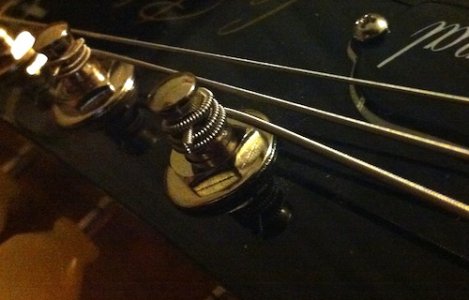
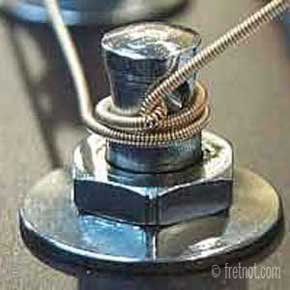
I read about this thing earlier today that's refered to as "self-locking" or "pro wrap" winding. It's said to reduce string breakage and increase tuning stability. The two ways I found to do it are as such: either wrapping the bit of string that has already passed through the tuner around the part that has not, or wrapping one wind over the string and the rest below it.

They look this:
last-step.jpg
string_tuners.jpg

If this method is so great, why don't people use it? Does it actually work as it claims to?
 
Re: Self-Locking String Winding?

My question was, in less words: does it work? I'd think that it wouldn't make a difference, but I want to hear some advice from people who have tried it both this way and the "standard" way.
 
Re: Self-Locking String Winding?

I've tried the first way a few times, but I usually use the second method. Mostly I just don't like thinking about it.
 
Re: Self-Locking String Winding?

Martin recommends the first method. I was taught the second. I've never noticed a difference on my non-trem guitars, and my trem guitars have one of: vintage style tuners, locking tuners or locking nut.

Try it on your next set of strings...
 
Re: Self-Locking String Winding?

How often do strings really break at the tuner? Mine unwind the wraps before they ever do that. I have no problems with stability the standard way, even with vintage trems.
 
Re: Self-Locking String Winding?

I use the first way because it's very stable with only a few winds around the tuner and it's easy.
 
Re: Self-Locking String Winding?

I've done the first way for years. It does work pretty well as long as you do get the wraps tight, and don't have too many windings on the post.
 
Re: Self-Locking String Winding?

I might start to try the second method, it looks to do the same thing and IMO looks better. But I'll have to try both ways before I make a solid decision.
 
Re: Self-Locking String Winding?

I use the 2nd method on guitars without locking tuners. I don't notice any issues. The strings either break at the bridge, or I change them before they break, but they work fine using that method.
 
Re: Self-Locking String Winding?

My eyes are so bad that watching me thread a string through a post is like watching grandma trying to thread a sewing needle. .... No "fancy" wraps for me. As I said, I'm lucky to find the hole (that's what she says too) so I've taken to smearing J.B. Weld on the post. That way, no matter how badly my post wrapping is due to my lack of eyesight, the string never slips. :bigok:
 
Re: Self-Locking String Winding?

Method 2
Until the locking tuners arrive

I put that ... on everything

My electrics
My acoustics
If I could find them for bass
I would those as well
 
Re: Self-Locking String Winding?

I use neither. I find the first method has caused more problems then solved. Never understood it, but to each their own.

if your having constant tuning issues, the problem most likely lies elsewhere.
 
Re: Self-Locking String Winding?

Method 2
Until the locking tuners arrive

I put that ... on everything

My electrics
My acoustics
If I could find them for bass
I would those as well

Sperzel makes locking tuners for bass, but I've never felt the need to try them. For my needs either Gotoh GB7s or Hipshot Ultralights get the job done. /tangent
 
Re: Self-Locking String Winding?

Sperzel makes locking tuners for bass, but I've never felt the need to try them. For my needs either Gotoh GB7s or Hipshot Ultralights get the job done. /tangent

I looked for those
Couldn't find them
I'll look some more
 
Re: Self-Locking String Winding?

I use the second method on guitars, banjo, and mandolin, and a modified version on my nylon string.
 
Back
Top