So why ARE tube amps louder than solid state?

Zhangliqun

Questionologist
...at the same rating, e.g., a 30 watt tube amp will blow a 30 watt SS out the door. (Heck it'll even manhandle a 60 watt SS or more.)

You'd think that SS being the newer technology and all, it would be more efficient but it ain't so, at least when it comes to pushing air.

I'm sure it's been asked before, but why?
 
Re: So why ARE tube amps louder than solid state?

I was of the knowledge that wattage for wattage, ss and tube will have the same amount of loudness up until they 'break up' and distort....but no one wants to hear ss distortion.....


Please tell me if im wrong.
 
Re: So why ARE tube amps louder than solid state?

Output voltage, there's a reason why driver sensitivity is tested at 2.83V because "1 watt" on 2 amps could be a different output voltage and thus one would be louder than the other but if you match the voltage both have to have the same "power."

So:

1 Watt is not equal to 1 Watt

1V is equal to 1V
 
Re: So why ARE tube amps louder than solid state?

...at the same rating, e.g., a 30 watt tube amp will blow a 30 watt SS out the door. (Heck it'll even manhandle a 60 watt SS or more.)

You'd think that SS being the newer technology and all, it would be more efficient but it ain't so, at least when it comes to pushing air.

I'm sure it's been asked before, but why?

Headroom.....and how it relates to the way tube and solid state amplifiers clip.

Basically, with solid state you need to keep your volume set to a level where it does not overdrive the amp....that means that in a 30w ss amp you might be pushing an average of 10w, but when you nail big, full bodied chords that include an open E string you'll need the 30w of headroom to keep the power stage from overdring.

Conversely, with a tube amp you can dial your volume to a level where the amp is quite overdriven....which means that unlike the ss amp that might be averaging 10w with the occasional jump upto 30w you'll be pushing a full 30w much more often.

So, in short....the reason tube sounds louder is because you're using more of the maximum available output most of the time.
 
Re: So why ARE tube amps louder than solid state?

1 Watt is not equal to 1 Watt

1V is equal to 1V

Huh? Drivers are measured at a given power, not a voltage. If they measured at a given voltage, an 8-ohm driver would always be more efficient than a 16-ohm.

Look at the Eminence specs:

The average output across the usable frequency range when applying 1W/1M into the nominal impedance. Ie: 2.83V/8ohms, 4V/16ohms.

They apply 1 WATT, and measure at a distance of 1 meter.

The reason for the urban myth about tube v. SS is as explained above - a tube amp at 10% THD usually sounds a lot less 'distorted' than a SS amp at the same level, so your ears aren't really comparing apples to apples.

The Crate Powerblock is an exception to this, it'll bury a 50W Marshall and hang right with a 100W.
 
Re: So why ARE tube amps louder than solid state?

Tube amps have bigger Johnson Rods.
 
Re: So why ARE tube amps louder than solid state?

:13:
TU-JJ-E34L-1.jpg


or

:laugh2: :laugh2: :laugh2: :laugh2: :laugh2:
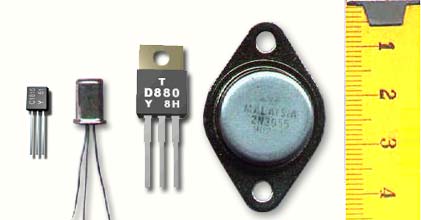
transistor.jpg
 
Re: So why ARE tube amps louder than solid state?

My understanding is that it's related to the even/odd harmonics when being pushed too hard.
 
Re: So why ARE tube amps louder than solid state?

These are the views of Stewart Ward, the British amp designer behind the Sessionette solid state amps that some of you may remember from the 80s:

Are valve amps louder than transistor for the same power rating?

The short answer is no. Watts are a precise measurement and is exactly the
same for valves or transistors. Valves do not have some ‘mysterious’ ability
to alter the laws of physics... sadly for some romantics! But there are factors
which can make transistor amps seem quieter. There are three main reasons
to explain this:

1. Valve amplifiers are usually fitted with premium grade speakers. As
mentioned in ‘Speaker Talk’, these can make your amp much louder for the
same input power to the speaker. Unfortunately, transistor amplifiers are
not viewed with much esteem by the general guitar player or magazine
writers. They are, by default, expected to be much cheaper than a valve
equivalent. So the manufacturers of these amplifiers do not invest a lot of
time and expertise at the design stage. Further, most of the expensive
components used are cut down to the bone in order to achieve the ‘expected’
low price. Resultantly, as the speaker is the single most expensive component used in an amplifier, it becomes a cost cutting target! Therefore, and even though it may exhibit a ‘famous name’, it is not usually to the same high standard as the one fitted to a valve amp. One way to cut down the cost of a speaker is to reduce the size of the magnet, as it is the most expensive component in the speaker. This also makes the amp lighter, which is great in helping to save freight costs if the amplifier is being shipped from some far away country. Freight is charged by weight. However, the down side to this is that the smaller magnet means that the speaker is bound to be less efficient, which results in the amp sounding a lot quieter on stage in a performing situation. But, in a shop or at home, it still seems very loud. This is deceptive and lots of guitarists (and reviewers) get caught out by this.
At the time of writing, some guitar speakers are coming onto the market
using ‘Neodymium’ magnets - Celestion’s G12 Century for example.
This newish material enables very small magnets to be made which are
much stronger than conventionally sized ceramic ones. These new magnets
should therefore, not be confused with the traditional ‘ceramic’ type we are
talking about above.

2. Transistor amps are able to deliver more power when you add an
extension speaker cabinet. Whereas, valve amps have their speakers
‘matched’ to the output transformer, which means that the amplifier always
delivers the maximum power into the speakers. As you know, when you connect an extension cabinet you usually have to select another impedance setting using a switch at the back of the valve amp. The often overlooked point here, is that guitarists do not realise that the power quoted by the manufacturer on the front of the transistor amp, is usually the maximum total power the amplifier is able to deliver when an extension cabinet is connected. This means that you should expect to derate the power of a 100 watt transistor amplifier to around 60/65 watts RMS when using just the internal
speaker(s). This makes quite a difference and it is perfectly understandable
why any guitarist might be surprised to find that a transistor amp which says 100 watts on the front does not seem as loud as a similarly rated valve amp... especially when it is likely to be fitted with one of those less efficient speakers as mentioned earlier!

Continues.......
 
Re: So why ARE tube amps louder than solid state?

3. There are, annoyingly, too many occasions where the manufacturer
has mis-quoted the output power of an amplifier. It might be a bit
strong to accuse them of lying... but they have certainly used some dubious
measurement techniques to establish their power ratings. All too frequently,
we come across well known British manufacturers who indulge in these tactics. For example, we regularly see examples of a popular mid-1990s 40 watt budget transistor amplifier come through our workshops for servicing, which I must say sounds really good, but the output power falls way short of that quoted at only 28 watts RMS. To my calculations this amp is overstated by over 40%. As it happens, the speaker sounds great, but has a rather small
ceramic magnet. So, all-in-all, the amp is bound to be disappointing in the
loudness stakes when used in anger in front of a drummer! Fender have a power measurement statement on some of their schematics which is to be applauded. It says... “Output power 100 watts RMS into an 8 ohm resistive load, allowing for 5% THD at 1kH, at the rated AC input voltage.” Because of this well worded statement, there is no chance of misunderstanding what the power actually is. It is the only way to measure the output power of any amplifier - period! However, many manufacturers use an 8 ohm speaker as the load, which is where the ratings become a joke. A guitar speaker’s impedance varies with frequency and is likely to be significantly higher than 8 ohms at 1kH and results in an overstated power specification. This is exactly the case with the 40 watt amp mentioned.


http://www.award-session.com/pdfs/GEAR_TALK_1.pdf
 
Re: So why ARE tube amps louder than solid state?

Headroom.....and how it relates to the way tube and solid state amplifiers clip.

Basically, with solid state you need to keep your volume set to a level where it does not overdrive the amp....that means that in a 30w ss amp you might be pushing an average of 10w, but when you nail big, full bodied chords that include an open E string you'll need the 30w of headroom to keep the power stage from overdring.

Conversely, with a tube amp you can dial your volume to a level where the amp is quite overdriven....which means that unlike the ss amp that might be averaging 10w with the occasional jump upto 30w you'll be pushing a full 30w much more often.

So, in short....the reason tube sounds louder is because you're using more of the maximum available output most of the time.


This is exactly how I understand it . . . great explanation!
 
Re: So why ARE tube amps louder than solid state?

So, in short....the reason tube sounds louder is because you're using more of the maximum available output most of the time.

But I'm not talking about overdrive at all. Even played dead-squeaky clean, my tube amps just melt all the SS's I've ever tried. In fact, especially when played clean.
 
Re: So why ARE tube amps louder than solid state?

I've found from my experience that the efficiency of the speakers has a lot more to do with volume than power rating or tube/transistor does.
 
Back
Top