
So a friend of mine asked me to see if it's reasonable to try to restore this old ukulele of hers. This ukulele is at least 60 years old and kind of family heirloom so I don't want to ruin it. I may just tell her that I don't think I can realistically set it up correctly, but that I would at least look at it first.
The attached pictures are what I am really concerned about as that neck relief seems waaaay off, but this could also be normal for ukuleles, I genuinely don't know.
For people with experience with this sort of thing, is that much neck relief normal for a nylon-string baritone ukulele?
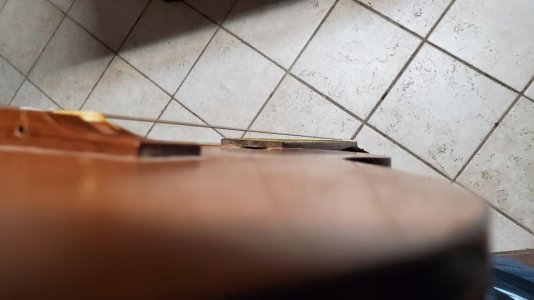
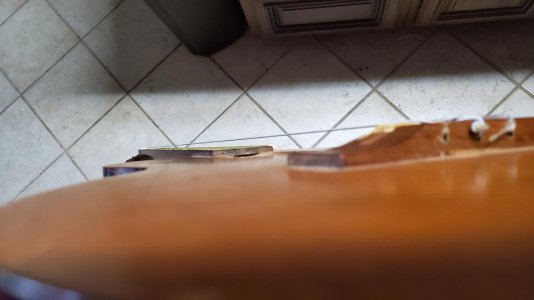
If that neck relief is too high, the only thing I can think of to do to compensate for it is sand the entire bridge down. It does not have a truss rod, which I found out is normal for ukuleles.
Thanks,
GreatOz
The attached pictures are what I am really concerned about as that neck relief seems waaaay off, but this could also be normal for ukuleles, I genuinely don't know.
For people with experience with this sort of thing, is that much neck relief normal for a nylon-string baritone ukulele?
If that neck relief is too high, the only thing I can think of to do to compensate for it is sand the entire bridge down. It does not have a truss rod, which I found out is normal for ukuleles.
Thanks,
GreatOz


