Bridge Differences

Lucius Paisley

Well-known member
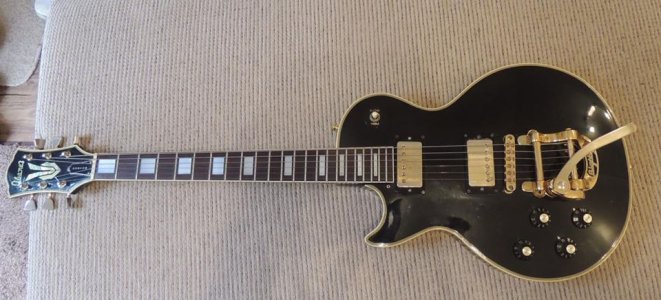
The opportunity has come up to purchase one of two 70's era Ibanez 2350L guitars.
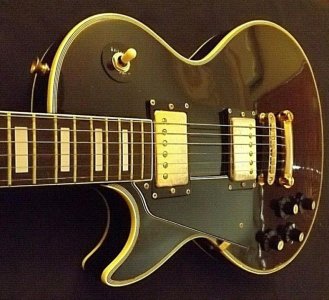
2350L.jpg

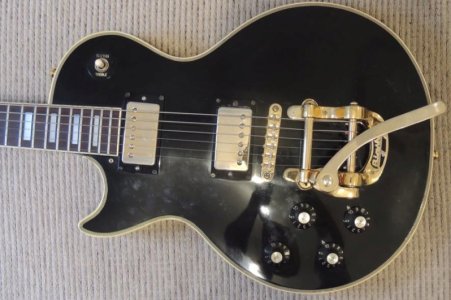
2350LwBigsby.jpg

I am leaning towards the Bigsby, because the guitar at least has a serial number, plus I don't have to deal with postage, ebay in general, etc.

I am just wondering what tonal differences there may be between the two and how the Bigsby may or may not detract from the guitar overall.

Thanks.
 
Re: Bridge Differences

If you haven't yet played them, then the differences would seem to be one has a bigsby and no pickguard, and the other has a tailpiece and a pickguard.

Until you play them then you cannot know any of the finer details that might make one stand out in the hand.

The Bigsby will only detract from the guitar if you don't like Bigsbys.
 
Re: Bridge Differences

If your not planning on using alot of Bigsby sounds in your playing, I would not get the Bigsby. Its a great system for what it is, but its less reliable of an intonation platform than a fixed tuneomatic style which is as rock solid of a vintage system ever made. Also Bigsby soften the attack and feel a bit due to the Bigsby giving slight inperceptible slack out when the string is plucked , which can be good or bad, so consider that
 
Re: Bridge Differences

The Bigsby guitar will have a softer string feel due to the longer string length and the spring in the Bigsby itself. There's no problem with intonation of either, you're still dealing with the same bridge type. But the stop tail will keep that one in tune better. It's impossible to tell which will have a more desirable tone without actually playing them.

If you haven't ever played a Bigsby before don't expect it to do what a Strat trem can do. It's a different animal...great at what it does however.
 
Re: Bridge Differences

I'd go Bigsby. They're a really fun trem system to use, and if set up properly stay in tune pretty well.
 
Re: Bridge Differences

Thanks for the responses, guys, however I've gone ahead and put a bid on the non-Bigsby. I don't think I have the player subtlety required to use a Bigsby effectively. But you've given me something to take into consideration should I decide to get adventurous later.
 
Re: Bridge Differences

Hard tails are always a safer bet, but everyone should own a well setup Bigsby equipped guitar at least once in their lives.
 
Re: Bridge Differences

Thanks for the responses, guys, however I've gone ahead and put a bid on the non-Bigsby. I don't think I have the player subtlety required to use a Bigsby effectively. But you've given me something to take into consideration should I decide to get adventurous later.

The Bigsby only does subtlety. You can be a little heavy handed and it will still sound pretty smooth. It won't be long until you find yourself adding a little shimmer to every held chord and ending.
 
Re: Bridge Differences

A Bigsby is to a guitar player what a crotch is to a rapper. Once they touch it, they just can’t keep their hands off it.
 
Re: Bridge Differences

If you're buying the actual guitar pictured with the Bigsby, I see a Vibramate on there, so it would be easy to change it back to a stoptail.

Thanks for the heads up. Not knowing what to look for, all I see is the Bigsby. I'll definitely have to ask the guy if he has the original stop bar, because bonus.
 
Re: Bridge Differences

Well, I have the guitar.

ib2350lbigsby.jpg

The seller played it a little for me through a Fender Mustang III, demonstrating some Bigsby use. I felt awkward for me to play at first because the strap he had on was was too high and it felt heavier than it should have been. But I'm resting it on my leg as I type this now and it's no heavier than my LP59 copy.

I think I made the right choice.
 
Back
Top