My experience agrees and I’ll post just an excerpt of it.
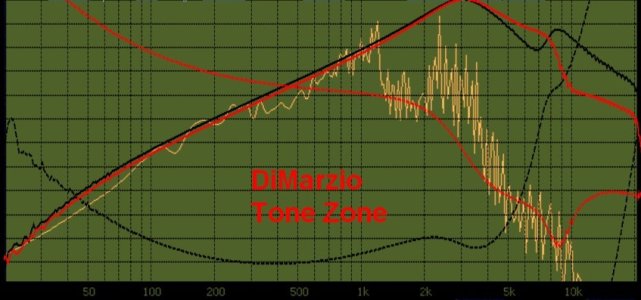
Below is a pic transposing the dual-resonance of a DiMarzio Tone Zone.
Plain red and black lines = resonant peaks of the two coils.
Dotted red and black lines = their phase response.
Orange hazy line = cumulative response of the pickup in bridge position when the test guitar hosting it is played from unfretted low E to high E, 22th fret, plugged direct to the board through a 1M input.
The comb filtering theorized by Donald Tilman + the dual-resonance of the pickup appear to shape its harmonic spectrum: see how the frequency response of the played guitar follows the curves due to electro-stimulation, after an expected gap between fundamental and harmonics due to the position of the pickup comparatively to the bridge.
In this case, dual-resonance causes a dip followed by a subtle hump in the higher harmonics. The goal is apparently to keep a bit of sparkle between 5 and 10k in order to increase the harmonic richness of a high inductance pickup, but also to cut the treble content in a “stairway” fashion @ these two successive frequencies in order to avoid “fizz”.
My temporary conclusion: between arrogance and tendency to dictate its rules to the whole World, DiMarzio corp. give many reasons to be disliked… but the idea that dual-resonance = BS is not one of them, IMHO.
Please, note that albeit a bit more concrete, this post doesn’t claim to picture ALL the tonal features of the HB tested: my screenshot says nothing about loudness and time domain, for example. I’ve focused on the dual-resonance making so much buzz above.
FWIW.
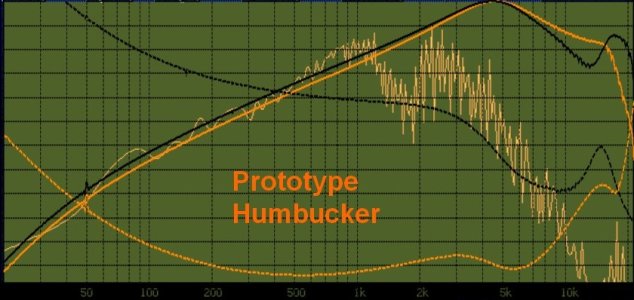
View attachment 85624