Ebonize a Fretboard

UnderTheFlame83

New member
How many of you have ebonized a fretboard before and how good was the results? What did you use and what steps did you take?

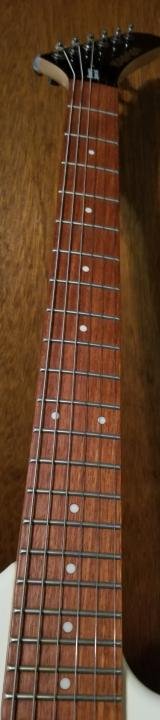
I'm considering doing it on my vintage white Kramer Baretta Special. As much as I love the guitar, I'm not crazy about the fretboard color. If the fretboard was darker the guitar would look much better. I'm thinking of using black zumi ink. I want it as dark as possible.
 
Have you tried just oiling it? I only ask because there are a lot of guitars with factory ebonized boards out there that will turn your fingers black and if they can’t get it right, what chance do we have?
 
Have you tried just oiling it? I only ask because there are a lot of guitars with factory ebonized boards out there that will turn your fingers black and if they can’t get it right, what chance do we have?

Yeah I tried oiling it many times. Doesn't get any darker.

20220317_002042.jpg
 
I clean and scrap down the board then I use an ebony stain marker. Let the stain sit for 20 minutes then use a dry cloth to wipe it all down. let it sit for a few hours and see how it looks if need be hit it with the stain again. Let it sit 24 hours then hit it with a coat of Watco Danish Oil or the like. Let it dry, buff it out and you should be good to go.

I've done this to a number of guitars with very good results
 
I know people have done this with wood stains. The stuff is messy and stains everything it touches though, so be very careful.
 
Mm, there's a few ways of doing it, whether using a product like Minwax, markers, or even India ink (https://www.stewmac.com/luthier-too...and-tints-and-stains/black-fingerboard-stain/). I have some black guitars with rosewood boards which I'd prefer to be darker, and am planning to do it at some point.

As per Wattage's instructions, it's about the prep, waiting time, masking off areas you don't want stained, and repeat coats if initial one isn't dark enough for taste. For a small surface area like a fingerboard, markers or India ink is probably the more practical way to go.
 
There are plenty of dark stains available at home improvement stores. Minwax has an ebony colored one.
 
I have done this with a guitar with light rosewood fretboard and had really good results - the board turned very black and wouldn't come off on the fingers at all.

It's not hard to do, but preparation is the key. You need to really, really clean the fretboard. Start out by rubbing it down with a cloth/toothbrush and naptha. Once it looks super clean, very lightly sand with some 400/600 grit sandpaper. Then I'd go over it one more time with the naptha. Board should be bone dry.

Go to an arts and craft store and buy some of this stuff (it's only a few dollars):
10015483_1.jpg


Tape off anything you don't want to get ink on with some painters masking tape. Get a fine paintbrush, and paint the ink onto the fretboard (try to avoid your fretboard inlays - they will darken slightly if you get stuff on them). Once you're done the whole board, let it sit overnight. It will dry and soak in. The next day, repeat (you will see any minor spots you missed). Then after waiting another night for it to dry completely and soak in gently rubbed it down with a rag to remove any remaining black stuff from the surface, then did applied a light coat of Watco Danish oil and gave it another night to soak in/dry.

After that it should be playable. Rub the board down with a rag, and you shouldn't have any black coming off it. If you do, apply another light coat of Danish oil and wait another night for it to dry. Finally, take a sharp knife and gently/carefully scrape the top of your inlays clean anywhere you slopped ink on them, and you're good to go. Should be very black and unless you sand it down it will stay that way.
 
technically ebonizing is not adding dye. if it were a type of wood with a lot of tannin (oak, mahog) you could make a type of acid from steel wool and vinegar and this would actually ebonize the wood... but typically this is not "black"... but I digress. If you want to turn your fretboard black... do not bother with anything from local hardware store. Not going to darken to black. ime you'll need something that penetrates and does not fade (india ink fades and even black will have a blue tinge to it - not truly black). You also want something that is not going to end up on your fingers every time you play it (water based dyes will do if not sealed with lacquer or other. the minute there is moisture on your fingers or enough in the air -water based will activate). water based is also not a good idea as it potentially could put tension into your fretboard that will fight the neck afa relief. angelus leather dye is alcohol based and does a pretty good job of this. I've read that feibings is even better afa black... but have not used myself. hope something there helps.
 
technically ebonizing is not adding dye. if it were a type of wood with a lot of tannin (oak, mahog) you could make a type of acid from steel wool and vinegar and this would actually ebonize the wood... but typically this is not "black"... but I digress. If you want to turn your fretboard black... do not bother with anything from local hardware store. Not going to darken to black. ime you'll need something that penetrates and does not fade (india ink fades and even black will have a blue tinge to it - not truly black). You also want something that is not going to end up on your fingers every time you play it (water based dyes will do if not sealed with lacquer or other. the minute there is moisture on your fingers or enough in the air -water based will activate). water based is also not a good idea as it potentially could put tension into your fretboard that will fight the neck afa relief. angelus leather dye is alcohol based and does a pretty good job of this. I've read that feibings is even better afa black... but have not used myself. hope something there helps.

The India ink that I linked does not have any blue tinge to it at all, and showed no signs of fading in a couple years of use. It does not come off on fingers at all after applying the way that was mentioned. A properly glued fretboard is not going to lift when using it. (I wouldn't apply it to a fretboard that isn't glued to a neck though).

Stew-Mac specifically recommends that ink for dying fretboards - https://www.stewmac.com/luthier-too...and-tints-and-stains/black-fingerboard-stain/ . They stopped recommending feibings leather dye ever since the newer formulations of it leave a blue tinge when dying.
 
Back in the late 70's I bought some ebonizing stain from International Luthier Supply in Tulsa. Supposedly Martin used the same brand. Smelled like kerosene, and it listed coal oil and lampblack as the darkening agents. It did work, but smelled terrible for a day or two after application. Encased the bottle in a half-inch thick coat of epoxy when I found out it was suspected of causing cancer.
 
Back in the late 70's I bought some ebonizing stain from International Luthier Supply in Tulsa. Supposedly Martin used the same brand. Smelled like kerosene, and it listed coal oil and lampblack as the darkening agents. It did work, but smelled terrible for a day or two after application. Encased the bottle in a half-inch thick coat of epoxy when I found out it was suspected of causing cancer.

Man, my money upon reading the original post was that you would have been triggered into a rant.... instead you are knee deep in this ghetto fabulous fret board darkening technique!

Ive never considered this -it does sound nasty and dirty, Ebony fretboards are my favorite looking and feeling fretboards, so I go for those guitars that have them.
 
There's no smell at all using Higgins ink. The stuff is just carbon black (fine bits of black ash) suspended in water. Usually I like the look of rosewood, but on certain guitars (especially with black bodies) it can look crappy.
 
The India ink that I linked does not have any blue tinge to it at all, and showed no signs of fading in a couple years of use. It does not come off on fingers at all after applying the way that was mentioned. A properly glued fretboard is not going to lift when using it. (I wouldn't apply it to a fretboard that isn't glued to a neck though).

Stew-Mac specifically recommends that ink for dying fretboards - https://www.stewmac.com/luthier-too...and-tints-and-stains/black-fingerboard-stain/ . They stopped recommending feibings leather dye ever since the newer formulations of it leave a blue tinge when dying.

fwiw i mentioned nothing about lift. what I'm saying... is if you put products on a fretboard that add moisture... you can cause issues with twist/cup. that is how wood works. that's why alcohol based is better. if you were doing this on a new build or unattached fretboard... you could afford to do whatever and then allow the wood to dry after and then sand it flat. Doing it after it is built is not a great idea... but ymmv.

good to know about feibings. as I said I've never used it... but it is very common to use to darken ebony. that said... I'm not sure we want to go so far as to make stew mac an authority. there are some great luthiers that work for them, and not questioning that... but wouldn't be the first time they've said things that are not exactly good advice. go google search for stew mac broken truss rod for example lol.
 
To paint a fretboard black with ink, you need maybe 1/2 an ounce of the stuff. If you think that amount of water is going to cause problems with your guitar, how the hell do you avoid sweating while playing gigs?
 
To paint a fretboard black with ink, you need maybe 1/2 an ounce of the stuff. If you think that amount of water is going to cause problems with your guitar, how the hell do you avoid sweating while playing gigs?

Not to mention when it soaks up the applied fretboard oil...
 
Back
Top