Leveling tools

Re: Leveling tools

You could probably practice both skills at once. Use cheap necks. It takes several tries to get good. Although there's more that can go wrong with a complete refret.

The refretting process really wasn't as hard as I was expecting.

- Pull frets (heat 'em with a soldering iron to limit chipout, and start and one edge, slowly working your way off to the other)
- sand the fretboard and roll the edges (optional I suppose, but might as well while the frets are out)
- scrape any gunk that has accumulated out of the fret slots and deepen them if you're putting longer fret tang in
- bend frets to the correct radius
- put a wood block on the top of the fret and bang on the block with a regular hammer to drive 'em in. Right side, left side, middle, done.
- clip the edges off
- file the edges down (start by getting them flush with the fretboard, then move to rounding them off with some more delicate files)
- check for high spots, mark and level them
- crown the frets
- sand and polish


It's time consuming, but not really too hard.
 
Re: Leveling tools

Yep. You can also round the fret ends before you install them by simply dragging them in your half round file. Instead of spending 20 minutes per end while they're in and putting more marks on the fretboard.
 
Re: Leveling tools

Yep. You can also round the fret ends before you install them by simply dragging them in your half round file. Instead of spending 20 minutes per end while they're in and putting more marks on the fretboard.

I found that it was easier to keep the fret tang at 90 degrees by hammering the whole long fretwire piece into the board and then clipping off the excess, which precluded that practice.
 
Re: Leveling tools

Is it common for those refretting classic Fender maple necks (no separate board) to re-spray the board after?
 
Re: Leveling tools

Is it common for those refretting classic Fender maple necks (no separate board) to re-spray the board after?

My understanding is that it's possible, but there's a lot of risk in getting visible chips while refretting maple because of the way the finish is often applied after the frets . . . so most places will try to do a refinish after the re-fret.
 
Re: Leveling tools

Is it common for those refretting classic Fender maple necks (no separate board) to re-spray the board after?

It depends on what the original finish is. Lacquer you can melt new into old, but with poly a strip and refinish. I have successfully refret poly boards without the need for a refinish, but the replacement frets were wider.
 
Re: Leveling tools

This thread is about leveling tools, and I posted pix of some of mine.
Anyone interested in pix of my fretting tools?
 
Re: Leveling tools

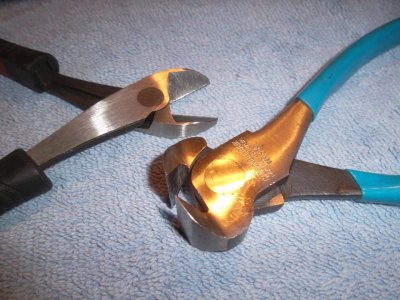
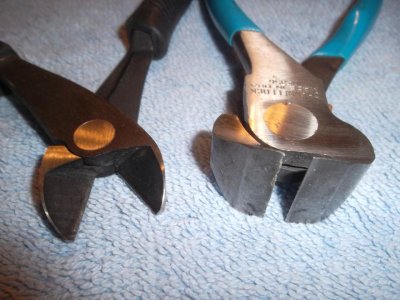
Alrighty then! First - pulling the frets. I have an ancient pair of nipping pliers I ground flat decades ago, and a pair of sidecutter for cutting fretwire to rough length. I moisten the fretboard first, get the fret hot with the soldering iron, and slowly work the pliers across the board, lifting slowly and keeping them flat to keep chips to a minimum.

SAM_3548.jpg

SAM_3549.jpg

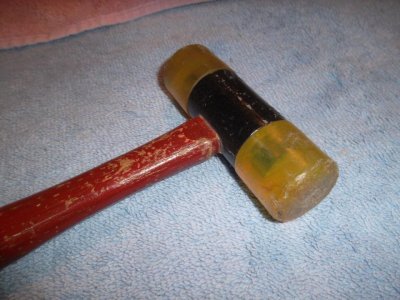
After cutting them just oversize, I can hammer them in. For about 20 years I've meant to get a deadblow hammer..... but this cheap nylon faced one keeps doing the job well.

SAM_3556.jpg
 
Last edited:
Re: Leveling tools

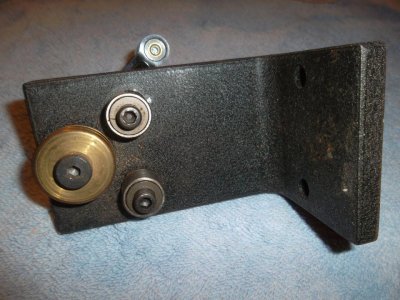
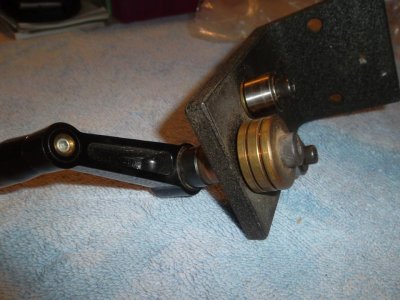
But what about bending the frets, you say? I have a StewMac fret bender from the 80's. It's fully adjustable, and works great - do a whole stick of fret wire in a few seconds.

SAM_3560.jpg

SAM_3563.jpg

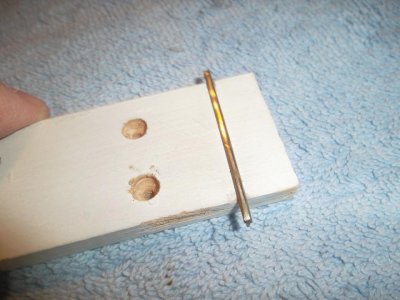
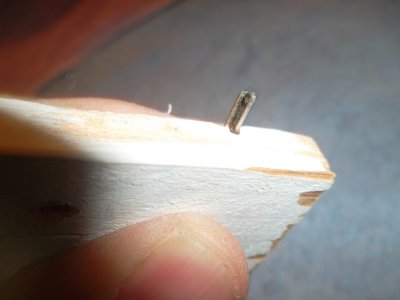
If I plan on notching the frets for a bound fingerboard - I use a pair of gloves, and this shopmade holding jig (between my fingers and thumb). Notch it with nippers (I have a StewMac fret nipper that hurts my hands to use, doesn't really work any better than nippers, and of course - the little snippet goes flying across the shop), then file a notch in the fret with a needle file - both the tang and the underside of the fret must be flush and square to each other. Both ends, of course.

SAM_3557.jpg

SAM_3558.jpg
 
Re: Leveling tools

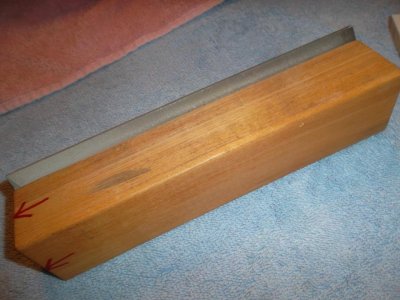
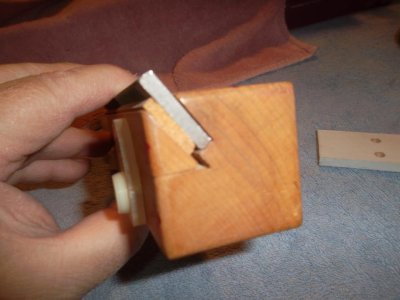
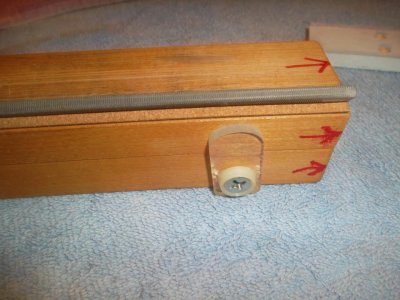
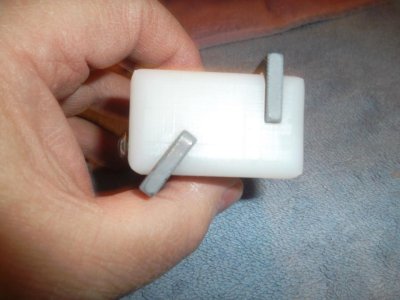
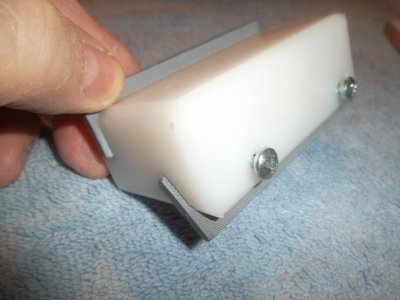
After I've hammered the frets in flush (on older stuff, I might glue them in with hide glue. Use Titebond on maple boards), then I use this old StewMac beveling file. It only goes one way..... And I can turn the file around to go the opposite direction if need be (tight spaces, etc.). I recently purchased the nylon double fret bevel, which also flushes the frets when cleaning up fret sprout in the dry season. It has fine and medium cutting edges on the files.

SAM_3550.jpg

SAM_3551.jpg

SAM_3552.jpg

SAM_3553.jpg

SAM_3554.jpg

Not pictured: an ancient Nicholson fret file which was broken and worn out. I safed all the edges, it's now sort of a lozenge shape. Because it's dull, it will not mar or scratch any smooth surface. But if there is a nick or high spot in the fret - it will take it right off with a few passes and almost no pressure. When it's level - it quits cutting. Old machinists trick.
 
Re: Leveling tools

Yep. You can also round the fret ends before you install them by simply dragging them in your half round file. Instead of spending 20 minutes per end while they're in and putting more marks on the fretboard.

If you finish the fret ends before installing them, how do you get the length correct?
 
Re: Leveling tools

I love how a fret-end file works and bought one. The main problem is that the file is at a much steeper angle (35 degrees) than I prefer and it removes too much of the top of the fret. I made my own (similar to the nylon one in goober's post, #53), but it's 20 degrees on one side and 90 degrees on the other. Works much better than any other I've seen.
 
Re: Leveling tools

Time is money, guys - especially in a repair shop. You do things right, in the correct order.

I don't understand WTH Clint is talking about using a halfround file.... Maybe he'd like to provide some pictures before I just say he's doing it wrong?
 
Back
Top