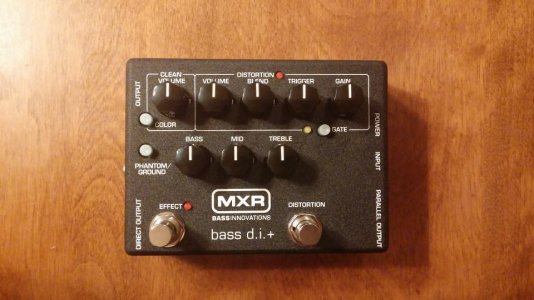
Re: NPD MXR bass d.i.+
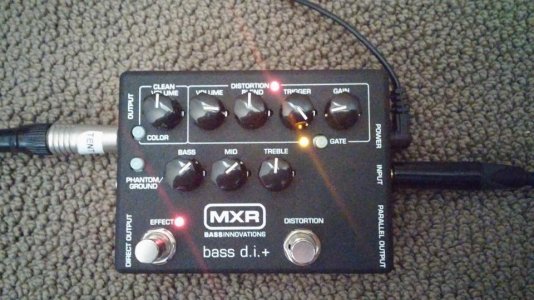
Ok so what a lot of people don't realize about the gate is that it is not intended to act as a normal noise gate. It does cancel some hum, but only to an extent, where it REALLY shines, and what it dually is intended as, is as a flexible dynamic threshold. If you turn the gate off or run it on low, your distortion will be pretty consistent regardless of how light your playing and how low your gain is set. This is the kind of distortion people usually experience.
BUT, when the GATE IS ON AND THE TRIGGER IS RAISED, If you keep the blend knob mostly leaning toward the clean side or in the middle and keep the gain relatively low (off-9oclock) then you will have a dynamic overdrive effect. The gate will smooth out the grit and fuzz in your tone, you can tell it is working when the light is yellow. When you PUSH the signal more, the gate will fluctuate on and off letting distortion in when you dig in and gradually cutting it out when you play softly. You can dial this in to be as sensitive as you need it to be. The further blend leans towards the right side, the gate opens easier, more gain lets the gate open easier too, the lower the trigger setting is, the less signal is needed to let the distortion come in too, so you have 3 knobs to play with to control how dynamic the pedal is, 4 IF YOU COUNT THE VOLUME CONTROL ON YOUR BASS.
Yep this thing works just like you expect. You back off the volume on your bass, that gate becomes harder to push through, keeping your tone clean. I use textured steel 50-105 roundwounds through some of the hottest passive bass pickups around (PJ G&L MFD pickups) with the tone control taken out, so naturally I run my trigger pretty high, my gain low, and I like to keep a fair amount of clean signal blended in it because the signal from the bass is already gnarly enough to drive this thing pretty easily. But the typical Jazz or P bass running through this thing with 45-105 nickelwounds will hit it much softer, meaning you can be more liberal with the distortion and back off the trigger more. It functions just like tube overdrive in this way and, when dialed in to suit your needs and setup, will break up smoothly when you dig in and clean up with a full tone when you play softly or mute your strings.
With the distortion channel engaged, the color switch automatically comes on, but the scoop it kind of creates on the clean channel is filled with more midrange when using the distortion channel, so when you play softly on the distortion channel with the gate, the highs are tamed and the mids are pushed, creating a warmer and fatter clean tone than the straight up clean channel on the pedal with the color engaged (which sounds AWESOME). But those tamed highs and full mids get DAMN close to how a typical bass tube amp responds when it is cranked but the player is playing lightly (as if the headroom was being filled), as opposed to playing with the same thing dialed in but with much more clean headroom. And as I said, you dig in and the gate creaks open letting the breakup through.
This is where the EQ comes in. The texture of the breakup distortion can be controlled through the treble knob. Gnarly fuzzy crackle distortion sounds come out when using more treble, a more growly and softer clipping tone comes when rolling back the treble and increasing the midrange. This is why I have it set the way I do. On clean with the color switch in, the low end is massive, clean, and soft, I fill in the mids get filled in a bit from the eq to add a bit more weight to the fundamental, then I keep highs straight up, because the color switch brings them out plenty enough. This clean tone is very warm, detailed and airy. Highs aren't always clicking and clacking unless you strike hard, easily muted, strong fundamental, loads of smooth lows, kind of like having a massive tube amp without driving it. Then I flip the distortion on and the lows tighten up a smidge from the distortion, but still stay prominent because the blend is leaning towards clean or straight up (keeping more of the clean signal in tact like overdrive typically does), keeping the sound huge and not fizzing out the lows. The mids from the eq get pushed a little harder by the distortion channel, making them even more prominent and filling in the scoop, creating a big and airy growl when you pick hard, but is strong and thuddy when muted or played lightly, then the treble at noon just adds a bit of rasp to the top end to mesh well with the other instruments since the breakup makes it not as sharp as the pure clean treble tone, but the texture makes it stand out well among the guitars. This emulates the kind of harmonic distortion and high end roll-off that is associated with tube overdrive, leading to full and growly mids with solid bass, then the gate supplies the control of the dynamic range.
Boom, warm tube-like dynamic overdrive. If you didn't know you could, now you know, and if you did know this already and have found out other tricks to squeeze different tones out of this thing, PLEASE TELL ME. Tweaking this thing and dialing in complementary tones with my amps is my new favorite hobby. And OF COURSE this thing is amazing for crazy fuzz bass or modern metal high gain bass tones as people usually experience, but by playing with the treble, midrange, and gain you can actually get some old school 60s-70s ratty bass fuzz tones as well as the fat and sharp prog rock bass tones like Yes and Rush. The distortion channel is TOO versatile to be written off so easily, and that gate really is something too. Usually noise gates I've run through before can kill your dynamics, but this actually enhances them since it is coupled with the distortion from the pedal specifically and isn't an outside unit.
But I'm rambling at this point. If you have never tried it before, then give those settings a shot and see what magic you can work. It still won't TOTALLY get you that specific SVT/Bassman overdrive that the Sansamp is known for delivering, but it will get in that tube amp ballpark (enough to fool anyone I know), and can take you so many more places than that. Despite it's positive ratings and reviews, I'd STILL say this thing is sold short and underrated. It kicked the OCD off my board in the end because it seemed redundant at that point.