Re: Ok how do you use a compression/limiter pedal
Compression is a bit tricky. It's a powerful tool but it's not an obvious effect like delay or chorus.
There are several parameters to compression. But the basic deal is this. Compression limits the dynamic range of a signal making the quiet parts louder.
Threshold=the point where compression starts. Set very high only the hardest picked notes will get compressed. Set very low just about everything get compressed.
Ratio=the severity of compression. A ratio of 2:1 means for every 2dB over the threshold only 1 dB gets through. A ratio of 4:1 means for every 4 dB over the threshold only 1 dB gets through. Those ratios are pretty gentle. Higher ratios produce some pretty good squish to the signal.
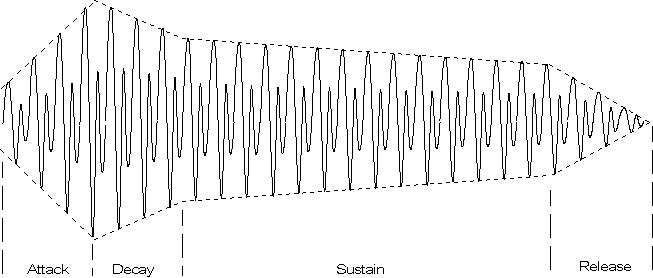
Attack=How quickly the compressor responds to the signal. The times range from 1 millisecond up to around 250 milliseconds possibly more.
Release= How long it takes for the compressor to stop. Usually between 50 milliseconds and 3 seconds.
(Attack and release are the two knobs that give most people fits and very often are not even an option. The designer just sets them internally and they don't change. Or you might get a fast/slow long/short option.)
Gain=adds volume to the signal after it is compressed. The very nature of compression makes a signal quieter. The gain knob gets things back to where they started or ever louder. The diagram above illustrates this.
Usually compression is used in the studio or live by the sound guy to help things sit better in the mix. A bass player pumping 1/8th notes might be a bit inconsistent in his picking with some notes picked a little too hard and some too soft. A bit of compression can reign in the loud notes and bring up the quiet ones. A drummer might have a similar issue with his snare. Compression to the rescue! In these cases the idea is to not notice the compression working. You just know it sounds better.
Some guitar players like to really squish the signal. Chicken picken' Tele guys spring to mind. At this point they're using compression as an effect that is quite noticeable.
Most guitar players don't like or particularly need a compressor in their rig. When you're playing distorted your signal is getting natural compression simply because you're overloading something. Plus tubes amps operated a high volumes are naturally distorting thus giving a natural compression.