Order the following Tone influencers. What do YOU think?

Aceman

I am your doctor of love!
Lot of discussion on this. Let's see what people think….

I want you to order the following items on WHICH will influence the tone the most, Most to Least, as well as make a distinction between the significant and audible, and those that technically might, but are so small as to be trivial! So, put the biggest influencer first, then the next all the way to the least. Assume or stick to humbuckers. Put a ------ at the point where you think the things don't matter.


Here are the factors in alphabetical order:


Body Wood
Bridge Saddle Material
Body Shape
Bridge Type - TOM, Standard Strat, Floyd
Fret Material
Fretboard Wood
Neck Angle - Flat, Angled
Neck Attachment - Glue v Bolt
Neck Scale
Neck Wood
Pickup Magnet
Pickup Output
Pickup Resonant Peak
Pickup Height Adjustment
Pole Piece Spacing (correct vs incorrect - trem standard)
Nut Material
String Gauge
 
Re: Order the following Tone influencers. What do YOU think?

Body Wood
Fretboard Wood
Neck Scale
Neck Wood
Nut Material
Bridge material
Bridge type
 
Re: Order the following Tone influencers. What do YOU think?

Does the nut material make any difference on anything other than open strings?
 
Re: Order the following Tone influencers. What do YOU think?

I can not believe that your list omits the all-important strap.
 
Re: Order the following Tone influencers. What do YOU think?

Amp
Guitar
Pedals
Pickups
Strings
 
Re: Order the following Tone influencers. What do YOU think?

I can not believe that your list omits the all-important strap.

My guitar sounds pretty good with a fine leather strap, but I think the tonal energies carry through synthetic modern nylon better.
 
Re: Order the following Tone influencers. What do YOU think?

Fingers should be at the top of the list... far more important than anything else that was listed.
 
Order the following Tone influencers. What do YOU think?

Amp/effects
Pickups (combination of the following):
• Pickup Magnet
• Pickup Output
• Pickup Resonant Peak
Body Wood
Fretboard Wood
Neck Wood
Bridge Type
Neck Attachment - Glue v Bolt
Pickup Height Adjustment
String Gauge

------- below here is still in order, but I personally wouldn't worry about any of them... at least not in regard to tone. -------

Bridge Saddle Material
Nut Material
Neck Scale
Pole Piece Spacing (correct vs incorrect - trem standard)
Body Shape
Fret Material
Neck Angle - Flat, Angled

Edit: While I don't believe it has any direct effect on tone, I believe that the chicks dig a good, sturdy strap... which tends to make most of us play differently, therefore possibly affecting tone by proxy.


[emoji450]Sent from my iPhone using Tapatalk [emoji441]
 
Last edited:
Re: Order the following Tone influencers. What do YOU think?

My guitar sounds pretty good with a fine leather strap, but I think the tonal energies carry through synthetic modern nylon better.

You're crazy. The organic cellular structure of leather resonates much better at the frequencies guitar strings vibrate at than some modern synthetic polymer used to make pantyhose. Did Hendrix, Charlie Christian, Clapton, or Santana ever use new fangled aliphatic polyamide thermoplastics to heft their vintage axes? No.
What are you thinking man!
 
Re: Order the following Tone influencers. What do YOU think?

2 points to make:

First, years ago when I was just a wee guitar-wannabe, I had this LP Copy I bought from my best friend. I couldn't get it to sound what I felt like was "good".
A more experienced friend of mine played the solo to Diary Of A Madman on it and it sounded like the album.
Maybe it was the Full Shred I put in the bridge, maybe it was the player.

Second, Jackson and Charvel Strats (real full-size Strat bodies, not the Dinky or Soloist) sound nothing like Fender Strats, even those using the same body wood, neck and fretboard wood, and bridge.
My SoCal sounds nothing like the FR Strats I used to have, and the SoCal was made by a Fender employee who was going by Charvel's specs, on Fender's Strat-making machines, in Fender's side of the building.

Even acoustically, where pickups don't enter into it, the two guitars sound completely different.

While I've not played any of the famous San Dimas Custom Shop Les Pauls, Explorers, roundhorn Vs, or Firebirds, I get the feeling they don't sound like Gibsons, either, even if they're made identically.


So I really can't say which of those has the biggest influence on a guitar's tone, because it's been my experience that the primary factors are:
1. Who's playing it
2. Who made it
 
Re: Order the following Tone influencers. What do YOU think?

Lets talk about factors outside of the guitar first:

• Pedals
Drastically change the sound of your guitar, unless you are specifically using 'transparent' od's.

• Amp/Settings

• The space you are in
My rig sounds completely different here than at a gig-space than at my rehearsal spaces

Then guitar:

• Pickups
Hard to say which of the parts is most important, though I do believe that magnet is probably the core of the sound, followed by output.

• Neck Construction/Wood
I have to agree with Paul Reed Smith here, the makeup of the neck does more for your overall tone than almost any other acoustic element of the guitar. I've played a single guitar with two different scale lengths on it and it completely changed the voice of the guitar, more than a change in body did. The tension can change your sound between dark or piano-like and chimey.

•Bridge material/makeup/angle = Fret material/shape
The two ends of a struck string. The first two points of contact after you hit a string. Initially I would think that the bridge is more important after changing bridge types on one of my guitars.. but I've also never changed fret materials/shape. I'd assume it has a similar effect on the string, being a direct point of contact.

• Fretboard Wood/Body Wood
Definitely has an effect, but not as extreme as the above parts. Hard to quantify as well, with higher output pickups or pedals or a higher gain amp ths effect of body wood can be completely erased, but stuff above like scale length and the bridge of your guitar can never be quite EQ'd or effected out.

------

•Most other stuff on the guitar.
Don't get me wrong. When you strike a note, every part of your guitar vibrates, and everything the guitar is touching vibrates. Changing a pickguard or a tuner or a plastic knob on your guitar will change the composition of the material being vibrated. This might show up on sound-graphs, but would be almost imperceptible to the naked ear.

Other thoughts/Lets get weird

On an acoustic guitar, similar rules apply as above, with neck still being near the top. In this case the wood becomes much more important as you hear it much more directly (as opposed to having it's vibrations 'picked up' by magnets). With acoustic instruments it matters more and more what kind of environment you play in, and even how it shaped/held in accordance to your body. You can try this with an acoustic guitar, try sitting it up on a stand and strumming it, then on your knee, then pull it close to your stomach and strum it. EVERYTHING affects the vibration of the wood of these guitars. It's not a night and day difference, but it certainly exists.

If you really want to get weird and specific, then EVERYTHING affects our sound. All sound is vibration which hits our ears, which our brain then interpret the beating of the waves into audible pitches and tones. Different 'tones' are just collections of varying ranges of overtones. A different body-wood may accentuate a certain collection of the harmonic sequence creating the impression of different tonal characteristics. Several people stand nearby, the sine-waves reflect off of them creating new accentuations in the harmonic sequence. A tree standing 20 feet away from you resonates with a different collection of sinewaves, and so the audible overtones would be different based on whether or not that tree exists or not. Might be getting too weird, and again this is the type of stuff that would be absolutely impossible to hear with the human ear but nonetheless I find the physics of sound fascinating.

TL;DR:

The most important part of your tone is the curvature of the earth and the collection of gasses, liquids and solids which carry and reflect soundwaves and cause them to be possible and perceivable in the first place. Thanks oxygen, couldn't have had great guitar tone without you.
 
Order the following Tone influencers. What do YOU think?

None of the choices would go first on my list. Number one would be the combined sonic properties of the already-shaped individual piece/s of wood in question. That combines certain elements of some of the choices offered, for instance, body shape. But it doesn't make the gross conceptual error/assumption that the sonic properties of a piece of wood can be summed up simply by looking at the species of tree the wood came from, or the shape of the body.

In short, IMO a guitar pretty much just sounds how it sounds, and there is not a whole ton you can do during construction of the instrument to finely control that.

I believe it's mainly the wood, but not in any individually repeatable/controllable/tunable manner. An electric luthier can't select a raw blank of wood and control in in such a way that it ends up sounding exactly as he desires in the end. It's more like if he/she builds 500 or 1,000, then he/she will see certain average tonal properties show themselves. That doesn't mean the luthier can take a piece of wood and purposefully force it to fall on the average, or at any specific point in the range of possibilities; it just means that if a guitar of a certain material and shape is made, it is more likely to fall within a certain range of average than not.

Once you have a hunk of wood with certain sonic properties, the shape into which it is carved probably has by far the largest effect on altering the sonic properties of the wood blank into the sonic properties of the finished guitar. Just a theory...but to my mind, probably a pretty decent one. Again, I'm saying it has an effect, but not one that can be quantified to such a degree as to make that effect finely controllable.

Bottom line: Just buy guitars that sound good.
 
Last edited:
Re: Order the following Tone influencers. What do YOU think?

#1 on my list would be "preconceived notions".

I think it should go without saying that overall tone can't be described in a hierarchical "most to least", because the whole thing is a system where changing one thing slightly effects everything else. These different elements don't exist in isolation, to where they can be "stacked" for a predictable end result. The body of the guitar is the singer, and the pickup is the singer's microphone. What the guitar provides, and what the pickup provide, are two very different things. The guitar itself determines the base tone, and the pickup colorizes that tone in the process of transmitting it to the amplifier, either to a small degree or a large degree depending on how well the two do or do not compliment one another.

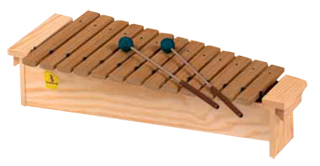
I think people vastly underrate the importance of body shape. Everyone knows Strats, Teles, Les Pauls, etc. don't sound alike even if you use the same pickups in all of them, and people will attribute this to everything but the body shape, such as the wood type, the bridge, scale length, set vs screwed on neck, and so on. A straight piece of wood essentially as a single resonance, that's the principle of a xylophone

257459.jpg


but since a guitar is not a straight piece of wood, it has multiple resonances at various frequencies

guitarStandWave.gif


so that when you strum an "A" chord on one guitar, it may be louder or quieter on that particular guitar depending on whether the shape of the guitar compliments (sympathizes with) or ignores (fails to create a standing wave) the constituent frequencies of that chord. The sum of the multiple resonances is what gives the guitar a voice. That's also the reason fat people tend to have have deeper, richer voices than thin people. Here's hoping Sam Smith and Adele don't take dieting too seriously.
 
Last edited:
Re: Order the following Tone influencers. What do YOU think?

I think it should go without saying that overall tone can't be described in a hierarchical "most to least", because the whole thing is a system where changing one thing slightly effects everything else. These different elements don't exist in isolation, to where they can be "stacked" for a predictable end result.

Right on. Many talk about a "sum" where there should be a "product". A cartesian one, perhaps.

Yet another story is that guitars are always at least slightly unpredictable, which is one small but important difference between making instruments and making furniture.
 
Re: Order the following Tone influencers. What do YOU think?

Amps, Instument cable length, your fingers, picks, and strings... That other stuff is just for looks.
 
Last edited:
Re: Order the following Tone influencers. What do YOU think?

Speakers
Amp
Guitar
Pickups
Strings
 
Re: Order the following Tone influencers. What do YOU think?

The question is flawed in that a lot of these things make no difference until they make a huge difference or mean nothing on their own. It is the sum of the parts. Personally I would rank neck wood as the generally single most important piece. Other features, like body thickness, which I would rank as important are absent. But some differences between common things are negligible, so unless you sub in something drastically different it doesn't seem to matter.

I view most of these things as filters. In some of the ways, wood, and joints and such are absorbing energy. So if you use similar features it will appear to not matter.

Some things like pole piece spacing are meaningless until they are a problem which means they would need to be ranked as irrelevant and probably #1 at the same time.

Some things, like strap and action effect sound by how you play. I actually play better with a leather strap, rough on the back. It stays in place better for me, improves ergonomics, and thus I play better.

Some things, like body shape of a solid body, seem to be utterly meaningless. For example, a Peavey mantis and predator with the same pickup sounded functionally identical. (Same basic neck, same thickness, poplar body, same trem, etc)

Some things, like a strat trem versus a hardtail can be quite dominant. However, the type of hardtail seems to make little difference to me. The gauge of the strings and spring adjustment in a trem can make a huge variation in the sound. In short, a guitar is an interactive system, so everything tends to effect everything else. Mostly I agree with TimmyPaige though.
 
Re: Order the following Tone influencers. What do YOU think?

Hi, for me i think guitar sound is more pretty good.
 
Back
Top