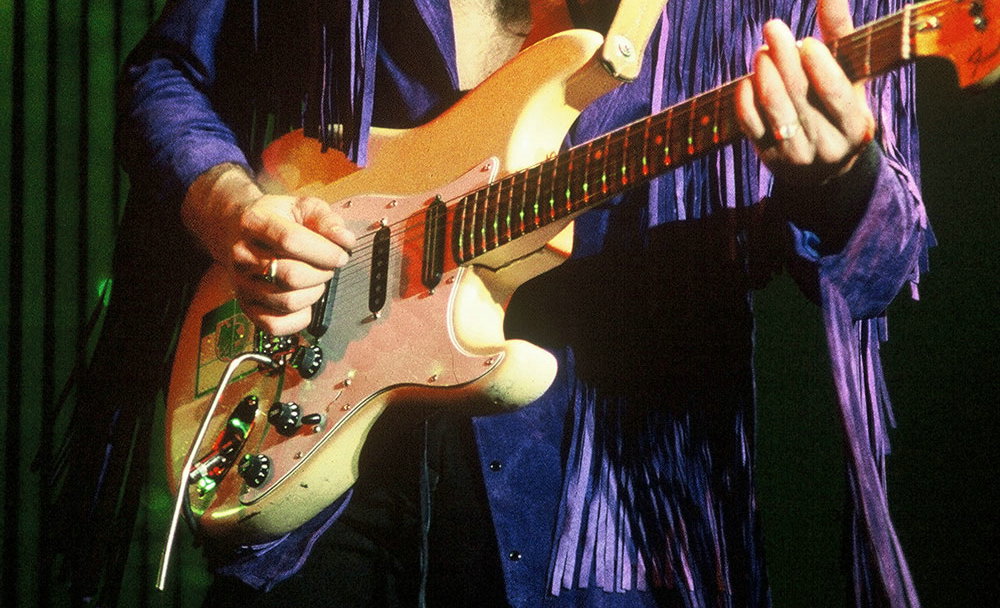
set neck/bolt on

Re: set neck/bolt on

Those are high-end guitars, borrowing a number of features that Leo Fender designed in the 1950's to reduce production costs. Granted, the expensive Andersons & Fenders are built with high quality materials & workmanship, but the bolt-on neck concept was developed for financial, not tonal reasons (Leo wasn't a player). The fact that some of you guys have since come to love the look & sound that those cost-cutting features produced, doesn't make its origins any more noble.

This is actually quite truthful......:laugh2:


he is right, the bolt on neck was meant to make things easier and cheaper. And it did. It turned out that it sounds good too. If it's good, it's good...if it's not, it's not.
 
Re: set neck/bolt on

I like bolt ons.... I like the upper fret access, and it helps me tell where the high frets are without looking. :)
 
Re: set neck/bolt on

Here's Blackmore's solution, you can see the black epoxy:
blackmore-glue-pickup-bl-xl-450.jpg


It is fairly likely that Blackmore just pulls a lot harder and hence need more stable necks. In one of the youtube videos about his guitars you can also see him like a Strat with a smooth heel that looks like a neck-through (although it probably isn't).

I don't think there's too much of a difference when properly executed, but another problem with bolt-on, apart from the pocket spacing that was already mentioned, is that sometimes people put quite a bit of paint into the neck pocket, so that parts of the neck rest on paint and other parts have less contact.


Where exactly does he put the 2 screws?

The web site with the pics on EVH''s guitars is down, but someone had pics of the EVH Frankenstrat disassembled when it was undergoing repairs. The 2 additional screws were simple self tapping drywall screws, in line with the current screws, going lengthwise (Take a look at the EB/MM Axis with the 5 screws- you'll get the idea). The screws are flush mounted with the wood, then covered by the neck plate. EVH did this to all of his guitars, the Kramers, etc... there's a guitar he gave to a famous tennis player friend of his- a Kramer - that has the neck plate drilled out for the 6 screws.

On Blackmore- the "neck through" strat is one of the Fender signature models that was made- it had a set neck. Blackmore did alot of the work on his guitars, such as the scalloping, as well as the epoxy. The scalloping is pretty sloppy, as is the epoxy work. If he didn't have sloppy neck joints on his guitars (particularly that white one), he wouldn't have needed to glue it. Up until the mid 80's it wasn't unusual to have neck shifting on Fender style neck joints, even to this day it sometimes happens. The neck joint on my Malmsteen is very tight and the neck never moves or shifts.

That pic of Blackmore is interesting in that he's using blade pickups which wasn't seen before. I've seen him use stock Fenders, SD Quarter pounders, Schecter pickups and Fedner Lace Sensors. Maybe he's using Hotrails?
 
Re: set neck/bolt on

One of the big pros of bolt-on construction, if you're talking about a very standard design like a Tele or Strat, is that the necks are very strong compared to a mahogany Les Paul neck, and if it something goes wrong with one of them, they're pretty easy to replace.

...I don't think that's to do with construction but materials.

To me the BIGGEST advantage of a bolt neck is increased adjustability actually... the ability to shim the neck. I've played a lot of guitars (acoustic and electric) that played horribly because the neck was at the wrong angle, and there was just nothing you could do.

Anyway, I don't believe that glue kills resonance, I mean look at alembics. Besides, if you look at how much of the surface of an LP has glue on it it ought to sound like crap. Oh wait :laugh2: JK sorta.
 
Re: set neck/bolt on

Try a set-neck schecter with a strat body.You need some EMGs to get tone.it sounds like plastic unplugged!

That is usually because most neck-throughs are mostly maple. That's not going to be better than a maple neck on maple body. My Ibanez Musician was exactly as you describe. Pretty useful for self-defense, though.

However, there are guitars that have neck-through with more organic sounding woods, Firebirds come to mind.

%%

I also fail to understand how people who insisted on a one-piece body on a Les Paul or Strat 10 minutes ago can suddenly accept a 5 or 7 layer neck through without a blink of an eye when it's a neck-through.
 
Re: set neck/bolt on

Those are high-end guitars, borrowing a number of features that Leo Fender designed in the 1950's to reduce production costs. Granted, the expensive Andersons & Fenders are built with high quality materials & workmanship, but the bolt-on neck concept was developed for financial, not tonal reasons (Leo wasn't a player). The fact that some of you guys have since come to love the look & sound that those cost-cutting features produced, doesn't make its origins any more noble.

I agree that it was originally introduced to save money. However, that hasn't a thing to do with whether it's entry-level or top of the line.

BTW, I apologize, as I did not mean to insult you in my previous post.
 
Re: set neck/bolt on

Except its not "wood-on-wood" contact. The wood has a finish on it, that acts as a barrier as much as glue does.

Bolt-on necks shouldn't have finish in the neck pocket...like set-necks shouldn't have big-ass gaps, like in the production Gibson pics. Set neck is far easier a construction method because the customer can't see what going on beneath and you can just fill up everything with glue. Those facts do not make set necks superior


The advantage of glue is that it seals the air space between the neck & body. Whereas with a bolt-on, unless it's really well done, and even on unfinished wood, will have many small gaps throughout the fit.

That's an advantage over two improperly constructed neck joints. It doe not make the set neck superior. Like I said, it's just easier. I know you won't find it in many Fenders, but builders such as Warmoth and USACG offer high quality necks that have super tight fit, at a fraction of the price as compared to most Gibson's.
 
Re: set neck/bolt on

That pic of Blackmore is interesting in that he's using blade pickups which wasn't seen before. I've seen him use stock Fenders, SD Quarter pounders, Schecter pickups and Fedner Lace Sensors. Maybe he's using Hotrails?

No, these are Bill Lawrence pickups. I am not sure what model, I have seen "L-450/XL-450" being claimed.

Note that they are flat, hotrails are rounded.

He never uses hot pickups, all his pickups are very thin sounding (he uses normal Lance Sensor gold, pretty vintage sounding normally) and he fixes it up with the LCR network and some other gizmos before his amp.
 
Re: set neck/bolt on

I know you won't find it in many Fenders, but builders such as Warmoth and USACG offer high quality necks that have super tight fit, at a fraction of the price as compared to most Gibson's.

I was referring Fenders when I was taking about bolt-ons, as I've known enough guys that have had problems with them. Putting shims in may get the neck angle right, but I gotta think that's going to impact sustain & tone. Obviously there's manufacturers that make excellent fitting necks/pockets with both bolt-ons & set necks. I was talking about the common brands that the big retailers carry (Fender, Squire, Gibson, Epiphone, Ibanez, Schecter, etc) which don't always have a sterling reputation in this.
 
Re: set neck/bolt on

Fender Japan doesn't put paint in their neck pockets... Then again there's paint in the pocket of my 66 Mustang (didn't use a "paint stick" like fender would have when I refinned it) and the headstock still vibrates for days, when I shimmed the neck I was worried about getting less resonance and really didn't...

If there is a difference in sustain I doubt anyone could hear it, the differences in sustain between certain Fenders and Gibsons is probably down more to the myriad other differences.

...could just be that maple is a better wood for necks than mahog. ;) who knows

The worst neck pockets I've EVER seen were on 70s Fenders that you could literally stick a dime in the gap... but Fenders from before and after I've never really seen an awful one...

...and even the dimegap ones still had resonance, if you think about it I don't think you need THAT much area contact between two parts of a guitar for it to be resonant. Think of how little contact there is in the trem parts of some guitars.
 
Re: set neck/bolt on

The worst neck pockets I've EVER seen were on 70s Fenders that you could literally stick a dime in the gap... but Fenders from before and after I've never really seen an awful one...

Whether it's a dime, or a business card, a gap is a gap.

It's all the same if there is no contact.
 
Re: set neck/bolt on

I was always under the impression that TOO tight could cause the neck joint cracks you see so much...

No word on what that does for tone, but I think people are more nitpicky about contact than they need to be... (that said all mine are fairly tight, but yeah I've played Broncos with those sorts of gaps that sounded fine)
 
Re: set neck/bolt on

I was always under the impression that TOO tight could cause the neck joint cracks you see so much...

Those are usually just finish cracks, and it happens on a lot of necks whether they are tight or not. There are hardly any production bolt-ons that have tight neck pocket specs, but you will see those cracks all the time. I don't see neck wood expanding enough to do any damage. Wood can expand, but wood also gives...particularly when it's unfinished like in the neck pocket.
 
Re: set neck/bolt on

I would think IMHO, that for most decently-built and maintained guitars neck-repair is a non-issue. Sustain and tone I believe the issues you can't get away from. I think a decently-built bolt-on sustains well enough for my tastes, but I find I miss the bolt-on sound if I'm away from it too long. :)
 
Back
Top