The Humbucker Archive: DiMarzio, EMG, BKP, Suhr & Duncan Tested – My Notes & Comparison Samples (Long Read)

belensky

New member
INTRO

Recently, I went down a fairly deep pickup rabbit hole. It started when I bought a guitar that sounded great acoustically, but for a long time I couldn’t find a pickup that truly unlocked its full potential. Out of frustration, I ended up ordering quite a few pickups from Thomann, hoping to find the ones that worked best for me.

That experiment gradually grew into something much bigger than I expected. I ended up testing and recording a large number of pickups—mostly DiMarzio, but also EMG, Fishman, Suhr, and a few Duncans—taking notes along the way and making simple A/B recordings of each in the same setup.

Along the way, I picked up a couple of other guitars, which led to a few side experiments—finding the right pickup for each instrument and testing them with different tunings and string gauges.

One thing that surprised me is that pickups often feel much more different under your fingers than they sound on a recording. With the right pickup, everything just feels easier to play (and I’m not talking about gain levels). With the wrong pickup, you still sound like yourself, but it’s more difficult to get there. I noticed that my playing subtly changed almost unconsciously—tiny nuances in articulation—to compensate for the pickup and try to pull the tone I had in my head.

Since I had already accumulated a lot of notes, mini-reviews, and forum posts, I decided to organize them into a readable format and share them here in case it’s useful for anyone else curious about pickups.

I also made several YouTube comparison videos. They’re quite long, but I added timestamps below each video so you can easily jump between pickups. Think of it more as a pickup reference database than an educational or entertainment series. However The best way to compare pickups, though, is to listen to the raw, uncompressed files, so I’ve uploaded them to Google Drive—anyone can drop them into a DAW and hear them exactly as intended.

raw files download link
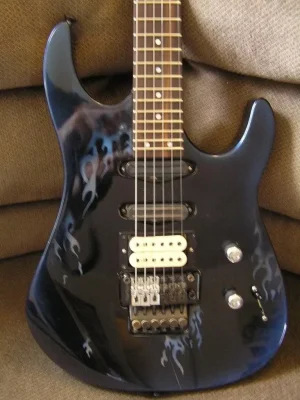
Recording chain: Everything was recorded using a 1988 Hamer Chaparral: Floyd Rose, alder body, bolt-on maple neck, rosewood fingerboard. It’s a relatively neutral-sounding guitar without any noticeable frequency bias. The cable was 6 meters. The amplifier was a Diezel Herbert (second channel, all knobs at 12 o’clock), running into a Diezel 4×12 cabinet. No boosts, processing, or effects were used. Pickup height was set precisely to 2 and 2.5 mm (1st and 6th strings pressed at the last fret). The guitar was tuned to Eb, with 10.5–48 strings. Everything was recorded into a UAD Apollo at 96 kHz.
Samples: I settled on eight very simple but varied riffs and clichés. Everything is organized into numbered folders with the tempo specified, so anyone can load them into their DAW and listen in any order and at maximum quality. All guitars were recorded as double tracks in two versions: guitars only, or a mix. For me it’s very important to hear how a pickup behaves in a full arrangement, so I recorded not only dry riffs but also a very simple backing of drums and bass (the folder titled “Mix”). The bass and drums have minimal processing: a bit of reverb and compression,. The guitars remain completely unprocessed — a very raw mix with no actual mixing work done.


Below you can find my notes. Obviously, there’s a lot to read, so I’ve broken everything into sections for easier skimming. I hope I don’t come across as too opinionated or blunt—these are just my personal experiences, which don’t have to match yours. I’m not here to sell, preach, or promote anything. I also apologize in advance if I post a lot about DiMarzio, EMG, or Fishman here on a Seymour Duncan forum—I know some Duncan fans might raise an eyebrow, so I hope I don’t rub anyone the wrong way.


REVIEW

For the sake of discussion, I loosely grouped humbuckers into a few broad categories (distortion, modern, hot-rod, hot PAF, and PAF). The categories are obviously subjective, but they make the comparisons a bit easier to follow.


Distortion — high-output, old-school raw pickups designed to squeeze maximum gain out of amps that aren’t extremely high-gain, such as a Marshall Plexi or a Marshall JCM800. They typically use large ceramic magnets and have fairly high DC resistance, usually around 13–17kΩ. Typical examples include the DiMarzio Super Distortion, DiMarzio X2N, Gibson Dirty Fingers, Gibson 500T, Seymour Duncan Invader, and Duncan Distortion. They tend to push all frequencies at once and often sound quite thick and somewhat loose. Think of a hairy, aggressive classic rock tone where the main priority is simply driving the amp harder.

Modern — similar output levels, but instead of raw hair and thickness, the focus shifts toward tight low end and clarity. These are more focused pickups designed to handle low tunings, fast percussive riffs, and dense mixes. They also typically use ceramic magnets, but with slightly lower DC resistance, usually in the 10–15kΩ range. Examples include the DiMarzio Illuminator, DiMarzio Titan, DiMarzio Dreamcatcher, DiMarzio D-Sonic, EMG 81, and Fishman Fluence Modern, as well as the Duncan Jupiter Rails, Duncan Scourge, BKP Juggernaut, and BKP Aftermath.

Hot-Rod — essentially variations on the Seymour Duncan JB formula. The classic recipe is an Alnico 5 magnet with around 15–17 kΩ of DC resistance. The idea was to take traditional Gibson P.A.F.-style pickups and push them to much higher output. They are typically more dynamic and less pushy than distortion-style humbuckers, but have a looser feel than the modern pickups mentioned above. Typical representatives include the Seymour Duncan JB, DiMarzio Tone Zone, DiMarzio AT-1, Suhr SSH+, Fishman Fluence Classic, and Bare Knuckle Holy Diver.

Hot PAFs — various takes on the “PAF on steroids” concept. Frequency-wise and dynamically, they are closer to classic PAFs (cleaner, leaner, tighter, and more open than a typical hot-rod pickup), but with more output and more body in the sound than a standard PAF. They usually measure around 10–14 kΩ of DC resistance and typically use Alnico 5 or ceramic magnets. Examples include the DiMarzio Fred, DiMarzio Norton, Gibson 498T, Seymour Duncan Custom, Duncan PATB-1, DiMarzio Transition, and EMG 85, BKP Rebel Yell

P.A.F. — various interpretations of the late-’50s Gibson P.A.F. design. Clean, airy, and almost single-coil-like in character. In reality, this category could easily be split into multiple subcategories, because there have probably been more PAF-style variations made than all other pickup types combined. They typically measure around 7–9 kΩ of DC resistance and use different Alnico magnet options (A2, A3, A4, A5). Typical examples include the Seymour Duncan Seth Lover, Seymour Duncan ’59, Seymour Duncan Jazz, DiMarzio PAF 36 Anniversary, DiMarzio Air Classic, Gibson Burstbucker, and Gibson Custombucker, BKP Stormy Monday.


Now let’s take a closer look at each pickup.

DiMarzio Super Distortion
a true classic. It often feels like this pickup can work in almost any guitar, rescuing even the most lifeless, dead-sounding instrument with its sheer output and authority. That said, if the guitar already has strong character and nuance, the Super Distortion can sometimes overpower it, downplaying the natural qualities of a good piece of wood.
It excels when you want big, dirty gain — a proper wall of sound. Despite what the EQ chart on DiMarzio’s site suggests, I found this pickup fairly bright. It has a lot going on at once: plenty of lows, mids, and highs. To its credit, among similar pickups like the Gibson 500T, Seymour Duncan Invader, and Seymour Duncan Distortion, the Super Distortion probably has the most balanced frequency response. Still, it drives forward with saturated mids.
Into my Diezel Herbert, it felt a bit too powerful and somewhat messy, since the amp already provides ample gain and compression — the Super Distortion just adds more of both. There’s a modern trend toward using more transparent, dynamic pickups and letting the amp handle the gain. I’d say the Super Distortion works best in brighter, relatively simple-sounding guitars (think alder). In darker or more complex instruments, it can get a bit too busy, at least by modern standards.

DiMarzio X2N

for a long time, I didn’t take this pickup seriously and didn’t even bother testing it. It seemed like an over-the-top, one-trick “Deathbucker.” Boy, was I wrong. Yes, it’s very powerful, but it has a cool, crunchy midrange and an overall surprisingly balanced voice. It sits well in a mix and doesn’t feel overbearing.
It sounds like a heavy hammer, but without weird frequency spikes. A genuinely great pickup with a strong personality. I love that it has a clearly defined character. It actually makes me want to build a dedicated old-school metal guitar around it — maybe something like a Dean V. To me, the X2N and the Super Distortion are pickups that have absolutely stood the test of time and earned their classic status.
 
Last edited:
DiMarzio Steve Morse
the first signature pickup DiMarzio made, all the way back in 1983. It’s somewhat similar to the Super Distortion, but the emphasis shifts from the lows and low mids up toward the upper mids. In theory, that should work well for tight downpicking metal rhythms.
In practice, though, this pickup is a good reminder to be careful with signature gear. What works perfectly for one player in their rig may not translate the same way for others. Compared to the Super Distortion, the Morse model feels much drier. The overall vibe is similar, but it loses some of the Super Distortion’s charm — it comes across as a bit peaky, stiff, and uninspiring. If the Super Distortion is a raw, juicy steak, the Morse pickup is overcooked, slightly burned meat.
Compared to other “tight” DiMarzio models like the Illuminator or Transition, the Morse doesn’t really offer any advantages. The dynamics feel a bit dull, the frequency balance is uneven, and the overall tone is somewhat boring. I see it as an early attempt at creating a powerful yet articulate pickup — a first draft of an idea that DiMarzio refined much more successfully in later years.

DiMarzio Evolution
the first signature model for Steve Vai. Online, it’s often criticized for being sharp and almost harsh, and honestly, that reputation isn’t baseless.
My take: imagine taking a Super Distortion, hitting it with a light boost, tightening up the low end and low mids, removing some of the dirt, and adding more harmonics with a hint of DiMarzio PAF Pro on top. The Evolution feels like a more modern (for the ’90s) continuation of the Super Distortion concept.
Playing riffs, the Evo feels like a sharp axe, while the Super Distortion feels like a sledgehammer. Tight low end, plenty of useful mids, bright and slightly aggressive top end — personally, I miss a bit of airiness. It has a very distinct late-’80s to ’90s shred vibe.
It’s a very stiff-feeling pickup without much give. It’s not an easy pickup to play, but if you have a strong picking hand, it really sings and cuts. It sits well in a mix — as long as you’re doing your part. That said, the dynamic range feels fairly limited. Again, a good example of how specific signature gear can be.

DiMarzio Evo2
a logical continuation of the first Evolution. The Evo2 is more versatile, calmer, more dynamic, and overall more mature sounding. The top end isn’t as piercing, and the dynamics feel more natural. The general ’90s shred DNA is still present.
On the right guitar, I’d say the Evo2 is one of the most versatile high-output pickups: it has power, but also nuance. For me, it lacks a bit of “wow” factor — it does everything well, but nothing is truly jaw-dropping. I’d put the Evo2 in brighter, drier guitars (alder), while the original Evolution might suit softer-sounding instruments better (basswood). In a mix, they’re similar, but I lean toward the Evo2 because the original’s sharp high end can be a bit much.

DiMarzio D-Activator
an attempt to capture active pickup tone in a passive format. Overall, it’s pretty successful. It continues the idea of a tightened-up, drier Super Distortion, but without strange dynamic quirks or obvious frequency imbalances. A solid, powerful metal pickup.
Does it sound like the original EMG 81? To a degree, yes — but the EMG still has its own unmistakable voice and compresses in a very particular way that sits effortlessly in a mix. The D-Activator feels beefier and wider. My take: if you want active tone, just go active. Among DiMarzio passives that offer a tight EMG-81-like low end and fast feel, there are also models I personally find more interesting.

DiMarzio Titan
a logical culmination of the idea of “drying out” the Super Distortion for modern low tunings. The Titan sounds genuinely cool. You could think of it as a blend of the Illuminator and the Super Distortion.
The low end is tight, but the aggression and saturation are closer to the Super Distortion. The Titan has bright lows and a smoother top end. With heavier strings, it feels punchy and responsive for fast rhythm work, but on leads it becomes smooth and vocal. That contrast is unique.
However, it’s a very picky pickup. I tried it a couple of times in different guitars, and it didn’t click in my Hamer with Floyd Rose. In a Dean ML with a fixed bridge, it was outstanding. For me, the Titan is basically the Super Distortion for the 21st century. It seems to work better in more even-sounding, perhaps slightly polished guitars(think typical PRS), where you want to introduce a bit of grainy but tight texture.

DiMarzio Mirage
in short, a slightly refined Titan. The sweet, usable guitar mids are pushed forward a touch, and some excess frequencies are trimmed away. The differences are subtle — think of a producer taking an already great tone and adjusting the EQ by half a dB.
Titan feels a bit rawer; Mirage feels more finished. I’d honestly pick whichever one is cheaper or easier to get. There’s a sense of evolution and improvement in the sound that makes both very compelling.

DiMarzio MegaDrive
visually similar to models like the D-Sonic or Crunch Lab, with a single rail coil. In fact, it’s the granddaddy of a whole bunch of pickups (Steve Special, Blaze, D-Sonic, and all of John Petrucci’s signature pickups trace their lineage back to this one). The MegaDrive is a discontinued model, though small runs occasionally appear — I still see them from time to time on Thomann.
I have similar complaints here as with the Morse model: stiff dynamics and a somewhat woolly, unfocused tone. In 1983, it was probably a cool new concept, but compared to modern designs, it just doesn’t stand out. To me, the MegaDrive didn’t quite pass the test of time.

DiMarzio Steve’s Special
a continuation of the MegaDrive and Blaze concept. This pickup focuses on clarity and width, with emphasized lows and highs and a noticeably scooped midrange. The idea is a big, clean, hi-fi sound, but in practice it comes across as somewhat hollow.
John Petrucci used it in the mid-’90s, and those recordings sound great. Compared to more recent models like the DiMarzio Illuminator or Titan, which deliver similar clarity but with more depth and tightness, the Steve’s Special feels dated. It works if you’re chasing that nostalgic mid-’90s prog-metal vibe or if you need to tame an overly mid-forward guitar.
Initially, I even liked it, but that didn’t last long. It’s not a bad pickup, but time has moved on and pickups have evolved. Today, it’s mainly suited for players chasing Petrucci’s ’90s tone or for masking a guitar with too much midrange.


DiMarzio D-Sonic
essentially a refinement of the Steve’s Special concept, but more natural and better balanced, without that scooped midrange or hollow tone. It was developed in the early 2000s with low tunings and thick strings in mind. The pickup addresses the typical muddiness of thick strings by having one coil do most of the work while the other is noticeably weaker. This gives it an unusually tight and focused feel for a passive pickup.
I liked it quite a lot. It works great for fast riffing — conceptually, it’s similar to Bill Lawrence pickups, but in my opinion, the D-Sonic is far better. There’s a slight cold, metallic edge to it, but lead tones are surprisingly sweet and don’t pierce the ears. Overall, it strikes a good balance between fullness and tightness, combining depth, clarity, and a focused low end.
On the downside, compared to more modern pickups like the Illuminator, Crunch Lab, or Titan, the D-Sonic sounds somewhat flat and one-dimensional. It lacks fine detail, nuance, and the depth of contemporary designs. For the early 2000s, it was a cutting-edge, very interesting pickup.
Today, however, there are models that achieve the same tight, focused sound with more depth and tonal richness.


DiMarzio Crunch Lab
a fairly common pickup, many of you have seen it in various Music Man JP guitars. For a long time, I actually liked it — especially the 6-string version, particularly through a Mesa/Boogie. It’s powerful, yet not as dirty-sounding as a Super Distortion. It has depth, clarity, and density, with a pleasant, tight, and well-controlled low end.
However, over time, I’ve come to notice traits I’m less fond of. Despite the tight low end, it has a very pronounced and dominating lower-midrange, and it lacks a certain sparkle and “air.” I liked it on brand-new strings, but once the strings lost their brightness, the Crunch Lab immediately felt dull to me. Under the fingers, it also feels slow and somewhat stiff — fast, tight riffing (think Metallica-style) isn’t very comfortable. It lacks liveliness and a certain spark, so when you play, you’re constantly trying to extract that energy by hand… but it’s just not there. What it does have is density, depth, clarity, and controlled sound. Dynamically, it reminds me of a heavyweight boxer: powerful but not agile.
The 7-string version has all the same issues as the 6-string, only more exaggerated: muddiness, sluggishness, and that dominating lower-midrange. Crunch Lab works best with amps that have plenty of sizzle, like a Mesa.
Its neck partner, the DiMarzio Liquefier, is a very compressed, overpowering, dark, mid-heavy pickup. It works okay for fast leads, but that’s about it.
 
Last edited:
DiMarzio Illuminator
for me, it’s a near-perfect modern metal pickup. It corrects many of the Crunch Lab’s shortcomings: tight, articulate, powerful, yet lively and responsive. It handles low tunings well and has a nice compression, so the pickup sounds “together.” The Illuminator feels more textured and deeper-sounding than the D-Sonic, while being faster and more agile than the Crunch Lab.
If I had to nitpick, it can sound slightly sharp high up the neck, but in a mix that edge actually helps it sit properly. Overall, it’s a very strong, versatile pickup.
The Illuminator and Titan are actually quite similar. The Illuminator is brighter and more sparkling, while the Titan is more textured and aggressive but has a smoother top end. Interestingly, the 7-string version of the Illuminator is brighter and livelier than the 6-string.


DiMarzio Dreamcatcher
at first, seeing DiMarzio’s EQ chart and the listing on the last Dream Theater albums and John Petrucci’s solo record, I was initially skeptical. That turned out to be a mistake. The Dreamcatcher sounds like an Illuminator but much more like a well-produced, nicely mixed record. All the desirable frequencies are emphasized, and any harshness is smoothed out.
The output is slightly lower, which gives the pickup more depth and dynamic range. In a mix, it lands exactly where you want the guitar to sit. Very thoughtfully voiced, with excellent balance. It’s one of my favorite pickups — I really can’t pinpoint any cons. It sounds great in standard tuning as well as in baritone tuned to A.
Probably, if someone is used to a rawer sound, the pickup might feel a bit “too good sounding”, but to me, it just sounds like a very well-designed, carefully balanced pickup with an almost perfect frequency response.


DiMarzio Tone Zone
The story behind this pickup goes back to around 1990, when Music Man was building a Van Halen signature guitar (which later became the Music Man Axis) and DiMarzio was making the pickups. The goal was to replicate Eddie Van Halen’s favorite Duncan JB, which he had accidentally damaged: a string slipped onto the pickup, leaving one coil partially broken and reading 180 kΩ instead of the normal 8 kΩ. Despite the damage, it sounded punchier than the original.
Through trial and error, DiMarzio finalized two prototypes for Van Halen: one with symmetrical coils and another with deliberately unbalanced coils. Eddie liked both pickups equally, and the final choice was made by Steve Lukather, who was in the studio with him. The balanced-coil pickup went into the Music Man Axis, while the unbalanced version was released a year later as the Tone Zone.
Despite its thick, powerful low end, the Tone Zone is surprisingly agile. Thanks to the coil imbalance, interesting and musical harmonics emerge. It’s a juicy, saturated, textured, and very cool rock pickup. Unlike a Duncan JB, the Tone Zone’s lows never get in the way. It’s very dynamic and responsive, with plenty of give, and if the lows feel excessive, they can be easily tamed with a Tube Screamer. Fun fact: Dream Theater’s Images and Words was recorded using a Tone Zone, and the guitars there sound exceptionally tight.
I completely understand why this pickup is so commonly paired with Ibanez RGs. The combination of a Floyd Rose bridge, thin maple neck, basswood body, and thick polyester finish tends to eat a lot of tone and produces that characteristic shrill “Ibanez sound,” which the Tone Zone smooths out. The result is a balanced, rock-ready tone that’s easy to work with.


DiMarzio Air Zone
a fairly rare pickup. I picked it up out of curiosity, and it definitely didn’t disappoint. The Air Zone feels like a Tone Zone in a velvet glove: the lows are a bit tighter, the highs more open, the output slightly lower, and the overall clarity and dynamic sensitivity are much greater. Surprisingly, even fast, tight down-picked riffs are very easy to play. The Air Zone is one of the most responsive DiMarzio pickups I’ve used — you can shape your sound almost any way you want just by varying your technique.
When choosing between the Tone Zone and Air Zone, I’d unambiguously go with the Air Zone. It does everything the Tone Zone can, but more musically and with greater ease. It has quickly become one of my new favorites. I really enjoyed this pickup, even though, like the Dreamcatcher, I was initially skeptical.


DiMarzio AT-1
The Andy Timmons signature pickup is based on the Duncan JB, which he used for a long time. According to him on the Tone-Talk podcast, it’s essentially a Duncan JB with a more pronounced low end and a cleaner, more controlled high end.
Compared to the Tone Zone, the pickups are fairly similar. The Tone Zone is more textured and saturated, while the AT-1 is cleaner and more precise. If your guitar’s acoustic tone is a bit plain and you want to add character on top, I’d prefer the Tone Zone for its extra richness and liveliness. If the guitar already has a strong inherent tone, the AT-1 is more neutral and less coloring.

Suhr SSH+ and DSH+
sound much drier and cleaner than a typical Tone Zone, without the slow, compressed feel of a Duncan JB. Suhr pickups are dry, honest, moderately tight and offer a lot of clarity. They reminded me a bit of the Fishman Classic.
I currently have one on my Suhr, and I’m very happy with it. That characteristic dryness and clarity is really a hallmark of Suhr pickups. However, that same dry and “honest” quality makes them less universally forgiving: if the guitar itself isn’t great, the pickup won’t mask flaws the way a juicy Tone Zone can.


BKP Silo
The Silo follows the same basic specs as a JB or Tone Zone: Alnico 5 magnet, around 17kΩ resistance. Compared to the Tone Zone, it’s wound symmetrically, and the pole pieces are in two rows of screws, giving a more even, massive tone. And massive it is — if the Tone Zone is thick, juicy, and dynamic, the Silo is a fatter, stiffer version with less harmonic richness. The lows are enormous; I’ve never heard anything quite like them. That gives it a certain appeal, but it’s physically demanding to play, and I’m unsure what are the benefits of having so much low end before any gain stages of an amp, usually its opposite people use Tubescreamers to cut so me the low to keep sound fast and tight. Anyway its a Cool a bit unusual pickup, but I don’t see much advantage over a Tone Zone or Air Zone unless you specifically want that stiff, huge low end.


DiMarzio PAF 36
among cork-sniffing boutique PAF enthusiasts, this pickup is often dismissed as ordinary or not particularly authentic. A common claim is that DiMarzio specializes in high-output metal pickups and that PAF designs are not really their thing. Sure, it’s built in a modern way: it uses a four-conductor cable for coil-splitting, an Airbucker design for a softer magnetic field, and additional iron in the bobbin to shape the high end — something DiMarzio calls “Virtual Vintage.” Unlike many original PAFs or boutique replicas, it is also wax-potted, which some purists consider almost sacrilegious.
In terms of sound and feel, however, it is a very good pickup. The PAF 36 sits on the slightly hotter side of the PAF spectrum. I compared it with a very authentic ThroBak DW‑102B P.A.F. replica, and to my surprise they sounded and felt quite close. The ThroBak had a bit more dynamic response and air, slightly more three-dimensionality, but the overall feel was remarkably similar. It seems both companies achieve a similar tonal result while arriving there through completely different design philosophies.
One interesting observation is that in a loud, acoustically resonant Les Paul–style guitar, good PAF pickups like these can deliver just as much perceived impact and gain as a high-output modern humbucker in a superstrat with a Floyd Rose. This suggests that pickup “output” — especially with unpotted designs — is not just about measured millivolts, but a combination of EQ, dynamic range, and the acoustic properties of the guitar itself. long story short.
Long story short, the DiMarzio PAF 36 is a great pickup that can easily put many other PAF-style pickups to shame.


DiMarzio Fortitude
very similar to a bridge PAF 36, with the Fortitude being slightly beefier (a very small difference). Its highs are a bit tamed, with more emphasis in the upper mids, whereas the PAF 36 feels more airy. On a Les Paul–style guitar, I preferred the PAF 36 without question. What really turned me off was that in a mix, the Fortitude started to reveal some unpleasant upper-mid harshness. It’s possible the Fortitude might sound more favorable on hot-rodded Telecasters, but on a Les Paul, I didn’t hear any advantage over the PAF 36, which is also cheaper and more widely available.

raw files download link
 
Last edited:
DiMarzio PAF Pro
when it was released in 1986, it was a very interesting reinterpretation of a typical PAF, with slightly brighter and more articulate voicing. It’s a good pickup; I really liked its frequency response. However, as a bridge humbucker, it could use a bit more output, otherwise you have to really hit the strings to get the sound. In short, it’s a solid, neutral-sounding pickup. I can’t say anything bad about it, but it’s not particularly outstanding either — a high-quality, reliable workhorse.


DiMarzio Fred
essentially very similar to the PAF Pro, but with slightly more harmonic content and output. On its own, especially when playing rhythm parts at home, it’s tight, clear, and dynamic, with a responsive feel under the fingers. However, in a full mix, much like the Fortitude, some unpleasant upper-mid harshness becomes noticeable.


DiMarzio Mo’Joe
essentially a slightly beefier version of the Fred. I tested it briefly and it didn’t stand out particularly. If the Fred is a characteristic, dry, aggressive, biting PAF, the Mo’Joe is similar but with a subtly different low end and more emphasis on the lower mids.


DiMarzio Norton
unlike its relative, the Air Norton, the standard bridge Norton is surprisingly overlooked and rarely seen. I’ve only seen it on Siggi Braun Victor Smolski signature model. It hardly ever appears in stores or on the used market. That’s a shame, because it’s actually a very good pickup — a modern “hot PAF” that combines the fatness and richness of a Tone Zone with the clarity and fullness of a DiMarzio Fred.
There are a few reasons for its undeserved lack of popularity:
1. No signature association — Unlike most DiMarzio pickups, which are either artist models or strongly associated with one, the Norton exists on its own.
2. Competition with the Gibson 498T — Its formula is quite similar: PAF-style winding, 12kΩ, Alnico 5. But the 498T is a popular, proven pickup that few want to swap out, leaving little incentive to buy a Norton.
3. Super-versatility — In DiMarzio’s broad lineup — from the aggressive Super Distortion, through the tight Illuminator, juicy Tone Zone, and dynamic PAF 36 — the Norton sits squarely in the middle. It handles almost everything well, but doesn’t specialize.
The result is a very solid, versatile pickup — better than some more popular models — and an excellent choice if you only have one guitar and want something that covers a wide range of tones.


Seymour Duncan Parallel Axis original (PATB‑1)
I used to really like this pickup, and it was my main pickup for over seven years. Back in the day, it felt like a perfect “PAF on steroids.” Tonally, it’s close to a ceramic Duncan Custom but more lively, with better clarity on top and a more playable feel.
Over time, I outgrew it. In a band mix, it often felt either too prominent or too recessed, though it delivered excellent results in the studio.
I eventually moved on because, like many classic Duncans, it has a dry low end, lacks air in the highs, and feels somewhat stiff. Dimarzio pickups, by contrast, seem to have more balanced highs and lows and feel easier to play—at least on my particular rig.


DiMarzio Transition
Steve Lukather signature pickup that largely flew under the radar, though it is arguably one of the most distinctive-sounding pickups DiMarzio has ever made.
The Transition is essentially a hot PAF built around a ceramic magnet, with a very tight and focused low end. It may be the tightest-sounding DiMarzio pickup, capable of competing with EMG, Fishman, or passive high-gain models like the Illuminator and Titan in terms of low-end control. Its voicing, however, leans more toward a vintage PAF than a modern metal pickup. Compared with a typical PAF, it has noticeably higher output while retaining similar openness, more body, and a PAF-like dynamic response. Compared with modern pickups like the Illuminator, it carries more raw, aggressive energy.
In a mix, the Transition cuts through with strong upper mids and a clear top end, but without the harsh edge associated with the Fred or the metallic buzz sometimes heard in pickups like the D-Sonic or the Gibson 500T.
The main drawback is that some players may find it too aggressive, with a pronounced upper-mid presence. It is probably not the best choice for very bright or thin-sounding guitars. The voicing can also be something of an acquired taste: when I first installed it, my reaction was essentially “what is this thing?”, but by the next day it had become one of my favorite pickups. To me, it is an excellent choice if you want to capture the raw, aggressive character of a ’59 Les Paul in a Superstrat format.
In many ways it feels like a continuation of the PAF Pro → Fred → Norton concept — just executed more effectively.


EMG 81
a classic case of love and hate. The internet often criticizes EMG pickups for being sterile, harsh, and one-dimensional. But an enormous amount of great-sounding music has been recorded with EMGs. Bands like Metallica, Rammstein, Judas Priest, and Bullet for My Valentine, as well as players like Zakk Wylde and Steve Lukather, have used EMGs extensively. One could even argue that more recorded metal guitar tones come from EMGs than from any other pickup brand. So, to loosely quote Paul Reed Smith: we shouldn’t let “internet people” tell us how to build guitars.
When playing alone, the EMG 81 can sound somewhat unpleasant. But in a recording or live context, that same seemingly one-dimensional tone suddenly sits exactly where the guitar should be. It doesn’t interfere with the bass or drums, handles palm muting extremely well, and tends to stay clear in a dense mix. In my own experience, EMGs consistently delivered great results when playing live. That said, the pickup strongly favors either high-gain tones or completely clean sounds.
Another interesting point is that the EMG 81 is not actually as loud or powerful as many people assume. Compared with something like the DiMarzio Super Distortion or other high-output passive pickups, passives tend to shout across the entire spectrum — lows, mids, and highs — with many resonant peaks. That produces a powerful but sometimes less controlled sound. The EMG 81 works differently: the distortion character comes from a focused upper-mid attack and a crisp, slightly “crunchy” tone. Its frequency response is flatter and more controlled; there are fewer highs and lows. The 81 is mainly about strong upper mids, so I would be careful about installing it in guitars that lack pronounced low end and low mids. In essence, if a powerful passive pickup behaves like a shotgun, an active pickup behaves more like a sniper rifle — different tools for different jobs.
There is also a common stereotype that EMGs make every guitar sound the same. In reality, EMGs — like any distinctive pickup — have a recognizable character, but the instrument still matters. A Les Paul with EMGs will not sound like a Stratocaster. I own several guitars with active pickups, and the differences between instruments remain just as noticeable as with passive pickups. In fact, I found that the EMG 81 can be quite picky about the wood of the instrument: with some guitars it sounds mediocre, while with others it sounds excellent.


EMG with 18v or more
to me this is absolutely unnecessary and can actually hurt the pickup’s performance. A higher supply voltage increases the preamp’s noise floor, and there are reports of pickups and pedals being damaged when run at higher-than-intended voltages. I know EMG states that their pickups can accept up to 27V, but there is no reason to unnecessarily stress the internal preamp in the long run.
The compression and slight clipping of a 9V-powered EMG 81 are an integral part of its character. If you play palm mutes lightly, everything stays clean; hit the strings harder or press your palm down more firmly, and you get clipping and a more saturated sound.
With a passive pickup, there is a similar effect with palm muting: muting the strings harder and digging in more increases the low-end response. Active pickups, however, naturally have less low end, so you cannot really control that aspect; instead, you control saturation and clipping. An EMG running at higher voltage loses that character. You get a kind of “bottomless” response — no saturation from clipping and no noticeable low-end push like you get from a passive.
In that sense, running an EMG at 18V or higher can actually reduce the perceived dynamics and output, because you lose the ability to control the preamp’s saturation and clipping. I should add that here I’m talking about EMGs in electric guitars. With bass guitars the situation is different; 18V systems are much more common there and often make more sense.
 
Last edited:
EMG 81x
Comparing the standard EMG 81 with the EMG 81X, the main difference is in the preamp. The original 81 sounds slightly more saturated, with more harmonic content and clipping. The 81X is a bit more open in the highs but has less compression, fewer harmonics, and slightly lower output. In practice, the differences are small; in recordings or live playing, the distinction is minimal. At least, I didn’t hear much difference comparing my 2002 EMG 81 to my 2010 EMG 81X.
I prefer the regular 81 because it’s a bit louder and feels better when switching between hotter passive pickups and EMGs. If you want a more hybrid passive/active approach, there are better options designed specifically for that concept, such as the Hetfield set, Jim Root set, or 57/66 set.
A quick note about the active tone knob included with the EMG X Series: that circuit reduces the signal by roughly 3 dB and drains the battery faster than the pickups themselves. A regular passive tone pot works just as well, without killing your tone or draining the battery.


EMG 85
essentially an active interpretation of a hot PAF/PAF voice. More open highs and less trimmed low end compared to the 81. The 81 has more interesting midrange harmonics; the 85 is smoother and cleaner.
It works well in both bridge and neck positions. In the neck especially, I like that it avoids the usual muddiness. It stays articulate and handles fast playing very well.
Another important aspect of EMG actives is that they use weaker magnets than typical passives. As a result, the string vibration isn’t dampened as much by magnetic pull. Guitars with EMGs often have slightly longer sustain compared to passive setups.

EMG 81 TWx, EMG 89/89x
I strongly recommend avoiding some coil-splitting variants, such as the EMG 81‑TWX. While the general voicing is similar to the EMG 81, the output is noticeably lower and some of the character is lost; these pickups sound weaker and muddier.
The EMG 89/89X is okay as a neck pickup. It’s slightly brighter than the EMG 85, which it’s based on, and the ability to switch to the single-coil noiseless EMG SA is really useful. However, it lacks the body of the EMG 85 and sounds harsh and weak in the bridge position.
By contrast, I had great results with the EMG 57/66 TW. I haven’t compared them directly to the regular 57/66 set, but after testing the 57/66 TW against a good dozen passive and active pickups, I didn’t feel like I was missing anything — unlike my experience with the 81‑TWX and 89/89X.


EMG Het Set
Hetfield’s signature pickups, a very interesting set. To my ears, they really sound like a hybrid between passive and active pickups. In terms of volume, they are noticeably more powerful and lively than classic 81/60 or 81/85 sets — really loud, think Dimarzio X2N. At the same time, thanks to their “active” design, they perform much cleaner than many high-output humbuckers.
Hetfield pickups are more percussive and quick, broad sounding with more low end, more highs, and an interesting, slightly boxy midrange, making long, down-stroked riffs like Master of Puppets easier to play. One notable feature is that the magnetic structure of the Het Set is more like passive pickups (magnet + six pole pieces), whereas the 81 uses rail-style magnets. Rails generally give a smoother, more even tone, while the Hetfields’ pole pieces sound slightly rawer.
Overall, I consider this a very worthy set that deserves attention, especially if you’re not crazy about the 81 or want a different take on active pickups. They seem to favor brighter, tighter-sounding guitars. I had great results with them in my Korina Dean Cadillac tuned to C Standard, whereas I didn’t care for them in a thicker-sounding Jackson RR tuned similarly low. As a neck pickup, it’s thicker and fuller than a typical EMG 85, works well for sustaining solos, handles clean tones nicely, and doesn’t get muddy.
One thing I should mention: the bridge pickup is quite noisy — noisier than an 81 (to the point that I once returned a set thinking it was broken). To be fair, most active pickups — especially hybrid models — are actually noisier than passive pickups, assuming proper shielding and that all grounds are wired correctly


EMG JR Daemonum
Jim Root’s set seems like a mix between the 81 and Het Set, with a bit of its own character. Compared to the 81, it has a bit more raw grind—more highs, more lows—more of everything. It’s louder than the 81, but not as loud as the Hetfield set. JR are raw in a good way: nothing boomy or harsh, but not smooth either. To me, they feel like an EMG designed specifically for low tunings. Great pickups overall; they feel more percussive and a bit less “passive” than the Het Set.
Unfortunately, the bridge pickup hums like crazy (much more noticeable during pauses than the Hetfield). The neck pickup is good, but not as jaw-dropping as the bridge, which I really like. I wish they had spent a bit more time turning the neck pickup into something truly special.

raw files download link

EMG 57/66 TW
This is one of my favorite EMG sets. They sit right in that “Goldilocks” zone for hard rock and metal humbuckers. I can’t easily pinpoint a passive equivalent. The 57/66 has a PAF-like vibe, but it’s clearly much hotter.
Compared to something like the EMG 81, which has a relatively flat and focused EQ, the 57/66 pushes a lot of different frequencies at once, more like a strong passive pickup so they perceive being hotter than 81. At the same time, they retain a level of clarity that many high-output passives struggle with. There is a lot going on in the sound: they feel big but still very tight, they have some give under the fingers yet remain fast and responsive, and they stay clear without becoming harsh.
They can easily nail “that EMG sound,” but they are capable of lot mre. For anyone interested in exploring active pickups, I would strongly recommend starting with the 57/66 rather than the traditional EMG 81/85 Pickup Set. The 81/85 is a classic combination, but it is far more specific in character and, arguably, a bit dated compared to the versatility of the 57/66.
One thing to keep in mind is that they still sound like active pickups—perhaps more like a perfect hybrid, combining active clarity and tightness with a familiar passive feel.

Fishman Fluence Classsic
This was my first Fishman set and I was quite pleased with it. Each pickup offers three voices.
Voice 1 (PAF)
The first mode sounds like a classic PAF, but slightly more articulate and open, with a more controlled low end. The result is a “cleaned-up,” perfected PAF without unpleasant artifacts such as excessive clank. The neck pickup also has a slight single-coil-like attack, which is typical of many good PAF-style pickups.
Voice 2 (Hot Rod)
The second mode on the bridge is a bit hotter. It has something in common with pickups like the Seymour Duncan JB or the DiMarzio Tone Zone, but it feels more controlled and balanced—closer in spirit to something like the Suhr SSH+ Humbucker.
The neck pickup in this mode reminds me somewhat of the DiMarzio Air Norton, though Fishman reinterpretation didn’t particularly impress me. Personally, I would say this neck voice is the weakest part of the set. It feels a bit too clean, a bit piezo-like, and lacks some of the chewiness and saturated character that good passive neck pickups often have.
Voice 3 (Single-coil)
The third mode is the single-coil voice. It has a nice Strat-like tone with a good balance between glassiness and body. However, despite all the Fishman technology, it still sounds somewhat like a mix between a traditional single coil, an EMG SA Single Coil Pickup, and a typical split humbucker. There is still some hum, but noticeably less than with most single coils. The bridge single-coil voice retains good body and does not sound thin or weak, which often happens with Strat-style bridge pickups. They also handle gain quite well, though they are not quite as expressive and deep as something like the Suhr V60 Single Coil Pickup.
Overall, the Fishman Classic set is very good. All three modes are genuinely usable, especially if you want a versatile guitar, although the differences between the voices are not as radical as one might expect. This is largely a matter of physics: the Fluence technology can alter coil parameters on the fly, but the magnet type, physical strength, and size remain the same.
One drawback I noticed is that all Fishman pickups seem to have a particular feel under the fingers. It is difficult to describe, but they can feel slightly more “static” and less lively than either passive pickups or some of the better versions of EMG actives.
 
Last edited:
Fishman Fluence Modern
Like the Classics, I tested the newer Modern version with three voices. Unfortunately, after the Classic set I had fairly high expectations, and this set ended up being a disappointment.

First (Active) Voicing – Bridge Pickup
This voice is essentially similar to an EMG 81X Active Humbucker—perhaps slightly cleaner and tighter, with that typical “quacky” modern metal character. Despite the hype, I did not hear anything particularly special compared to EMG. If anything, they might handle lower tunings a bit better than the standard 81, but that’s about it.
Second (Passive) Voicing – Bridge Pickup
Here Fishman appears to be aiming at the style associated with the Bill Lawrence/Seymour Duncan Dimebucker. On paper, combining two iconic metal tones in one pickup sounds like a great idea. In practice, resulting voice feels stiff and somewhat muffled, lacking air and liveliness.
Neck Pickup Voicings
The neck voicings were almost identical. I had to concentrate carefully to hear any real difference between V1 and V2. That was probably the biggest disappointment and ultimately what led me to return the pickups.
Single-Coil Voice
After being disappointed with the humbucker voices, I did not spend much time evaluating the single-coil mode. My impression was similar to the single-coil sounds from the Fishman Fluence Classic Humbucker set: a decent option, but more like a blend between a traditional single coil, something like an EMG SA Single Coil Pickup, and a split humbucker rather than a fully convincing Strat-style single.
The set gave the impression of a somewhat rushed or unfinished product. The active voicing is good, and the single-coil option is decent, but the passive voice falls short. It does not really sound like a convincing passive pickup and, frankly, does not even sound like a particularly good pickup on its own. In the end, there are better options within the Fishman lineup and also better alternatives among EMG pickups.


Fishman Mick Thomson Signature
I was about to return the Fishman Moderns when I learned about the release of the Mick Thomson pickups. Fortunately, Thomann already had them in stock. As a long-time fan of Slipknot, I decided to give them a try, and they did not disappoint.
First (Active) Voicing – Bridge Pickup
The typical “quacky” character I noticed in the Modern Fluence set is gone here. Mick’s bridge pickup sounds like a refined version of the classic EMG 81 Active Humbucker. It feels more polished and seems to reward precise playing. Compared with pickups like the EMG JR Daemonum Pickup Set, the Thomson bridge has more carefully shaped EQ and less raw aggression, resulting in a tone that feels more mix-ready. In a double-tracked recording, the two pickups would complement each other well if you want slightly different tones on the left and right guitars.
Compared to the EMG 81 or the EMG 81X, the Thomson bridge sounds more open. The low end is tighter and clearer—which helps with lower tunings—while the highs feel less congested. The EMG tends to emphasize upper mids more and can sound slightly more “lo-fi” by comparison.
Second (Passive) Voicing – Bridge Pickup
The passive voice here is far more usable than the passive mode on the Modern set and complements the active voicing much better. Tonally it resembles a tighter version of the Gibson 498T Humbucker or a more focused take on the DiMarzio Tone Zone Humbucker. It remains aggressive and open and still works well even in lower tunings such as C standard.
Neck Pickup Voicings
Active Mode (V1) feels like a hybrid between the EMG 85 Active Humbucker and the EMG 60 Active Humbucker—thick, clear, and free of mud.
Passive Mode (V2) moves toward a more vintage-style PAF character. One of the strengths of this set is that the voicings are genuinely different and complement each other well.
Single-Coil Voice
The sound is similar to what I heard in the Fishman Fluence Classic and Modern sets: good and usable, though not exactly the same as a traditional Strat pickup. Still, it is a worthwhile additional option.
Additional Features
The set also includes a bass boost/cut option on the bridge pickup. The effect is subtle and feels more like a change in response than a dramatic EQ shift. It helps the guitar feel fuller, especially during slower, heavier riffs where some active pickups can feel too dry.
Overall Impression
The Mick Thomson set feels like what the Modern Fluence pickups should have been. The voicings complement each other well, the tones are practical and balanced, and the overall design feels much more complete.


Update 2026

raw files download link

DiMarzio Super PAF Ceramic
A very recent release. Cynically, one could say it’s a Super Distortion repackaged with a slightly altered magnetic structure. There’s also some legal context here: DiMarzio owns trademarks for double-cream bobbins and the word “PAF” (not “P.A.F.”). Other brands can’t legally sell uncovered double-cream pickups or use “PAF” in the name.
With Gibson reportedly challenging those trademarks, DiMarzio appears to be reinforcing its position by expanding its PAF-named lineup — including this Super PAF Ceramic.
On paper, it shares much with the Super Distortion: a large ceramic magnet, brass baseplate, and similar DC resistance. But the output is slightly lower, and the EQ curve shows reduced low mids and high mids.
Despite some official claims that it sounds identical to the Super Distortion, my ears disagree. The Super PAF feels slightly more coil-asymmetric, cleaner, and less saturated, with tighter lows and more refined highs.
Where I sometimes found the Super Distortion overly saturated into a modern high-gain amp, the Super PAF feels exactly right. It doesn’t need a boost, responds well under the fingers, and sounds more controlled.
Is it genuinely different internally, or partly a legal strategy? Hard to say. But I preferred it over the standard Super Distortion.


DiMarzio D Activator-X
Feels like a hybrid between the X2N and D-Activator concepts. Slightly less saturated than the original X2N, but tighter and more controlled. Where the old X2N aimed to overpower any amp, this version feels designed to maintain clarity and speed while still delivering impact.
It reminded me somewhat of the EMG Het Set in attitude — aggressive but structured. Both this and the X2N impressed me more than the regular D-Activator.


DiMarzio Dominion
I initially expected quite a lot from this pickup. I thought it would be something like an aggressive metal version of the DiMarzio Air Zone / Tone Zone, or maybe something like a raw Dreamcatcher. But I was pretty disappointed.
I’m not even sure how to describe it properly. There are juicy pickups with a lot of controlled, reasonably tight low end — like the Tone Zone, Air Zone, or Dreamcatcher — and then there are pickups where the low end is just stiff and woolly and gets in the way. The Dominion falls into that second category.
Frequency-wise, it’s a pleasant-sounding pickup, but that low end really makes you want to use a boost pedal to cut lows. Or, like in Mark Morton’s case, play it through a Mesa Mark IV, where the pre-gain EQ allows you to shape the signal before distortion (cutting low end in a similar way to a boost pedal).
If you slightly change your pick angle, it becomes somewhat manageable, but the pickup is really just not for me. I played it for a couple of days, but never really liked it.


DiMarzio Utopia
A new Steve Vai pickup made for the new Ibanez PIA guitar. According to the description, it is based on the DiMarzio Evolution. There are indeed some shared elements, but I liked the Utopia much more.
The Evolution feels somewhat stiff, unresponsive, and harsh-sounding. The Utopia has a more controllable dynamic range, and the top end is more pleasant. It’s a nice pickup that sits somewhere between EVO1 and EVO2. But, as with EVO2, I didn’t feel anything jaw-dropping here.


Seymour Duncan Jupiter Rails
I grabbed this out of curiosity to check out Duncan’s new models. I really liked this one: it’s very balanced and sounds right. I don’t know who voiced it, but the pickup gives the impression it was designed with an understanding of tone and a clear concept, not just “let’s wind 14 kΩ of wire and throw in a ceramic magnet for power.”
The Jupiter feels good under the fingers, and the lows don’t get in the way like with a JB or Dominion. Sonically, it’s similar to the DiMarzio Transition, but smoother and less raw. Overall, it’s a very good modern pickup.
The downside is the price — at Thomann it costs about twice as much as a typical DiMarzio. I can’t really justify spending twice as much for a pickup that sounds good but isn’t any better than the DiMarzio Transition.
 
Last edited:
Rail Minihumbuckers

All rails tested in the neck position. I think with rails it’s hard to truly replicate the sound of a good humbucker. A humbucker has wider coils, so it senses a larger portion of the string, which gives “that tone.” Trying to reproduce that same sound in the size of a small single-coil always requires compromises. All rails have some inherent drawbacks—they usually sound a bit mid-focused, lacking rich lows and open highs. By themselves they can be quite persuasive, but if you AB a rail mini-humbucker against a good humbucker, the difference is immediately noticeable.


Dimarzio Air Norton S
too compressed and muffled—probably fine if you want smeared fast passages with lots of gain, essentially turning the guitar into a sort of synthesizer. To my taste, it doesn’t pair well with bright bridge pickups; switching between bridge and neck feels awkward. On the bridge, everything is bright and cuts through the mix, then switch to the neck and it’s like you’ve changed guitars… it just didn’t work for me.


Dimarzio Pro Track
better than the Air Norton S. It definitely has a PAF-like vibe and nice dynamics. Playing in the middle of the neck, it might fool you into thinking it competes with a real PAF humbucker, but higher up on the high strings, notes start to disappear in a mix because the top end is heavily rolled off, which isn’t a trait of real PAFs.


Dimarzio Chopper
my favorite among the rails. It doesn’t try to be a single-coil or a humbucker; it comfortably sits in between. Frequency-wise, it reminds me of old PAFs or P90s: single-coil attack and openness, but with humbucker-like fullness. Shredding passages come out clearly, with a nice “violin-like” tone (hard to describe). Because it’s brighter than the Pro Track, it retains clarity high on the neck and pairs well with bridge pickups. I’ve had excellent results pairing Chopper with a DiMarzio Transition or DiMarzio Dreamcatcher in the bridge. While all rails feel like compromises to me, the Chopper is an exception—it doesn’t try to be anything but itself.


Dimarzio Fast Track 1
tested very briefly; it’s a good-sounding, hotter single-coil. It doesn’t sound exactly like a classic SC, more like a mix between a traditional single-coil and something wider and cleaner, almost like an HD version, similar to an EMG SA.


Dimarzio Cruiser
I didn’t really get this pickup. It feels like a weaker tamed version of the Fast Track 1, without clear benefits. It doesn’t sound any closer to a traditional single-coil than the Fast Track 1, lacks the wider dynamic range of a single-coil, and doesn’t have the weight of other rail mini-humbuckers. To me Cruiser doesn’t pair well with bridge humbuckers. I know Andy Timmons uses Cruisers and AT-1 and sounds great, but with Cruisers he relies on quite a few pedals to make them work.


Conclusions

Pickups are more about feel than sound. Each one responds differently under the fingers, which doesn’t always translate directly to the mix. With the right pickup, everything feels natural; the wrong one can still sound good, but it takes more effort.

Finding the right pickup is like getting a tailored suit. Buy a few, test them over extended periods and in different situations—through various amps, recording setups, and live playing. Keep the ones that fit your playing style, rig, and that specific guitar and wood combination. The ones that don’t work go back to the store. Over time, you learn which models suit you. I have a few favorite DiMarzio and EMG pickups, and I mix and match them depending on what I want each guitar to do.

Pickups are only a small part of the overall chain—guitar woods, construction, bridge type, scale length, pot and cap values, cables, amps, speakers, microphones, mic placement, and preamps all shape tone. Because of these variables, it’s difficult to recommend anything concrete. Some pickups work better with certain amps, cabs, and guitars, while others shine in different contexts. Scale length, woods, string gauges, and, most importantly, the hands of the player all matter. The most honest advice is to try as many pickups as possible and learn what works for you—there’s no substitute for playing your own rig.

Small tweaks in your guitar can often make as much difference as immediately buying a new pickup. Check your volume pots: “500k” pots can vary ±10–20%, affecting treble and output. Higher values brighten the tone and emphasize the pickup’s resonance; lower values produce a more mellow sound. I personally prefer 500k or slightly higher. Wire in a tone knob, even if you don’t plan to use it. A tone cap softens harshness and shifts the pickup’s resonant peak, giving a sweeter, more three-dimensional tone. Experiment with different caps—Orange Drops for high-output DiMarzios, oil caps for vintage-style pickups are a good starting point.

Finally, use good cables. About 6 meters (~20 feet) works well for distortion, and shorter 3 meters (~10 feet) for clean tones. Longer cables can subtly tame harsh distortion.

In the grand scheme—amp, cab, speakers, room, cables, string gauges, scale length, bridge, pots—a pickup is just one tiny variable among many. Pickups matter, but feel and context are everything.

So far, my personal favourites (in no particular order) include: DiMarzio Transition, DiMarzio Dreamcatcher, DiMarzio Illuminator, DiMarzio Titan, DiMarzio Air Zone, DiMarzio PAF 36th Anniversary, DiMarzio Chopper; Suhr SSH+, SSV, V60; EMG 57/66, EMG SA, EMG Het Set, EMG JR Daemonium; ThroBak DW102B, ThroBak 52/’54 P90; Fishman Fluence Mick Thompson, Fishman Fluence Classic.
 
Last edited:
that is a ton of info! i agree about the steve morse bridge pup. i wanted to like it, but it fell flat for me. steve sure makes it sound great though!
 
that is a ton of info! i agree about the steve morse bridge pup. i wanted to like it, but it fell flat for me. steve sure makes it sound great though!
I agree, he does. But like his signature amp and guitar, they are so suited to him only it seems. I love Steve's sound, btw, I just didn't like his pickups when I tried them.
 
My thoughts about the Dominion - I'm surprised you found the low-end problematic in this one. While my point of comparison tends to be the JB, which has a low-end some people find problematic, I feel like the Dominion is much tighter, drier, and faster-feeling. To be honest, I find the Dominion to have a much more "Passive EMG 81" vibe than the D-Activator, which I feel has a wider soundstage. I even remember I used to have (maybe I still do, I'll try to look for it) a clip where I'm comparing the Dominion with the JB in one of my guitars, and the JB comes off as much fatter and fuller.

I honestly would've liked the Dominion so much more if it had less of those DiMarzio vocal "Aw" mids.

But FWIW, I find your description on the Suhr SSH+, the AT-1, and the Crunch Lab spot on with my experiende.
 
My thoughts about the Dominion - I'm surprised you found the low-end problematic in this one. While my point of comparison tends to be the JB, which has a low-end some people find problematic, I feel like the Dominion is much tighter, drier, and faster-feeling. To be honest, I find the Dominion to have a much more "Passive EMG 81" vibe than the D-Activator, which I feel has a wider soundstage. I even remember I used to have (maybe I still do, I'll try to look for it) a clip where I'm comparing the Dominion with the JB in one of my guitars, and the JB comes off as much fatter and fuller.

I honestly would've liked the Dominion so much more if it had less of those DiMarzio vocal "Aw" mids.

But FWIW, I find your description on the Suhr SSH+, the AT-1, and the Crunch Lab spot on with my experiende.
That surprised me also. I was hoping it would be something like a mix of EMG and Tone Zone, but it’s definitely not that. Maybe it’s rig-dependent, but Dominion definitely had more JB-esque (problematic stiff low end) feel than the majority of DiMarzio. One thing to keep in mind: I almost never use Tube Screamers, which naturally make every pickup more compressed and forgiving.
 
Back
Top