Tru Oil used for bodies, Black Korina in particular

Re: Tru Oil used for bodies, Black Korina in particular

For toxicity purposes, wood is classified one of two ways:

Irritant: will produce some type of skin or respiratory reaction. Cocobolo is a good example of an irritant wood.

Sensitizer: may not produce any reaction at all, but prolonged exposure will develop sensitivity to the point where the wood becomes an irritant. Pine and cedar are good examples of sensitizer woods.

For more info, here's a link to a list of common woods and their associated health risks
 
Re: Tru Oil used for bodies, Black Korina in particular

I used a can of spray-on shellac on my swamp ash body (very porous, korina's probably similar). I even half-assed the sanding job, used no filler, and it still turned out great. Sorta looks like a Gibson Faded finish if you're familiar with those, in which the pores are still visible.
 
Last edited:
Re: Tru Oil used for bodies, Black Korina in particular

As far as grain filling and coloring the wood, it depends on what you use for a grain filler. When filling the grain all you're doing is filling the pores of the wood, not the actual grain.

A lot of times I use 5min epoxy to grain fill, in which case I color the wood first, fill the grain, then top coat. You won't see the epoxy, just the colored wood. It's best to thin the epoxy with denatured alcohol or naptha to about half its viscosity. It'll take a few coats to completely fill the grain, but you won't have to worry about the filler shrinking as it could with other fillers.

If I'm building something other than a guitar body, I'll use an oil (Boiled Linseed or Tung Oil) and a very fine (600 grit) wet/dry sand paper to create a slurry of wood dust and oil that will fill the grain nicely -- same color as the wood.
 
Re: Tru Oil used for bodies, Black Korina in particular

I have never heard about Limba being dangerous.

Me either. Any wood can cause a reaction depending on you as much as the wood. Some people are allergic to certain woods and others are not. However, most woods can cause you to develop a sensitivity with repeated prolonged exposure.
 
Re: Tru Oil used for bodies, Black Korina in particular

Me either. Any wood can cause a reaction depending on you as much as the wood. Some people are allergic to certain woods and others are not. However, most woods can cause you to develop a sensitivity with repeated prolonged exposure.

That is probably the case.
 
Re: Tru Oil used for bodies, Black Korina in particular

odie has it right when he says to fill the grain and then drop the dye right into the tru-oil. Thats the way i would do it
 
Re: Tru Oil used for bodies, Black Korina in particular

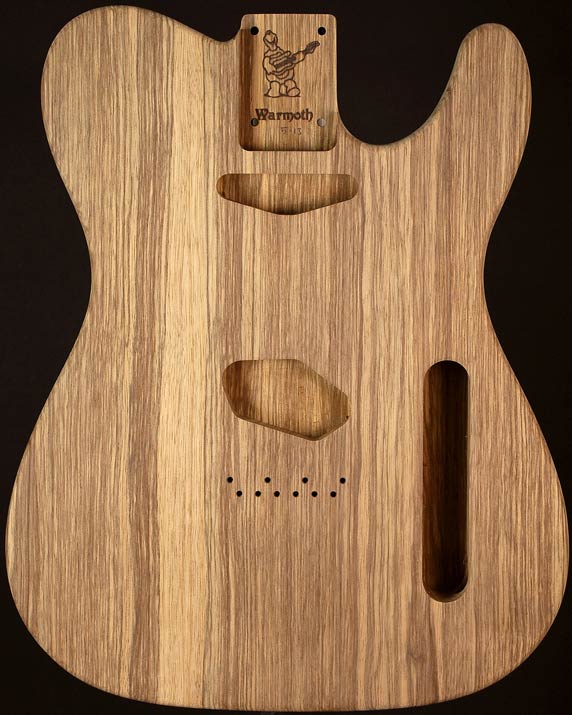
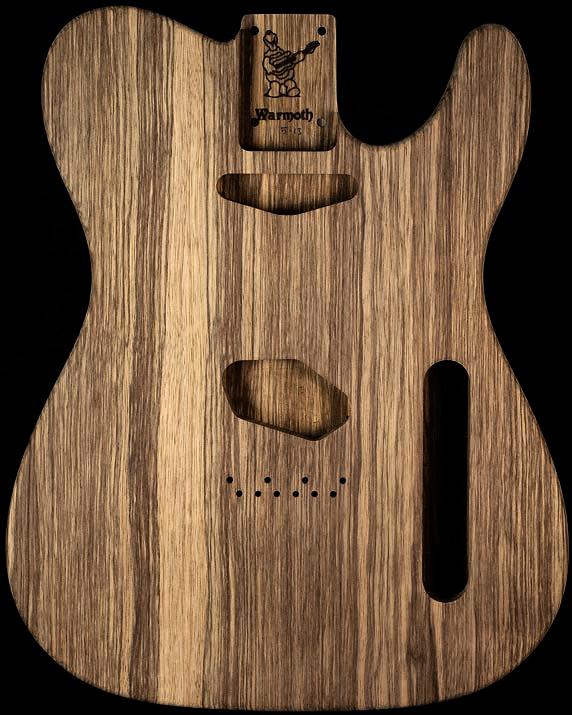
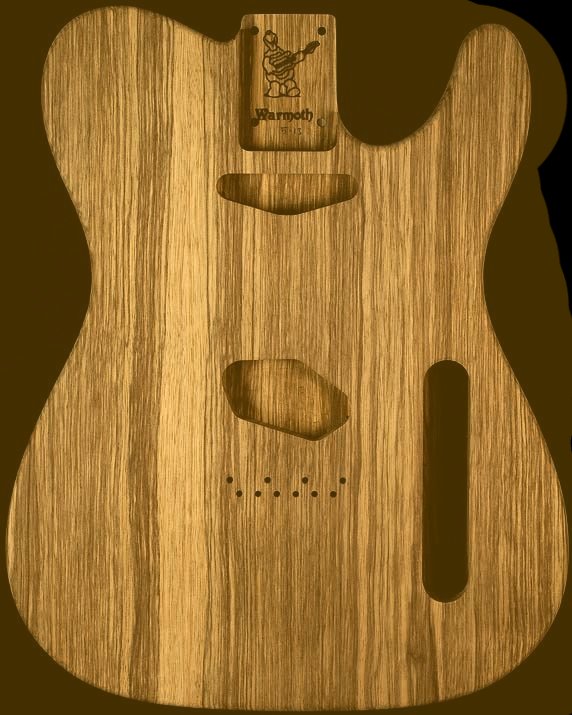
So here's the theory.

Original:
warmoth-korina.jpg


Grain enhance:
warmoth-korina_edit.jpg


Orange stain:
warmoth-korina_edit_stained.jpg
 
Re: Tru Oil used for bodies, Black Korina in particular

Stew-mac also says I can put the die into the filler.

Maybe that's more practical since I use a brush for the filler?
 
Re: Tru Oil used for bodies, Black Korina in particular

Stew-mac also says I can put the die into the filler.

Maybe that's more practical since I use a brush for the filler?

Well, if done right the filler will only be left in the crevices. the filler is not left on the entire body.
 
Re: Tru Oil used for bodies, Black Korina in particular

Putting the dye in the filler isnt going to really stain the top as the odie mentioned. i would stick with putting it in the 1st coat or 2 of tru-oil. Which reminds me of a good point, dont just dump the dye into the bottle of tru-oil. You only want to do 1 or 2 coats of color. That should give you sufficient color density. The rest you want to be clear coats to enhance the grain and color thats already there.
 
Re: Tru Oil used for bodies, Black Korina in particular

Putting the dye in the filler isnt going to really stain the top as the odie mentioned. i would stick with putting it in the 1st coat or 2 of tru-oil. Which reminds me of a good point, dont just dump the dye into the bottle of tru-oil. You only want to do 1 or 2 coats of color. That should give you sufficient color density. The rest you want to be clear coats to enhance the grain and color thats already there.

Yeah +1, I suggested dumping the dye into a wipe on bottle and using the Tru-oil spray bomb after a few coats of colored Tru-oil.
 
Re: Tru Oil used for bodies, Black Korina in particular

Putting the dye in the filler isnt going to really stain the top as the odie mentioned. i would stick with putting it in the 1st coat or 2 of tru-oil. Which reminds me of a good point, dont just dump the dye into the bottle of tru-oil. You only want to do 1 or 2 coats of color. That should give you sufficient color density. The rest you want to be clear coats to enhance the grain and color thats already there.

Thanks.

I still don't understand how the die can be effective after the filler is on. Wouldn't unfilled parts of the wood absorb more color than filled ones?

And are "die" and "stain" the same thing?
 
Re: Tru Oil used for bodies, Black Korina in particular

When you grain fill, all you are doing is filing up the open pores in the wood. Once the filler dries, you are going to sand the body again. You repeat this process until the wood is smooth (1-2 times will usually do it).

The stain will go down just like any other piece of wood.
 
Re: Tru Oil used for bodies, Black Korina in particular

Thanks.

I still don't understand how the die can be effective after the filler is on. Wouldn't unfilled parts of the wood absorb more color than filled ones?

And are "die" and "stain" the same thing?

The first question has already been answered.

As to the second question, dye and stain are not the same. The principal difference lies in the size of the pigments. Dye pigments are extremely small and will absorb into the the wood (to a depth of about 1/32" give or take). Stain, however, because of a much larger pigment size will not absorb into the the wood like a dye does, but will sit on the surface of the wood, lodging in the pores and the scratch pattern left over from sanding. Some stain manufacturers (like MinWax) add dye pigments to their stains to increase the effectiveness of their products, but the bulk of the colorant is stain pigments. You'll notice that the directions on a can of stain directs you to stir the contents thoroughly -- you have to stir all of the stain pigment off the bottom of the can. Open a can of stain that's been sitting for awhile and you can scoop the pigment off the bottom. Personally, I much prefer dyes to stains. The only downside to dyes is that they tend to not be as lightfast as stains -- they can fade with exposure to sunlight. The new H2O based dyes are much better in this respect but all dyes are susceptible to fading with UV exposure.

FWIW, some of the best dyes are the Transtint dyes created and sold by Jeff Jewitt (professional finisher). Here's link to his site. In addition to finishing products, it contains a wealth of information on dyeing and finishing a piece of woodwork, which a guitar body is.

http://www.homesteadfinishing.com/
 
Last edited:
Re: Tru Oil used for bodies, Black Korina in particular

Help!!!111

Sorry :)

I need to re-evaluate this piece of the puzzle. I bought this grain filler.
http://www.woodcraft.com/product.aspx?ProductID=818892&FamilyID=4493

I picked "neutral" as opposed to brown or mahogany.

But the "neutral" stuff is actually an off-white milky substance. I have applied it to a non-guitar project and it covers up the wood grain, even if I scrape a lot. I'm really not sure I can go forward with this particular product on the korina body.

What should I do? Transparent filler? Use a razor blade instead of plastic to scrape better?
 
Re: Tru Oil used for bodies, Black Korina in particular

Go to the Warmoth forum. All your finishing Q's can be answered there.

Scott
 
Back
Top