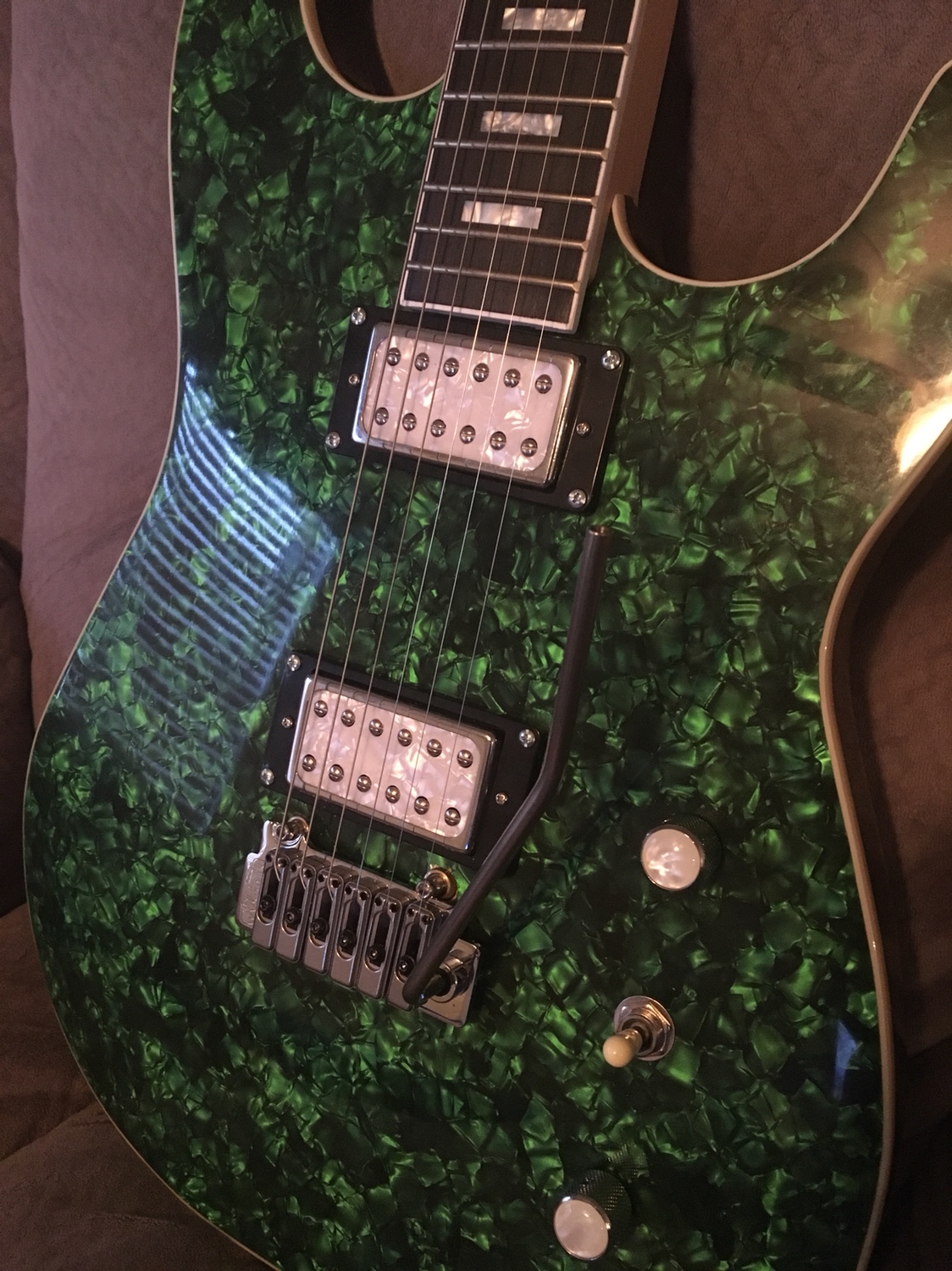
So mine is tilted right now for up-bend and works fine; wondering if anyone thinks there's a specified "right" way to do this or what might be different in my life if I set it parallel/floating instead.
If it were parallel, wouldn't you need it to be recessed to float? I don't mind a bit of tilt- on my Strat, I can pull up a minor 3rd and it stays in tune.
If it were parallel, wouldn't you need it to be recessed to float? I don't mind a bit of tilt- on my Strat, I can pull up a minor 3rd and it stays in tune.
Mine’s parallel (non-recessed) and works fine. Of course it’s a partscaster instead of a real Strat, but the rout’s the same.
It stays in tune fine in either direction (I have locking tuners as well) but I’ve noticed that there’s not a lot of travel available. Not a big deal to me since I barely use it and even then only for the occasional slight “wobble.”
I have no idea if there’s a specific “right” way to do it, but the OCD part of me likes to look down at a trem and see PARALLEL! [emoji848]
I like mine parallel and floating (2pt trem), well maybe a slight more than parallel is fine, but never the other way and never flush and most certainly never blocked.
Long ago I set up a friend's 90s Strat Plus with a parallel/float. No issues there; you can just back the post screws off and go. I don't remember specifics on how much travel was available vs. tilting but it makes sense that parallel would give reduced range vs. a typical tilt (unless you got crazy with neck angle.)
Part of me feels like experimenting but there's part of me that says "if it's not broke..." (Then I usually buy a new freaking guitar to experiment on.)
I prefer the bridge plate to be floating as close to the neck angle as possible (which is often flat, but not necessarily, depending on shims used and how truly the neck pocket is routed), and to also be high enough to pull up (which is mostly how I use my vibratos).
To start, the angle of the bridge plate is set using the springs. Then, the lowest string saddle should be as close to decked as you can get it without any interference from the adjustable bridge posts. Then pre-set the rest of the saddle heights based on fretboard radius. Then bridge height is set with the two bridge posts (two posts always kept at equal heights) to the string height that's good for that lowest saddle. Then the other saddles are individually adjusted as needed.
Mine is an ‘87 Standard, with the bridge tilted forward quite a bit, ala Jeff Beck. I used to fight keeping Fender bridges in tune, because I had them decked for down only. After utilizing Carl Verheyen’s method of setup, I can go nuts with it and no issues. My guitar plays better, sounds better, and stays in tune better floating forward.