
You are using an out of date browser. It may not display this or other websites correctly.
You should upgrade or use an alternative browser.
You should upgrade or use an alternative browser.
What makes you sound unique?
- Thread starter Chistopher
- Start date

weepingminotaur
Well-known member
I'll have you know that's not unique!My complete lack of talent and skill.


Phantasmagoria
watch where you point that sabre
I don't say my playing is "free" of anything that aligns with music theory. It's not like "I'm proud" of that. I just go about learning and playing in a way that is free from my having to gape at theory books for hours trying to memorize concepts that I will never have the slightest use for practically (circle of 5ths or w/e) and are imo only good for dorky discussions on forums. I mean I've come across my fair share of dudes who can talk theory all day long & then when (and usually.. if) they ever pick up their instrument and play it, it's shocking how terrible they play ...and by that I mean kindergarten level stuff ....which is cool, we can't all be Yngwie, but then try to maybe tone down the airs of superiority & elitism and the talking down at players who can, quite frankly "play" circles around you.I also think that both camps (theory and no theory) idealize the extent to which their playing is "free" of whatever it is they're trying to get away from.
Theory does'nt (can't) teach the super-basic stuff that's really important for players to even sound musical at all such as being able to bend properly to pitch, having decent vibrato, microtonal stuff or even adding harmonies. Cause if you have a tin ear and your trying to recall from your over-burdened brain what harmonizes with what (and can't remember)..the result can sound apalling. So while you guys say "you're still using theory no matter what". I can say the same about anyone who depends on theory and still has to use his/her EARS for everything pitch-related and more which makes up 99% of what is required to be able to even sound half-decent.
Also no one gives as much importance to stunning visuals as they should

^^ All places I have been to and all far more impressive in the flesh. Photo's don't do them justice, they absolutely can't capture the actual scale and majesty & the almost spiritual & sobering feel of being there at the scene of so many old bloody seiges & battles. I love trekking & exploring old forts. Learning about their history. It's a hobby of mine that I sadly don't indulge in much anymore...

Securb
One of Jerry's Kids
I can say the same about anyone who depends on theory and still has to use his/her EARS for everything pitch-related and more which makes up 99% of what is required to be able to even sound half-decent.
The difference is someone who has studied ear training knows what they are hearing, automaticlly no overthinking needed. I remember being drunk in an Irish pub and listening to the band it dawned on me the violinist was playing arpegios over the changes. Just like Jazz. It was an eureka moment and I instantlly had a better understanding of Irish folk music. The violinsit confirmed what I was hearing. I ended up having many beers after the set with the violinist and an awesome conversation about theory, Irish music and Jazz. Theory doesn't just teach us how to master our instruments. It also helps us understand what we are hearing and allows us to communicate with other musicians no matter what the style is.
Phantasmagoria
watch where you point that sabre
Studies ear training? You mean re-learned to follow/use/depend on their ears again after ruining them trying to get everything out of a book?The difference is someone who has studied ear training knows what they are hearing, automaticlly no overthinking needed. I remember being drunk in an Irish pub and listening to the band it dawned on me the violinist was playing arpegios over the changes. Just like Jazz. It was an eureka moment and I instantlly had a better understanding of Irish folk music. The violinsit confirmed what I was hearing. I ended up having many beers after the set with the violinist and an awesome conversation about theory, Irish music and Jazz. Theory doesn't just teach us how to master our instruments. It also helps us understand what we are hearing and allows us to communicate with other musicians no matter what the style is.
This is how it goes when you don't need to "study ear training" to use harmony because you've always used them (ears) for 'everything' since pretty much the get-go...
So how much does learning theory actually 'simplify' things in purely practical terms compared to just playing along/synchronizing to stuff for hours by following your ears?
Last edited:
Phantasmagoria
watch where you point that sabre
As for communication. I've played with plenty of bands besides my own as a guest for a song or two ...maybe a guest solo spot ..things like that and have never faced the slightest issue joining in anywhere because again ..all I need for that is my ears.
The only styles I'm interested in are metal & rock and I've never found I needed theory to understand what I have to do or communicate w/ anyone..
The only styles I'm interested in are metal & rock and I've never found I needed theory to understand what I have to do or communicate w/ anyone..
Chistopher
malapterurus electricus tonewood instigator
I think a unique aspect of the anti-music theory crowd is they insist everyone that learns any amount of music theory learns all of it. And they learn it through books. Me, and many of us here I'm sure, learned our theory almost purely through conversations with other musicians who also didn't sit down through a book.I just go about learning and playing in a way that is free from my having to gape at theory books for hours trying to memorize concepts that I will never have the slightest use for practically (circle of 5ths or w/e) and are imo only good for dorky discussions on forums.
Not everyone who learns the Nashville number system is also a classically trained Berkeley graduate who sits in their room all day reading textbooks on negative harmony
Also there is plenty of use for the circle of fifths, just not for guitar or bass players. Guitar can transpose by sliding up or down a fret, not all instruments can do that, hence the circle of fifths. I have never heard of w/e

Thumpalumpacus
Member
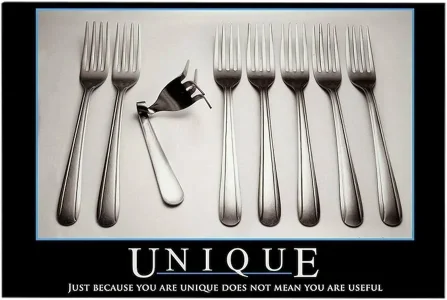
And just to keep this topic in perspective:
Securb
One of Jerry's Kids
Studies ear training? You mean re-learned to follow/use/depend on their ears again after ruining them trying to get everything out of a book?
Ear training teaches you how to identify certain intervals, chords, and scales in music. I wouldn't call it ruining them, more sharpening them. I don't understand your assertion that studying "ruins" a musician or their creativity. If it isn't for you, that's cool. If you do not understand the value, still cool, but on some level, we all learn from each other in some way. The knowledge of the instrument is passed from person to person. I do not think it is an issue if that knowledge is passed in verbal or written form.
Phantasmagoria
watch where you point that sabre
Why do you think Jazz guys don't bend notes
Phantasmagoria
watch where you point that sabre
Eh, I'm just pulling your legs,
But yes over-abundance of theory can result in both tin & cauliflower ear, devastating conditions in their own right, but over time you learn to live with them & it's not such a struggle anymore (or so I've heard)....especially if one uses a ear trumpet (which soothes & brings comfort)
But yes over-abundance of theory can result in both tin & cauliflower ear, devastating conditions in their own right, but over time you learn to live with them & it's not such a struggle anymore (or so I've heard)....especially if one uses a ear trumpet (which soothes & brings comfort)

GuitarStv
Sock Market Trader
I don't understand the argument that learning music theory hurts your ear for music at all. Learning more theory has helped me better hear things that are going on in the music I'm listening to. I'm able to figure out songs by ear much more quickly. I'm easier able to find the notes that I hear in my head when improvising over a chord progression. I don't think theory is necessary for developing a good ear, but don't understand how someone could argue that it hurts your ability to hear things.
(FWIW - I do have some cauliflowering on the outside of my left ear. Don't believe it developed from music theory though.)
(FWIW - I do have some cauliflowering on the outside of my left ear. Don't believe it developed from music theory though.)
Phantasmagoria
watch where you point that sabre
I don't understand the argument that learning music theory hurts your ear for music at all. Learning more theory has helped me better hear things that are going on in the music I'm listening to. I'm able to figure out songs by ear much more quickly. I'm easier able to find the notes that I hear in my head when improvising over a chord progression. I don't think theory is necessary for developing a good ear, but don't understand how someone could argue that it hurts your ability to hear things.
Well, tbh, I would'nt know cuz I've never learned theory
You could try a salve of crushed turmeric root & black seed oil, applied topically. It should dry up and disappear in a couple days (unless music theory's the cause)(FWIW - I do have some cauliflowering on the outside of my left ear. Don't believe it developed from music theory though.)
GuitarStv
Sock Market Trader
Well, tbh, I would'nt know cuz I've never learned theory
So then where are you getting the idea that learning theory makes a musician worse at hearing the music they're playing?
You could try a salve of crushed turmeric root & black seed oil, applied topically. It should dry up and disappear in a couple days (unless music theory's the cause)
With respect, you clearly don't know what you're talking about here. No salve of herbs will have any impact on cauliflower ear. There is nothing to dry up with a salve.
Caulflowering is caused by crushing or damaging the ear over time. (Mine is from a combination of boxing, judo, and jiu-jitsu over many years.) Fluid swells up between the two layers of skin that make up the ear when it becomes damaged. If you cut it open and drain the fluid, then staple or stitch the skin in the ear back together then the ear will typically return to normal. The fluid cannot be drained by applying a topical salve. If you fail to cut open and drain the ear, if you fail to fully drain the ear, or if when you stitch the ear back together the skin doesn't meet fully, then the skin in the ear calcifies and is slightly deformed permanently - causing permenant cauliflowering.
Phantasmagoria
watch where you point that sabre
haha...you got me. I'm a quack. 
...so you took my advice about the ear trumpet to heart then?
...so you took my advice about the ear trumpet to heart then?
Chistopher
malapterurus electricus tonewood instigator
All I know is that if someone's ears look funny, best not try starting a fight with them
Phantasmagoria
watch where you point that sabre
Well when music's heavily dependent on theory (say Jazz...dudes generally can't bend notes) or classical (dude's generally can't improvise) ie. the things you need to use your ears for is what they're weak at. So putting 2 & 2 together..So then where are you getting the idea that learning theory makes a musician worse at hearing the music they're playing?
GuitarStv
Sock Market Trader
Well when music's heavily dependent on theory (say Jazz...dudes generally can't bend notes) or classical (dude's generally can't improvise) ie. the things you need to use your ears for is what they're weak at. So putting 2 & 2 together..
Where did you get the crazy idea that jazz guys don't use their ears? I've never played with a jazz guy who had a bad ear.
Note bending is a stylistic choice in some types of jazz, the same way that using exclusively power chords is a stylistic choice in some types of metal. There's a pretty huge amount of jazz fusion and jazz blues where note bending is common (and the people who play it tend to be great at bending), just as there are genres of metal where the people playing it know more than root + 5th chords, and use creative dissonance to enhance the emotional impact of songs.
Thumpalumpacus
Member
Well when music's heavily dependent on theory (say Jazz...dudes generally can't bend notes) or classical (dude's generally can't improvise) ie. the things you need to use your ears for is what they're weak at. So putting 2 & 2 together..
Jazz guys don't bend? Of course they do. They don't rely upon it like blues guys, but listen to some Grant Green, or Kenny Burrell, or Django, or Barney Kessel. And if you don't think Joe Pass had great ears, I don't know what to tell you. That guy was all about improvising two or three jazz parts simultaneously -- and that means being able to hear them in your head before you play them. The loser obviously has crummy ears because he doesn't bend notes enough:
Yeah, that theory crap will just ruin a perfectly good guitarist.
Last edited:
Securb
One of Jerry's Kids
Well when music's heavily dependent on theory (say Jazz...dudes generally can't bend notes)
What are you talking about? Metheny, Holdsworth, McLaughlin, Scofield, and especially Benson have amazing bends and they have influenced every jazz guitarist on the planet. You admitted do not listen to jazz, so how would you know?
Then there is Grant Green .....
Similar threads


- Replies
- 8
- Views
- 695
