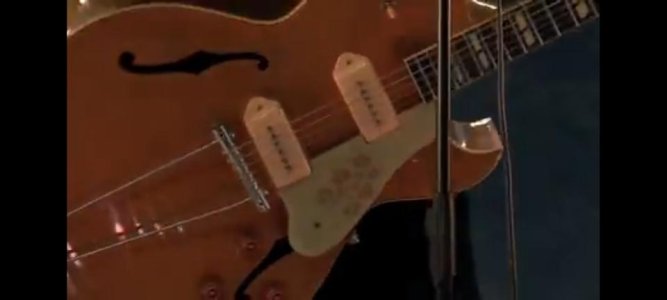
My understanding is in the early 1930's, the model number was based on the price. A Super 400 was $400. An ES-100 (Electric Spanish guitar) was $100. In later years, some of the numbers might have encoded some of the features, but I haven't observed a consistent pattern or found an authoritative reference to figure it out myself. I know the suffix letters did refer to appointments, like T meant Thinline, D was dual pickups (I think?) and C was cherry finish, N meant natural (no C or N meant stock Gibson darkburst).