WIRING ....GETTING GRETSCH MUD SWITCH EFFECT WITH 2 PUSH PULLS

Gstring

Active member
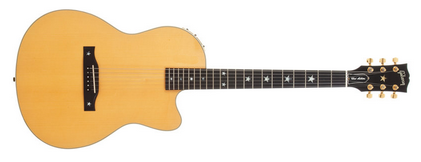
I have been asked to help re wire an old style Chinese import Gretsch Electromatic Pro Jet which as standard features 1 tone and 1 vol and a 3 way. Pups have been previously upgraded to Gretsch Filtertrons from the stock mini buckers.


Owner wants a more “Gretsch like” wiring with 2 ndependent volume controls and 4 “fixed” tones achieved by using push pulls to put two different appropriate value resistors in the circuit. I assume this can be done by wiring each push pulls to give the option of connecting one of the said resistors to ground from the output side of the 3 way. Presumably min bass (other than by pass when neither push pull is engaged )will be when both are in circuit in parallel . More bass when the lowest value will be engaged and most bass when the higher value engaged . I have not drawn a diagram as I hope what I am proposing is pretty clear.


I an see no reason why this should not give the owner what he wants (whatever the practicalities of the idea) but confirmation from the more knowledgeable would be appreciated,
 
Two quick questions:

1. Can you talk the guy into doing a dual-concentric pot for the two volumes, then with a standard tone control for the other pot? That would be easier, and make more sense.

If not:

2. Do want "bypass" to be no tone control, or a tone control on "10"? (ie., 500k in series with the cap.)
 
Hi Arttie
Thanks for your interest, The guy is very keen to get the complete by pass tone favored by Filtertron players .I did suggest the obvious no load tone pot. However he seems to quite like the idea of having pre set tones, Not sure about the R values Are thinking about dropping out the input jack ...hopefully there will be sufficient slack ....and experimenting with a high value pot wired across the terminals pots to find something desirable to him.

Fortunately at the age of 77 I have time on my hands these days. Sadly they also not as steady as they used to be.
 
Hi Arttie
Thanks for your interest, The guy is very keen to get the complete by pass tone favored by Filtertron players .I did suggest the obvious no load tone pot. However he seems to quite like the idea of having pre set tones, Not sure about the R values Are thinking about dropping out the input jack ...hopefully there will be sufficient slack ....and experimenting with a high value pot wired across the terminals pots to find something desirable to him.

Fortunately at the age of 77 I have time on my hands these days. Sadly they also not as steady as they used to be.

I'll doodle up a couple things today. I'm only (a small) handful of years behind you. Got two of my 10 grandchildren visiting this week.
 
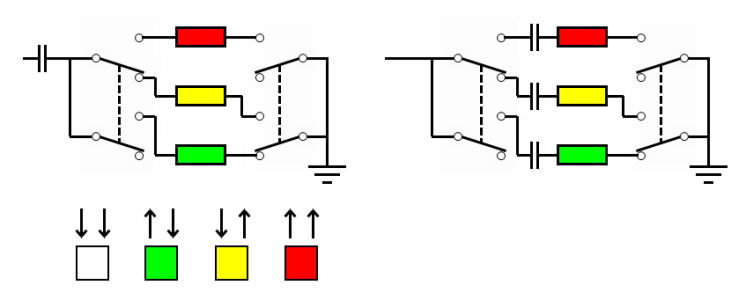
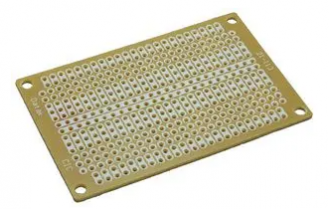
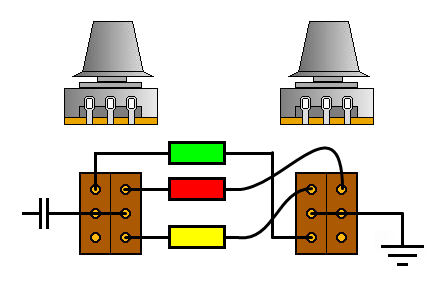
Here's the basic concept. I'll draw it up showing how to translate it to push-pull pots shortly. If it were me, I'd use multi-turn precision trim pots, so that you can tweak it exactly to taste. I'd put three on a little hobby perf board, and trim the board down to size. And, you could also insert three caps, like I show on the right, and make each position its own custom RC combination. Kind of like, a personalized varitone circuit.

https://www.mouser.com/ProductDetail/Bourns/3299P-1-254LF?qs=Yx1HeqtvVDhST5TINMWyVw==

switched_tone.png

switched_tone_board.png
 
P.S. If you (he) decided that they didn't like the "no-load" tone, just connect a 500k resistor between the two bottom unused terminals. Also, if you want one of the positions to be "tone on zero", replace its resistor with a jumper wire.
 
If I can contribute without interfering too much...

*a crude 3.3nF cap from hot to ground is interesting with Filter'Tron's IME: it makes them closer to P.A.F. humbuckers.

*a properly designed L R C filter might be interesting too as a MID CUT control with the low inductance and therefore extended high range of FT's... See the Lawrence Q filter if you want it "ready made" but keep in mind that any coil borrowed to any cheap pickup can be used as an inductor ( a choke) to build a similar circuit.
I'll share on request a recipe giving almost acoustic tones to an electric guitar thx to properly selected components cutting the mids in the right range.

*In the name of variety, a "demud mod" / hi pass / low cut filter à la ArtieToo might complete usefully a mud switch and a mid cut... After all, Rickenbacker mounted 4.7nF hi-pass/ bass cut series caps with their low inductance pickups as shown in the schematic, @ the bottom of this page: https://www.anatomyofguitartone.com/...kenbacker-tone

The order of components would matter for an optimal cooperation between all these circuits (that I've mounted many times in various instruments) but it's another story, that I won't evoke here.

Right now, let's just sum up this answer: multiple push pull pots can/could be a good way to give a control on high, mids and bass frequencies...

FWIW (a mere attempt to share, hoping to be useful). :-)
 
I'll share on request a recipe giving almost acoustic tones to an electric guitar thx to properly selected components cutting the mids in the right range.

Great info, (as always), from you. I'd love to see this "recipe."
 
Great info, (as always), from you. I'd love to see this "recipe."

Thx Artie.

Regarding the "recipe", I've really not invented it, so this answer is just a reminder.

Most acoustic sims in digital processors generate a complex comb filtering impossible to reproduce with simple analog components but they also share some tendencies when it comes to EQing: they add high frequencies and scoop the high mids.

Any Q filter / Torres mid control / Gresco Tone Qube or equivalent circuit is able to do that as long it involves two things:

- a LOW inductance choke (1H or 1.5H being the best value for that),

- a basic 22nF capacitor.

Let's connect these two components in series then put them between hot and ground (without any resistor) and we'll have a good starting point for acoustic tones: less output level, more high range and a drastic mid scoop.

Now and regarding the icing on the cake: a really convincing acoustic emulation depends on the pickups, their wiring and the input impedance of the host so I can't give ONE recipe for all... but tuning this kind of circuit is always possible IME.

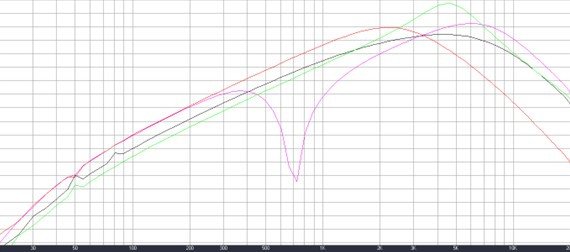
As a footnote, I share a pic showing the crude resonant peak of a magnetic pickup (in green) flattened by a mere resistor to ground (in black) then by a low value cap + resistor to ground (in red) then by a LC filter (in pink). The choke in this last case had more inductance than desired BUT the pic shows at least how the "principle" works, FWIW.

AcSimVsOtherFilters.jpg - Click image for larger version  Name:	AcSimVsOtherFilters.jpg Views:	0 Size:	38.2 KB ID:	6181968
 
Now and regarding the icing on the cake: a really convincing acoustic emulation depends on the pickups, their wiring and the input impedance of the host so I can't give ONE recipe for all... but tuning this kind of circuit is always possible IME.

My "best" acoustic SIM, (which is "iffy" at best), comes from an inexpensive Johnson clone of the Epiphone SST solid-body acoustic, with a UST into my BBE AcoustiMax preamp. The BBE has 2.2 meg input Z, and a great EQ section with parametric mid control AND mid-notch control. And, the best implementation of the BBE Sonic Maximizer. Close . . . but still no cigar.

Johnson_SST_clone.png
 
Last edited:
My "best" acoustic SIM, (which is "iffy" at best), comes from an inexpensive Johnson clone of the Epiphone SST solid-body acoustic, with a UST into my BBE AcoustiMax preamp. The BBE has 2.2 meg input Z, and a great EQ section with parametric mid control AND mid-notch control. And, the best implementation of the BBE Sonic Maximizer. Close . . . but still no cigar.

Yep, nothing replaces the real thing. That's why I was talking about "almost acoustic tones". :-)

Now, I've used acoustic emulations on stage these last decades and it did the job. That's one of the reasons why I've kept my old Variax 500 or my now outdated Boss GP10 fed by a GK3... and the reason behind the LC filters that I've in several guitars : they can work surprinsingly well with my acoustic amp when I don't want to use one of my cumbersome digital rigs. YMMV.
 
. . . or my now outdated Boss GP10 . . .

I can't remember the exact model number, but I used to have an old BOSS Acoustic Simulator pedal that was awful. It made my electric sound acoustic about as much as headers made my Ford Pinto sound like a BOSS 302. :D
 
I can't remember the exact model number, but I used to have an old BOSS Acoustic Simulator pedal that was awful. It made my electric sound acoustic about as much as headers made my Ford Pinto sound like a BOSS 302. :D

Yes, I see what you're talking about. But objectively, the GP10 has nothing in common with these old pedals: it's an hexaphonic simulator and once it's properly set, I find it actually better than my Variax when it comes to acoustic tones. Here is an example of its sounds that I don't find too cheesy: https://www.youtube.com/watch?v=N8wbFs4nkv8
Nowadays, there's all these impulse responses emulating acoustic guitars... I've several recent modelers with this capability and I think to use it during future gigs.

But there's still something to dig IMHO in the antique L(R)C filter principle; if it was used by people like SRV (with the Gresco Tone Qube) or Matthias Jabs (with his Dommenget "The Brain"), it's good enough for me - and was worth to be evoked here... :-)
 
Wow that was pretty informative . However suspect the wiring can be simplified by taking inspiration from the actual wiring diagram used by Gretsch in their mud switch whereby capacitors are used to cut highs .

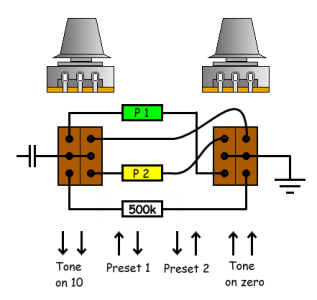
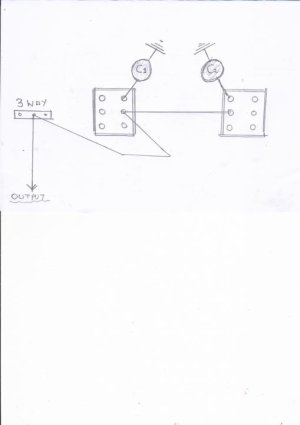
The simple wiring shown below should also get the job done.

I understand Gretsch are currently using cap values of 0.012uF and 0.0039uF . If used here there will be a combined f value of 0.0159 when both P P s are up....if my school physics is correct.
wiring 29 june 2022.jpg
 
The simple wiring shown below should also get the job done.

I understand Gretsch are currently using cap values of 0.012uF and 0.0039uF . If used here there will be a combined f value of 0.0159 when both P P s are up....if my school physics is correct.

That's it and it would/will give you three tones:

-3.9nF (0.0039µ) = a slightly darker version of the Gibson P.A.F. tone that I evoked (and for which the sweet spot with Filter'Trons is still 3.3nF rather than 3.9nF IME).

-12nF = cocked wah tone.

-15.9nF (0.012µ) = cocked wah with more mud - as implied by the name of the "mud" switch...

If memory serves me, original values for the mud switch were 4.7nF and 22nF but if Gretsch currently mounts 12nF as the highest capacitance, it makes sense for a simple reason: 12nF is the maximal capacitance under which fundamental notes will/would start to be affected with a typical FilterTron (4k, 1.6H).

With a higher capacitance, fundamental notes will be affected and "mud" will progressively drown the sound... unless a resistor is used to limit the action of the cap and that's where the ideas shared by Artie reveal all their interest. :-)

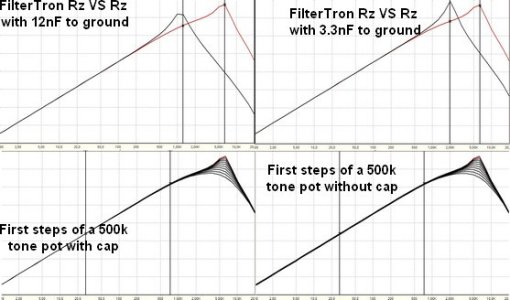
NOTE - Even if a tone cap can affect the harmonics when the pot is @ 10/10, it effectively starts to shift the main resonant frequency of a pickup under 3/10. Consequence: a tone pot can be grossly emulated without capacitor and thx to a simple resistor to ground.
Examples:
33k= a log tone pot @ 3/10
47k = a log tone pot @ 5/10
100k= a log tone pot @ 6.6/10

... and so on. you get the picture. :-)

Attached file: 5spice sim of the resonant peak due to a Filter'Tron with and without 12nF to ground (upper lefft), 3.3nF (upper right) then with a tone pot progressively rolled off with a tone cap (bottom left) and without cap (bottom right).

FWIW (answer before my morning coffee) and again, just to help. If I talk too much, just ignore my post. :-))

FilterTron12nF3nFthenTonecap&noCap.jpg
 
Thanks for that contribution freefrog. Most interesting. The HS Filtertron appears to be undergoing a bit of a resurgence in my neck of the woods. Possibly because Thomann in Germany are selling complete sets for an affordable 100 UK pounds. People seem to want that 50s jangly rock sound .Plus some old budget P90 Teles are becoming quite passable Cabronitas.
 
Back
Top