432 Hz Pythagorus tuning vs standard 440 Hz tuning

Re: 432 Hz Pythagorus tuning vs standard 440 Hz tuning

A standard is only a standard for as long as enough people agree to abide by it.

Equal temperament is for the benefit of keyboards.
 
Re: 432 Hz Pythagorus tuning vs standard 440 Hz tuning

Here's a frequency chart for all the notes listed in the wholesome scale in 432 Hz tuning.;)

freq_chart.jpg
 
Last edited:
Re: 432 Hz Pythagorus tuning vs standard 440 Hz tuning

I prefer 666hz Satan tuning when I'm playing metal. Otherwise plain 'ol 440hz works for me.
 
Re: 432 Hz Pythagorus tuning vs standard 440 Hz tuning

Stairay To Heaven @ 432 Hz...take that you devil!:saeek:

 
Re: 432 Hz Pythagorus tuning vs standard 440 Hz tuning

Tuning to 432 (or any frequency besides 440) is nothing new, and nothing special. The 440 standard is not that old, and is only a standard in the English speaking world (and as a result, the pop music world). 443 is most common in continental Europe.

A much more interesting experiment is to change temperament, but that's a whole other can of worms, and pretty much impossible on a fretted instrument.

Go ahead and try it if it makes you happy, but don't expect a miracle. With pop music it's unlikely you will notice a difference at all (aside from being unable to play along with nearly all recorded music). Plus it forces you to go through the exercise of re-tuning all your synths and other instruments to match. As stated, this is a huge pain on acoustic pianos and older keyboard instruments. There's a good reason why orchestras tune to whatever pitch the piano is at.
 
Re: 432 Hz Pythagorus tuning vs standard 440 Hz tuning

Damned lazy pianists, ruining it for the rest of us.
 
Re: 432 Hz Pythagorus tuning vs standard 440 Hz tuning

I feel like such a newb. All this Hz talk is confusing me.
 
Re: 432 Hz Pythagorus tuning vs standard 440 Hz tuning

A much more interesting experiment is to change temperament, but that's a whole other can of worms, and pretty much impossible on a fretted instrument.

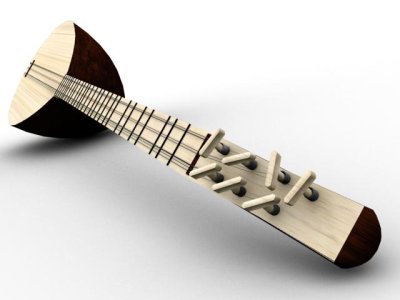
Three words: Movable, gut, frets. ;)

saz-baglama.jpg

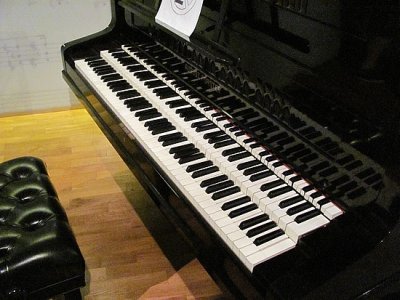
An interesting thing I've seen is a piano with a 2nd set of keys in quarter-tone intervals from the normal keys, making it possible to play relatively in tune with micro-tuned instruments. But it is still 24-tone equal temperament, simply because the key tuning is set. Again, it makes it possible to play *relatively* in tune with micro-tuning instruments. A 1/8 tone dissonance be might be small enough of a difference to avoid being heard as obviously out-of-tune to most people.

quarter-tone-piano.jpg
 
Re: 432 Hz Pythagorus tuning vs standard 440 Hz tuning

The reference pitch is insignificant, as others have said. Pythagorean tuning is more about the intervals between notes which are calculated differently. This eliminates the harmonic equivalent pairs, B# is not the same as C.
 
Re: 432 Hz Pythagorus tuning vs standard 440 Hz tuning

I have never heard of this before. Are there any songs which use Pythagorean tuning?
 
Re: 432 Hz Pythagorus tuning vs standard 440 Hz tuning

Well,this is the hardest test against the Pythagoras tuning(also called "just tuning").Note that here is the difference in note pitch relations,and NOT a 432 vs 440 test.Same piece,same base scale note hertz tuning,same performance (midi file) and same instrument (sine waves),same volume.In physical instruments difference is somewhat bigger because of the larger harmonic complexity.Difference is also bigger for more polyphony and complex arrangements.Try to notice the difference in the feel of the melodies (for example try to notice the pitch relation of long sustaining notes to the musical context) and tension where 2 or more notes sound together(polyphonic parts,for example thirds ring dessonantly in equal temperament and many more).I personally feel the western way of classical tuning IS a major compromise,BUT,trying to have a correct pythagorean tuning with all fretted instruments,winds,piano etc for more than one scale is a practical and technical nightmare,even worst in a band context where many different instruments play together,so until a practical solution is found about this,well,that's the intonation and musicality we can have.

Pythagorean tuning
https://www.youtube.com/watch?v=hq-SrgV7_Ow
Modern Equal Temperament tuning
https://www.youtube.com/watch?v=c6XkgNT20Eg

Although the same instrument plays both parts,the first clip sounds a little more musical,and harmonically better,also at times a little louder in certain polyphonic note combinations.If you can't hear the difference,you aren't paying enough attention,most people do.
I'll say once again that this is a test that favors equal temperament tuning.
 
Last edited:
Re: 432 Hz Pythagorus tuning vs standard 440 Hz tuning

I have never heard of this before. Are there any songs which use Pythagorean tuning?

Here's an artist who uses 432Hz exclusively.;) His name is Ananda Bosman who is also a professional producer. These are short extracts from every song on the first Trance album recorded in 432 Hz.

 
Re: 432 Hz Pythagorus tuning vs standard 440 Hz tuning

Equal temperament is for the benefit of keyboards.

"The Equal Tempered Clavier"? No, thanks!

Equal temperament is for the benefit of floating point calculators. It sounds boring and kind of lifeless, to my ear. It's a way to lose some of the tonal coloration in individual tones and much more of it in resulting intervals, scales and chords.

Any adjustment of the reference pitch is a way to shift the tonal colors one way or another. In other words, it's an effort to make things a little spicier. Fine, in my book. I don't mind whatever reference pitch and actually find 432Hz quite pleasing, though not exclusively. But yeah, pianos...
 
Re: 432 Hz Pythagorus tuning vs standard 440 Hz tuning

432 isn't actually a proper Pythagorus tuning. I mean, don't get me wrong it might sound a bit warmer and with slightly lower tension, but it's not a real pythagorian tuning. The real tuning would essentially require your guitar to be refretted for all of the 5ths on the guitar to be completely and perfectly intonated. This system also means that anything that isn't a 5th or an octave sounds absolutely terrible.

Most modern instruments use some form of equal tuning, or equalish. Basically everything in that tuning sounds 'okay', with the octaves, fourths and 5ths sounding good. As a fun experiment try tuning your guitar just by playing the 4ths (two strings next to one another, turn the tuner until you stop hearing them resonate), then try tuning your guitar with the harmonics on the 4th and 5th fret, and finally with a tuner. You'll find pretty fast that while all three are technically in tune, they all sound different, and all of them will give a very very slightly different texture to your sound.
 
Re: 432 Hz Pythagorus tuning vs standard 440 Hz tuning

Rory, that is cool stuff. I still like to dig into the '90s section of my CD collection and listen to some dream trance on occasion. I'm going to look more into this artist.

I want to learn more about this Pythagorean tuning stuff. I'm not interested in the "new-age" descriptions of health benefits n stuff; I just want to see (hear) if it's more enjoyable to listen to music like this.

It seems to me, that a skilled guitarist may be able to play in this tuning by employing vibratos and tiny bends.
 
Re: 432 Hz Pythagorus tuning vs standard 440 Hz tuning

Rory, that is cool stuff. I still like to dig into the '90s section of my CD collection and listen to some dream trance on occasion. I'm going to look more into this artist.

I want to learn more about this Pythagorean tuning stuff. I'm not interested in the "new-age" descriptions of health benefits n stuff; I just want to see (hear) if it's more enjoyable to listen to music like this.

It seems to me, that a skilled guitarist may be able to play in this tuning by employing vibratos and tiny bends.

Here's a link listed below to the website dedicated to 432 Hz tuning featuring Ananda Bosman. It may have some new-age description of health benefits, but I think you will find some links to some more scientific info and how this 432 Hz all works out. I think there is something to this. I know that certain vibrations can have an affect on us healthwise. So far I have 3 guitars tuned to 432 Hz. I have 16 more to go.;)

http://432hz.com/

:kabong:
 
Back
Top