
You are using an out of date browser. It may not display this or other websites correctly.
You should upgrade or use an alternative browser.
You should upgrade or use an alternative browser.
Bolt on neck question
- Thread starter crguti
- Start date

Muffleberry
New member
Re: Bolt on neck question
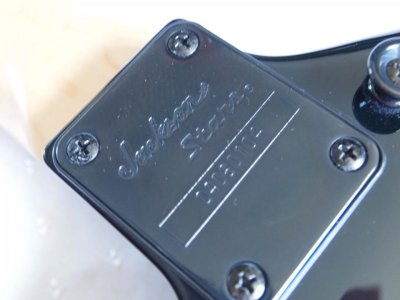
I've wondered the same thing a few times. I always figured it was for protecting the finish behind the plate. I'm probably way off though.
I've wondered the same thing a few times. I always figured it was for protecting the finish behind the plate. I'm probably way off though.

Snake Aces
Singlecut Slut
Re: Bolt on neck question
To protect the finish from the cover plate in case you ever need to take it all apart.
To protect the finish from the cover plate in case you ever need to take it all apart.
Last edited:


Aasinsilta
New member
Re: Bolt on neck question
It's all for tone man
It's all for tone man

kramersteen
PowerMetalRaph
Re: Bolt on neck question


CTN
The Drama Dude
Re: Bolt on neck question
the plastic has a lower sound transferrence coefficient than the bare metal or even the minute quantity of air that must exist between the plate and the finish in the case of no plastic spacer. Ergo, the plastic spacer allows the plate to vibrate more freely, contributing valuable tones to the instrument. Without it, the metal plate butts up against the body, and since there is a high sound transferrence coefficient, the vibrations are reflected back into the body, causing crossover distortion and unwanted artifacts to be deposited in the finish.
So basically, always eat your oatmeal or porridge when you are a child, otherwise the loch ness monster will continually come to your house, asking for about three fiddy in change, and starvin' marvin will bring his entire extended family to lay waste to your sanity.
the plastic has a lower sound transferrence coefficient than the bare metal or even the minute quantity of air that must exist between the plate and the finish in the case of no plastic spacer. Ergo, the plastic spacer allows the plate to vibrate more freely, contributing valuable tones to the instrument. Without it, the metal plate butts up against the body, and since there is a high sound transferrence coefficient, the vibrations are reflected back into the body, causing crossover distortion and unwanted artifacts to be deposited in the finish.
So basically, always eat your oatmeal or porridge when you are a child, otherwise the loch ness monster will continually come to your house, asking for about three fiddy in change, and starvin' marvin will bring his entire extended family to lay waste to your sanity.

Demanic
PenultimateTone Member
Re: Bolt on neck question
Yes, but the plastic is more likely to be amorphous and therefor likely to dampen sound transference. The steel plate by itself is more resonant, and therefor more likely to transmit more high end. Even with whatever crossover distortion is created, the resultant high frequencies will give more "air" to the tone. The lessor will sound more compressed.the plastic has a lower sound transferrence coefficient than the bare metal or even the minute quantity of air that must exist between the plate and the finish in the case of no plastic spacer. Ergo, the plastic spacer allows the plate to vibrate more freely, contributing valuable tones to the instrument. Without it, the metal plate butts up against the body, and since there is a high sound transferrence coefficient, the vibrations are reflected back into the body, causing crossover distortion and unwanted artifacts to be deposited in the finish.
So basically, always eat your oatmeal or porridge when you are a child, otherwise the loch ness monster will continually come to your house, asking for about three fiddy in change, and starvin' marvin will bring his entire extended family to lay waste to your sanity.
Last edited:
kramersteen
PowerMetalRaph
Re: Bolt on neck question
Really?
It's a bit of plastic.
Really?
It's a bit of plastic.
H
HiFiRebel
Guest
Re: Bolt on neck question
Yes but which one of those would likely affect the tine with a plastic gasket?
bumping old thread.
So if the bolt-on plastic is for protecting the finish, why there is no plastic underneath the bridge saddles?
Both parts transmit vibration from the strings to the body and viceversa.
Yes but which one of those would likely affect the tine with a plastic gasket?


treyhaislip
Well-known member
Re: Bolt on neck question
I agree
I use them because I like the finished framed look it gives a neck plate instead of just having a slab of metal there, that's all really.
I agree

Silence Kid
New member
Re: Bolt on neck question

...But on a more serious note: gaskets "to protect the finish" always seem like an oxymoron to me; what, the finish that is rendered totally invisible by whatever is bolted on top of it anyway?
The layer of paint that will probably be pulled up the minute you try to remove the gasket?
Gasket for gasket for gasket is the real way to do it
...But on a more serious note: gaskets "to protect the finish" always seem like an oxymoron to me; what, the finish that is rendered totally invisible by whatever is bolted on top of it anyway?
The layer of paint that will probably be pulled up the minute you try to remove the gasket?
Gasket for gasket for gasket is the real way to do it
Last edited:
Similar threads
- Replies
- 2
- Views
- 71


