Fender History..fire in Mexico?

greco

New member
A friend of mine was told that there was a extensive fire at Fender factory in Mexico (possibly about 1993 or 1994) and that the manufacture of Mexican Fenders (e.g. strats) was moved to the California plant for about a year.

He was told that some of the guitars for that year were not labelled "Made in Mexico" but the serial numbers started with an "M" to identify the guitars that would have normally been made in Mexico.

Just wondering if anybody has any more information about this, and is the serial number identifier/concept correct?

Thanks

Dave
 
Re: Fender History..fire in Mexico?

never heard of a fire... could of happened i guess but that is the first i heard of it... there is a lot of myths around if Fenders from Mexico are really American necks and so on..... Truth is the modern Mexico factory builds bodies and necks in house... In the past who knows... I do know that either factory can make the models as it is the same equipment....

all the 90's MIM guitars seriel numbers Start with M that i own...

I do own a 1994 Squier strat that was made in Mexico... Fender was without an overseas contract to make Squiers so they made Squiers for 1 or 2 years in Mexico... The strats only came in Black.. Same guitars as a MIM Standrad but had cheaper hardware... i have since upgraded my Squier with MIM Standard bridge and tuners i got for free from a repair shop....

A guy i know took a tour of the Fender Factories last spring and he said that the American Standard line is being machined in America, shipped to Mexico to be painted since the pollution laws are more relaxed, and then shipped back to the USA for assembly... So they do ship stuff back and forth...

But if it says MIM on the headstock the qulaity is that of an Imported guitar.... i like the MIM stuff so i'm not trying to put it down.... MIM stuff does have cheaper grade woods and hardwares..
 
Last edited:
Re: Fender History..fire in Mexico?

Sounds like somebody trying to sell a Mexican Strat as American to me!
 
Re: Fender History..fire in Mexico?

Sounds like somebody trying to sell a Mexican Strat as American to me!

ya.. Most likely...

On a side note, i remember going to a jam and the drummer i picked up on my way down to the jam.. he kept talk about this guitar player that has a $2500 strat... i get there and it was a MIM Standard...
 
Re: Fender History..fire in Mexico?

The friend that is selling this guitar to me, works in a local music store. He was told about the "fire" when he bought the guitar used (at the same store) .

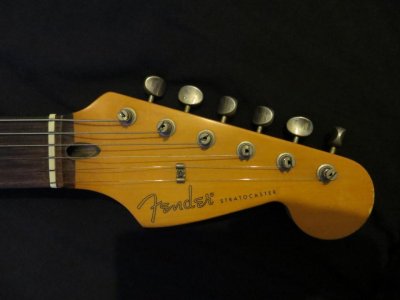
The key here is that that the guitar has neither "Made in USA" nor "Made in Mexico" labelling on it.

He is a good friend (outside of his work) and we are just wondering about the accuracy of all of this "fire" stuff. No big deal, the guitar is a good deal and he is selling it as a MIM and at a reasonable price.

Thanks

Dave
 
Re: Fender History..fire in Mexico?

The friend that is selling this guitar to me, works in a local music store. He was told about the "fire" when he bought the guitar used (at the same store) .

The key here is that that the guitar has neither "Made in USA" nor "Made in Mexico" labelling on it.

He is a good friend (outside of his work) and we are just wondering about the accuracy of all of this "fire" stuff. No big deal, the guitar is a good deal and he is selling it as a MIM and at a reasonable price.

Thanks

Dave

I wonder if the guitar is a Californian series... i have never heard of a fire at the Mexican plant... but maybe someone else here has heard of that... but in that case the Californian was a Mexican made neck and body that caused some trouble when they stuck MIA stickers on the guitar

If you can posts some photos most Fender fans here should be able to pick out what it is.... There is just so many stories of Mexican made guitars really being American Made and so on... The truth is both factories have the same equipment.... they could make a USA quality strat in Mexico and they could make a Mexican quality strat in the USA.... It all comes down to the quality of the electronic parts, wood, finnish and hardware...
 
Re: Fender History..fire in Mexico?

There was a span of time where the MIM series were actually MIA, and I think it might of had to do with a fire at the plant. I remember something to this effect from the Fender forum but I'm at a loss to be able to cite a hard source or be able to state what the outcome was.

The only thing I can tell you is the usual phrase I utter when the MIA vs. MIM debate comes up:

"You can buy something made in Mexico by Mexicans or you can buy something made in California by Mexicans. Your choice."
 
Re: Fender History..fire in Mexico?

There was a span of time where the MIM series were actually MIA, and I think it might of had to do with a fire at the plant. I remember something to this effect from the Fender forum but I'm at a loss to be able to cite a hard source or be able to state what the outcome was.

The only thing I can tell you is the usual phrase I utter when the MIA vs. MIM debate comes up:

"You can buy something made in Mexico by Mexicans or you can buy something made in California by Mexicans. Your choice."

That last statement is so true... In many ways the factories are pretty much the same with the same skilled workers... The American Standard guitar to me is a nice guitar. Perfect guitar for me and my playing. Very nice indeed.. But the new upgraded 06 MIM Standard Strats body and neck are a lot closer to the quality of a USA Standard... closer then ever before anyways... The biggest difference these days is in the hardware and electronics. But that being said the USA Standard is still a better guitar of course.. but you could buy 2 MIM for less then the price of 1 USA Standard. So my plan is to have a few modded new MIM Standards in my collection soon.. i just bought an 06 Standard last month... soon i'll buy a 2nd one. If they had 22 fret necks it would be killer but i can live with 21.. i find some songs that last fret could come in handy!
 
Re: Fender History..fire in Mexico?

I've heard about this fire as well actually. Think I read about it in an old guitarmag or old fender book...

As I recall production was moved to USoA for a few months or weeks.
 
Re: Fender History..fire in Mexico?

http://www.highbeam.com/doc/1G1-15687115.html

'100 Days After A Devastating Fire Leveled Fender's Ensenada Plant, Production Is Up And Running

On the evening of February 11, a routine maintenance procedure in a spray booth at Fender's guitar factory in Ensenada, Mexico, resulted in total devastation. A spark that found its way into a spray booth vent erupted in flames that reduced the 22,000-square-foot factory to ashes in less than one hour.'


http://www.musiciansfriend.com/product/Lace-Sensor-HG1000-Holy-Grail-Series-Pickups?sku=305403&src=3WFRWXX

'Based on a 1954 pickup that survived a fire at Fender's Ensenada manufacturing plant and a 63 design, but taken a step further. These are a 5 staggered magnet single-coil pickup for Strats.'
 
Re: Fender History..fire in Mexico?

http://www.xanga.com/home.aspx?user=Kris_Impossible&nextdate=12%2f5%2f2005+13%3a43%3a26.703


' Fender’s Ensenada, Mexico plant first opened in 1989. When it first opened, it consisted of 5 workers packaging strings in a converted church building. It has since become the crux of Fender’s international operations due to its relative proximity to Fender USA’s Corona, California plant. The success of the Ensenada plant was followed by Fender China’s opening in 1991.

Due to this globalization, the Stratocaster is now produced in several different countries, including: China, Mexico, Japan, and America. One of the most unique aspects about Fender’s international operations is that each operates as an independent production unit. This makes direct comparisons between the subsidiaries more significant than pipelined production–in which parts may be produced in one country and assembled in another.


It is widely accepted by the guitar that the quality of Stratocasters produced today can be ranked by the countries they are produced in. America produces the highest quality Strats, followed by Japan, Mexico, and China. This is also reflected by the price of the guitars themselves. All China-made Strats fall in the price range between $100 and $400.
Mexican-made Strats cost between $400 and $700. Japanese-made Strats run between $700 and $900 and American-made Strats start at $900 and end at $1600. One reason for this is that the fundamental differences in the materials used in the manufacturing process. Strats produced in China use lower quality woods, pickups, and tuning pegs in order to bring costs as low as possible. For a few years in the late 90's, Fender China even made guitar bodies thinner to save on wood. In a personal correspondence with Fender USA’s consumer relations representative, David Gonzalez explained:

I can tell you that the difference in price between an American and Mexican made instrument is the result of several factors. Mexican made instrument are generally made with lower grade woods and less expensive foreign made components whereas their American made counterparts use higher grade woods and more expensive American made components. Lower manufacturing and labor costs at the Mexico factory also plays a role the price difference. The Mexican made instruments are less expensive to produce than the American instruments. This, coupled with less expensive parts and components, allows us to offer them at a much lower price. (p.1)

Another factor in the price difference between Strats is the level of worker training. Located in Corona, California, Fender’s Custom Shop is the workplace of only 50 artisans compared to Fender Mexico’s Ensenada plant, which has over 1000 employees. While workers in the Custom Shop have all received years of training in all stages of the guitar-making process, while workers at Fender’s subsidiaries abroad are simply managed by workers at Fender USA’s plant. This difference in the level of attention to detail depending on where a guitar is made plays a huge role in assessing the price of a guitar.'
 
Re: Fender History..fire in Mexico?

' However, I believe that the most distinguishing factor in determining price is the strength of the nation’s economy in which a guitar is produced. As I mentioned earlier, the price and quality of a Strat can be determined by its country of origin. The highest quality and most expensive being made in America, followed by Japan, Mexico, and China. The respective GDPs per capita of these countries are $39,496, $29,906, $9,666, and $5,642. It is no coincidence that the price, quality, and GDP all have the same exact relationship between countries. Although these calculations are based on the purchasing power parity of the countries mentioned, the same order holds true for nominal GDP per capita. It is interesting to note that the percentage GDP difference between the US and Japan is the smallest of the four nations–Strats produced in these two countries are compared to each other more than any other pair of Fender subsidiaries. Due to the high level of workmanship in Fender’s Japanese models, Fender USA allows only a small number of them to ever reach American shores in order to reduce competition with its own American-made line.

The differences in GDP of Fender’s international subsidiaries’ host countries exemplifies the idea of the “race to the bottom.” Fender has to pay it’s workers only the minimum wage that the workers will accept–which is based largely on the average income of a person in the country. This is the fundamental defect in outsourcing work–if a job requires little formal education, then it simply becomes a race between multinationals to find the country that is willing to be paid the least. In this way, maquiladora and other factory workers are paid a competitive wage–but only relative to other domestic factory workers. Thus, both the countries they are based in and the subsidiaries themselves perpetuate inequality and make it easier to maintain a precedence of low wages.

Fender’s first subsidiary was in Ensenada, Mexico, but globalization and improvements in transportation allowed outsourcing as far as China and Japan to be economically viable. The advantage of producing in Japan being finer machining processes and the availability of workers already skilled in woodworking. The advantage of producing in China being a multitude of free trade zones that are loosely monitored in terms of environmental controls and wage rates. Thus, outsourcing can both improve and impair the quality of a commodity, depending on where it was produced.

But, is Fender a company that fosters growth in countries overseas or is it another core nation-based company determined to perpetuate the poverty in the periphery? Fender’s company website is adamant that they offer competitive wages, which, as I explained, can be largely inconsequential. Representatives of the Ensenada plant explain that the plant adheres to all U.S. and Mexican hazardous waste protocols and have installed modern fire sprinkler systems and emissions control equipment throughout the building. They also say that Fender Mexico supports the local fire department, orphanages, and schools and take pride in the fact that the Fender Mexico soccer team has won the State championships twice. '
 
Re: Fender History..fire in Mexico?

May fav strats of all time came from Japan. Just find a strat you like and enjoy it...regardles of where is whas made.
 
Re: Fender History..fire in Mexico?

A friend of mine was told that there was a extensive fire at Fender factory in Mexico (possibly about 1993 or 1994) and that the manufacture of Mexican Fenders (e.g. strats) was moved to the California plant for about a year.

He was told that some of the guitars for that year were not labelled "Made in Mexico" but the serial numbers started with an "M" to identify the guitars that would have normally been made in Mexico.

Just wondering if anybody has any more information about this, and is the serial number identifier/concept correct?

Thanks

Dave

Hi Dave,

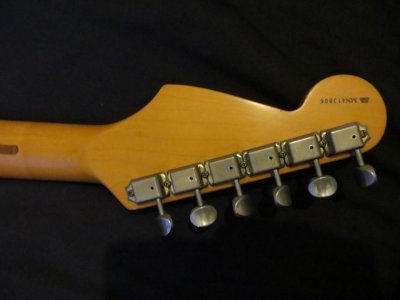
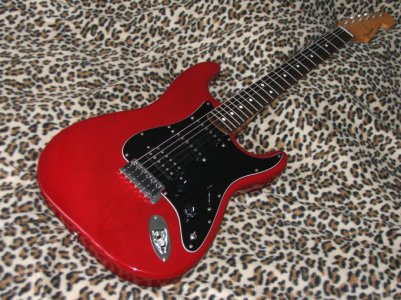
I am only 8 years late to the conversation! I worked at Axe Music in Edmonton, Alberta, Canada from 1992 to 2000. In the time frame you mentioned, our Fender rep arrived to tell us that the new Stratocaster Special (a new HSS configuration with black, sunburst, transparent red, and butterscotch blonde as colour options) which was supposed to be made in Mexico was delayed and would be delayed due to the fire. The model was supposed to have the necks and bodies made in the US and then shipped to Mexico for paint and finishing. Instead, the first batch we received were entirely made in the States. We were shown that the first ones did not have Made in Mexico on the head stock and the serial numbers (on the headstock) started with N. After the factory recovered from the fire, the subsequent models had Made in Mexico on the headstock and the serial number scheme changed to starting with MN. This first round were very cool. We also received some guitars around this same time that had higher quality maple that had nice flame patterns (not FotoFlame). I REALLY wanted one of these black-on-black Stratocaster Special models as they had an HSS pickup configuration, a humbucker split, volume, tone, tone controls, vintage style bridge and Kluson-style keys. All the plastic bits were black including pickguard, knobs, spring cover and pickup covers.

I eventually found one at a local pawn shop and had it substantially modded by a locally famous guitar tech named Jim Mozell. We put the Fender Floyd Rose locking bridge, Sperzel keys, LSR roller nut, the Ibanez Backstop with the body routed for trem pull-ups (similar to the Tremsetter but better for drop D tuning), moved the volume pot to the top tone slot and converted the tone to a master tone control, the pop-in tremolo arm had the rare hex embedded in the end that goes into the bridge for easy string unlocking and I had a custom Axe Music aluminum road case made for it. Sadly the guitar was stolen. I loved that guitar.

So there you go... if you find a black-on-black guitar with the small 60's style headstock and the HSS pickup configuration that doesn't say where it is made, and the serial number begins with n9, it is one of these special, all-US made guitars that can be bought used for around $400 if you can find it. I bought mine for $375 and put around $500 into it. It played and sounded better than my Fender American Deluxe Fat Strat Locking.

Glen
 
Re: Fender History..fire in Mexico?

Just ask Fender. Every time I've e-mailed them an inquiry, they've been more than helpful.
 
Re: Fender History..fire in Mexico?

I own one of these Mexican "Strat" Specials. 1994 with no Made in Mexico label. It has just a vintage gold spaghetti logo on the front and serial starting with MN on the back. The bridge mass and bridge measurement are USA spec. Not the low mass and narrower string spacing of Mexican strats. The Truss plug is in fact walnut and not plastic like usual Mexican standards which would suggest a USA neck maybe???? The body however is a swimming pool route which would suggest a Mexican body or a body designated for a cheaper guitar. However these guitars were a little different that standard as they were Poplar wood with an Ash veneer. Crimson transparent colour. It does look beautiful.

The pickups are glued on ceramic magnet types which are not very good. I bought it in 1995 thinking it was a cheap US model, only later finding out it was Mexican. Nice guitar which just needs a pickup swap which I've still never got round to doing.

The pots look like CTS, atleast they are large and resemble CTS so I would be forgiven for thinking they are. The pickup switch says MADE IN USA on it and the coil split is an alpha switch. The wiring looks good quality. Not like some cheap budget deal.


IMG_1022.jpg
IMG_1023.jpg
gear-fender-stratspecial.jpg
 
Re: Fender History..fire in Mexico?

I never heard of a fire at the plant, but what I heard was that some of the early 90's MIM were made from MIA and MIJ "B" stock or leftovers...don't know if its true or not.
 
Fender History..fire in Mexico?

Even USA made bodies in the 90's had a swimming pool route. It wasn't just the MIM models. In fact, I think the MIM models came routed HSH once the plant was back up.

I was working in a music store when this happened. It didn't take long for things to be back up and running. Heard a lot from our Fender reps, both local and on the phone at headquarters.
 
Re: Fender History..fire in Mexico?

Bizarre to reply to a post thats 9 years old. Thank you Iekobrid, that is some knowledge.
I have one of these guitars, or rather how it was explained to me. same drill, it was because of a fire at the plant that some maxis were assembled or completed with am parts. I suspect it was squier parts. My guitar has a black fender logo, and Squier series in small lettering on the round part of the headstcok. white body (now aging to a nice vanilla) white pick guard, rosewood (i think) neck. it plays really nice for a 19 year old guitar. I would swap out the tuners, old klusen types, and maybe the bridge, or rather, get a replacement of the metal block which looks like pot metal to me. but i could put all the money in the world into this guitar, and never get a quarter of it back, so, Ill just keep as is. I had a japanese start, in a unique blue Ive never seen, got in 87 i think. had locking term and the bridge lock like a floyd rose. sounded pretty good, but that locking stuff was stupid, constantly open closing pain in the neck. this was after I had learned how to string correctly and lube everything. sold it, haven't looked back. this guitar plays much better, sounds better. course I'm going by memory so if I had it next to me to compare, maybe Id be wrong. The Japanese guitars are a good value and you can get them pretty cheap $4-500 on lie craigslist and ebay. My two cents
 
Back
Top