New Gibson CEO

I'm gonna stay cautiously optimistic.

I think the real issue in the industry is that the model that supports a juggernaut high-end company like Gibson is simply dead. He is going to have to entrepreneur and innovate the shit out of that company.

Problem #1 is likely a board that will NOT be about that at P&L time. Infinite growth model is nice, except not reality based.

As for the next "savior" of the Les Paul, I just don't think that music is guitar oriented enough in mainstream to do it. If all of the sudden twice as many guitar playing women (electric) as there are now all went and bough new Les Paul because Taylor Swift, it is not anywhere close to enough to match their production/sales needs or output.
 
9-28-2011gibson-firebird-x-limited-edition-1.jpg


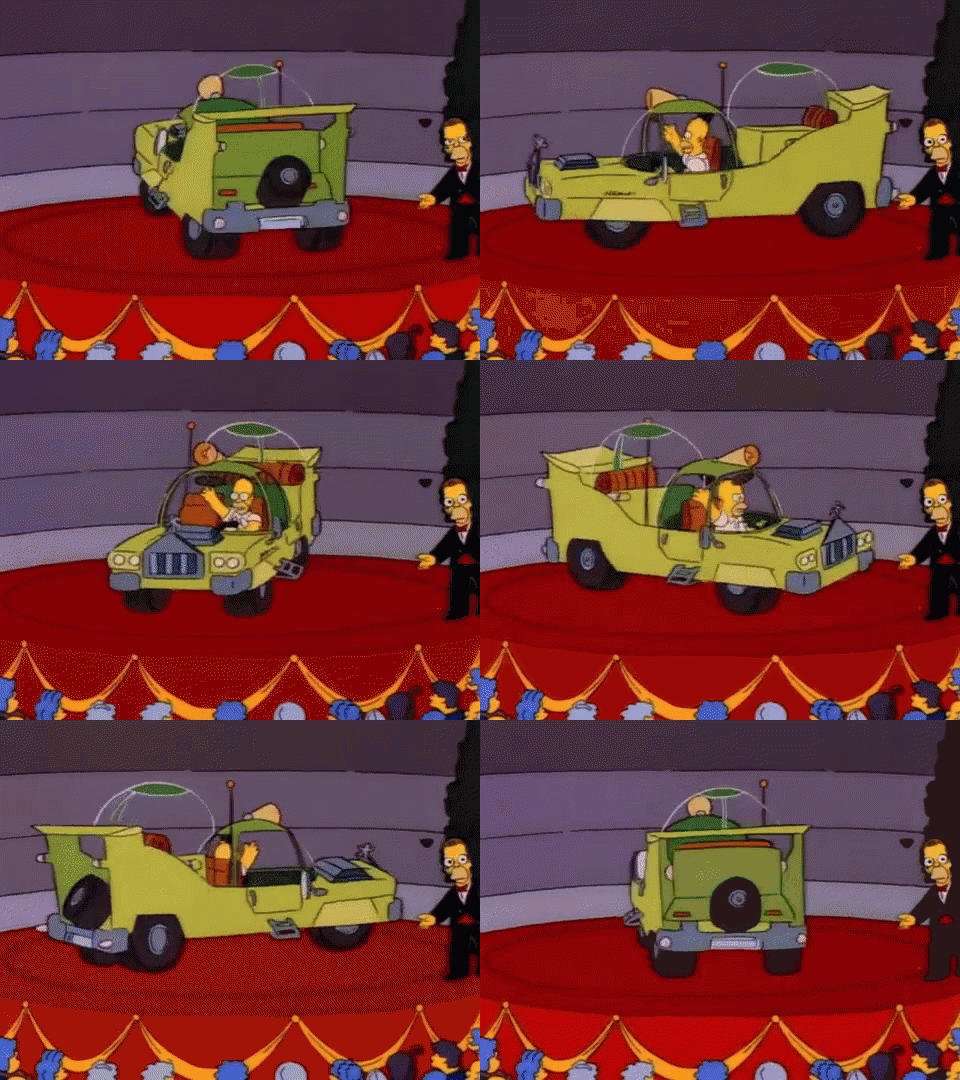
homer-simpsons.gif
.

.
 
I'm gonna stay cautiously optimistic.

I think the real issue in the industry is that the model that supports a juggernaut high-end company like Gibson is simply dead. He is going to have to entrepreneur and innovate the **** out of that company.

Problem #1 is likely a board that will NOT be about that at P&L time. Infinite growth model is nice...[9/QUOTE]

Agreed completely. I think that was already a big concern at the bankruptcy. They want a big money brand but they don't have products that match.

During the bankruptcy, I thought their best opportunity was Epiphone. They were pretty solid and affordable, but I think they've let the prices go up and I'm not seeing a lot of new innovation there either. Sire, Harley Benton, and similar companies are just hammering quality into low cost instruments so Epiphone may be in trouble as well.

So they already had the, “Do we target high end or mid-market?" dilemma, however, it's likely the competition has closed down the options.

So I totally agree with your observations, but here's devil's advocate for the future. If they could sell Epiphone for decent dollars, do they actually have the assets to rebuild a truly top brand? Could they "out Heritage" Heritage? Focusing entirely on expensive, custom, greatest players of all time? And could they innovate in that same space?

Obviously that's where they have wanted their brand to live, and of course they would do much better if they had high quality at affordable prices. But maybe The very top is all they have left?

During the bankruptcy, I had enough contacts to confirm that the innovative, user driven, deep knowledge thinkers had moved on. I no longer have any clue what's going on over there, but still think they own a gold mine if they can figure out what they're good at before they run it dry.

Could be entirely wishful thinking. But maybe we should give them a ring and offer high-end business analysis services;)
 
The biggest problem I see for Gibson, Fender, and Marshall is that they seem more focused on being lifestyle brands than musical instrument companies.
 
The biggest problem I see for Gibson, Fender, and Marshall is that they seem more focused on being lifestyle brands than musical instrument companies.

Totally agree. But it seems to me that Gibson is farthest from reality and the others are occasionally finding nuts, even if they're all blind squirrels.

On a sidebar, a friend of mine and I had the conversation last week about what is happening to quality design across all industries. The great example is user interface design for applications... This used to be one of the most important steps in the process, yet somehow, “Let's put lots of buttons and things on the interface and not explain how they work, and does workflow really matter?" seems to be taking over. Dark gray sliders on black backgrounds, bunny trails that take two or three clicks to get to heavily needed functionality... At least guitars and amps aren't running into these walls.

Sometimes I think, maybe I'm just getting old and the next generation has to run their heads into walls before they discover decent ROI. But Gibson, is such a classic brand, I still see rays of hope and it would be great if they wake up now :-)
 
Fender at least mixes it up a bit and comes out with a lot of new models at all price points. They might mine their own history for ideas, but their ideas don't miss the mark as much as that Firebird X up there. Gibson shoots high and continually misses the mark with 'new' models.
 
And if Gibson changes something in their existing models to up their quality as a selling point then they have to admit that the quality had been lacking in the past. They can't/won't do that so they're stuck between a rock and a hard place without something dramatically new and innovative (but without missing the mark this time). I would say that they are really in a tight spot.
 
Yes, it's kind of amazing how badly Gibson misjudges the market. Robo-tuners leap to mind here.

It was a smart move with the wrong execution, which is typical for Gibson today. Like when they released The Goddess, marketed to women. It would have been more effective if they had added new colors to the existing lines and did not brand the colors in any way. Instead, they designed a guitar "for women" with simpler electronics and nail polish colors as if women can not figure out all four knobs on a guitar.

FWIW more men were playing pink and lipstick-red guitars in the 80s than women.

kykznble6yxg7rjrwigu.jpg
 
I'm not sure the market for high-end guitars is really dead-PRS seems to sell plenty of core models.

I think the problem (just going off what I've PERSONALLY seen on new guitars hanging on the wall in shops) is that if you take a core PRS and put it next to a Gibson of the same price, the PRS has better fretwork, fewer (generally, zero) finish flaws and an overall level of quality that Gibson can't consistently touch. There are great Gibsons, and some Gibsons with minor flaws are great guitars, but if you want to compete against the top of the market, you've got to match their level of quality. Otherwise you're left selling tradition and history.

Even Harley has realized this with their new water-cooled models; you can only sell nostalgia until the market nostalgic for your product ages out of the activity, and then you need to be able to stand toe-to-toe with competitors and actually complete as a product, and not an emblem of a lifestyle.

Larry
 
If you can't tune a freakin guitar on your own you have no business "playing" one.

That was not the goal of the Robot Tuners and one of the missteps in Gibson's marketing of the feature. With the availability of $9 clip-on tuners and free tuning apps on phones anyone can tune a guitar. The goal of the Robot Tuners was to change tunings on the fly. If a musician needed drop-D or open G for a tune they could easily slide into the tuning without slowing down the flow of the performance. Or if someone played an aggressive solo with a lot of trem work and bends they guitar could quickly be pulled back in tune.

The device was designed with the professional performing musician in mind. However, Gibson failed to get that point across and most people thought it was a device to help noobs tune their guitar. Noobs are not tuning in open G or drop D for the most part. A smart product but poor execution on the marketing of the feature.

 
That was not the goal of the Robot Tuners and one of the missteps in Gibson's marketing of the feature. With the availability of $9 clip-on tuners and free tuning apps on phones anyone can tune a guitar. The goal of the Robot Tuners was to change tunings on the fly. If a musician needed drop-D or open G for a tune they could easily slide into the tuning without slowing down the flow of the performance. Or if someone played an aggressive solo with a lot of trem work and bends they guitar could quickly be pulled back in tune.

The device was designed with the professional performing musician in mind. However, Gibson failed to get that point across and most people thought it was a device to help noobs tune their guitar. Noobs are not tuning in open G or drop D for the most part. A smart product but poor execution on the marketing of the feature.


I agree with this. They were clumsy, and not executed well (and at the wrong time). The Variax implemented this idea better, and the Evertune bridge does a better non-clumsy way of keeping the guitar in tune.
 
The robo tuning debacle highlights Gibson's extreme lack of marketing skills. In effective companies, new features usually come about in two different ways... Consumers want something or engineering comes up with something new. Either way, absolutely nothing should be built until basic market analysis.

In this case, 20 focus groups at guitar stores across the US would have given them more than enough info to get started. It's an easy to describe feature and you would quickly find out which segments find it valuable and are willing to pay for an upgrade.

You wouldn't need to build a thing... You'd ask the stores to recruit a wide range of guitar players and show up with a PowerPoint.

There are multiple ways to test pricing, price triangulation would it worked well in this case, and at the end of focus groups, they could take requirements back to engineering and have projected potential market size and return on investment.

So was the demand high enough for a reasonable ROI to build a robo tuner for professional musicians who need to retune as described in earlier posts?

It would have been extremely easy to test and would have been extremely easy to market... "You are one of these very special people who need this very special thing.."

But my my guess is that the cost would have been too high for such a limited market because there's another data point to be considered.

If there was an actual need, there would be a void in the market and someone else would have filled that space.

This is marketing 101, and Gibson was acting like a 10-person mom and pop shop that couldn't afford to fly to 20 different cities and talk to potential customers for an hour.

The sad thing, is it doesn't sound like anything has changed and they didn't learn their lesson.
 
He did tune them cuz he built them and guess what > no robotuners. You always seem to try to be the opposition no matter what the subject..

No, I am just stating a fact. From Fender.com yes the company Leo built.

Leo wasn’t a guitarist, and legend says he didn’t know how to tune a guitar either. This obviously didn’t deter him from creating the most popular electric guitars in the world.

8 THINGS YOU MIGHT NOT KNOW ABOUT LEO FENDER

https://www.fender.com/articles/behi...out-leo-fender
 
Last edited:
That is what they said in 1963 and then Keef appeared
Then they said it again in 1970 and Jimmy Page appeared
Then again in 1985 and Slash appeared
Gibson was dead again in the 90's and Zakk came on the scene ...

2JwS.gif
.

Okay, here's the thing about it. The issue about it, mainly.

Gibson does have presence in the metal crowd among kids today due to acts like Mastodon and Tool, who are still very relevant on the scene.


The big issue mainly is that they lack mainstream appeal because of conflicting demans and brand image in each different demographic.

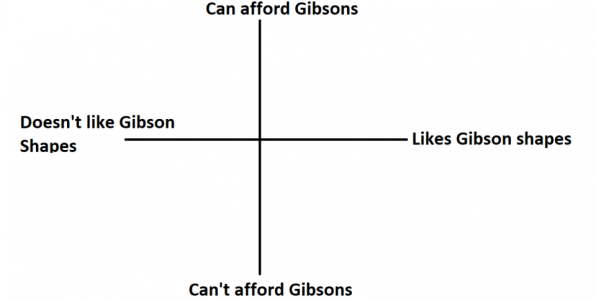
Let's just frame it like this:

Gib.png


The top right are practically the only demographic moving Gibson forward, and what do they generally want? True to form Gibson gutiars, design flaws and all, minus the QC issues Gibsons can have.

That demographic isn't growing fast enough because unfortunately, the entire bottom half of the graph is growing. And that's an issue because practically the other 3 demographics are the ones asking to see some changes in Gibson.

(And the dilemma there is that they're just asking for changes in guitars they're not gonna go buy anyways)
 
Back
Top