
You are using an out of date browser. It may not display this or other websites correctly.
You should upgrade or use an alternative browser.
You should upgrade or use an alternative browser.
PRS Archon build quality.
- Thread starter Ascension
- Start date
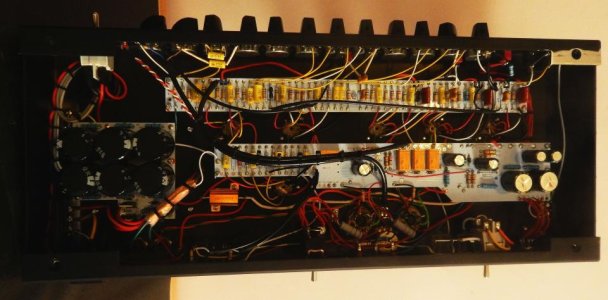
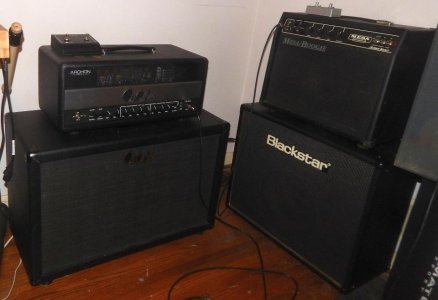


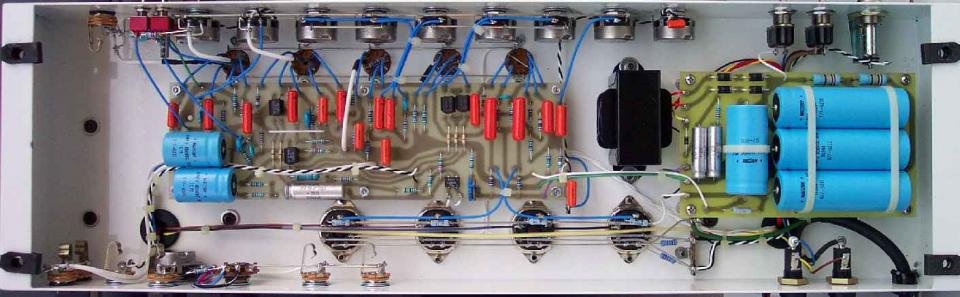
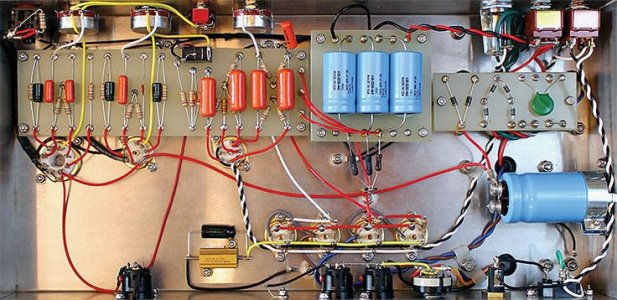
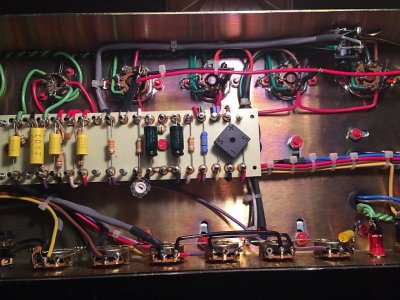
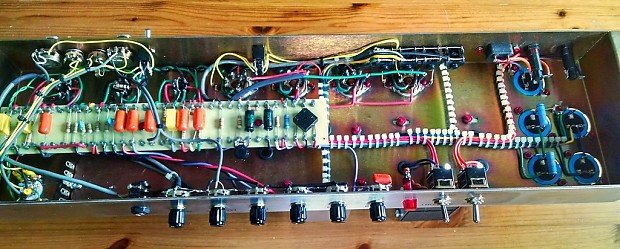
I hafta be honest the PRS Archon & others are pretty nicely built but for the money id rather have something else.
The used PRS Archon market is the best bang for the buck clean and dirty in an amp going that I have found.

Ascension
Well-known member
Wth its not PCB????
NOPE chassis mounted individual tube sockets and all point to point.! There is a reason these are so expensive!
Ascension
Well-known member
It's a glorious sounding rats nest.
Yep that it is!!
NOPE chassis mounted individual tube sockets and all point to point.! There is a reason these are so expensive!
Truth be told, I would rather have a PCB amp.
Intentionally mass producing a P2P amp is kinda like relicing a strat. "It's so retro!".

Ascension
Well-known member
Truth be told, I would rather have a PCB amp.
Intentionally mass producing a P2P amp is kinda like relicing a strat. "It's so retro!".
Take it you have little to no experience in repair. I own both PCB and point to point amps good tone is good tone. However when they break it makes a HUGE difference. The way a true PTP amp is built also makes them much more reliable long term all things being equal. Being I normally keep guitars and amps I really like for 10 years or longer it makes a huge difference for the long haul.
Take it you have little to no experience in repair. I own both PCB and point to point amps good tone is good tone. However when they break it makes a HUGE difference. The way a true PTP amp is built also makes them much more reliable long term all things being equal. Being I normally keep guitars and amps I really like for 10 years or longer it makes a huge difference for the long haul.
Much easier to trace a PCB. I have done a cap job on a tube head. And rebiased. Those are the only things I've ever needed to do, given they were PCB amps. So yes, I've worked on amps and other electronic things. I have built an ECU from a PCB kit, so yes my skills are at that level. I regret that you needed to use a personal insult to make your point.
Would you rather own a car with P2P wiring? Of course not. Why would amps be different? Do you think the space shuttle used P2P wiring?
Not going to argue this further. You like what you like.
Last edited:
Ascension
Well-known member
cant imagine why youd prefer a pcb amp. nothing wrong with them, but from the stand point of working on an amp, p2p is way easier
Yep and also with the Tube Sockets all being mounted directly to the Chassis not a PC Board on the Archon you don't have the issues over time with heat deterioration of the board you do with PC mounted tube sockets. There is a reason tecs prefer to work on PTP amps rather than PCB amps!!
Ascension
Well-known member
Much easier to trace a PCB.
Would you rather own a car with P2P wiring? Of course not. Why would amps be different? Do you think the space shuttle used P2P wiring?
Not going to argue this further. You like what you like.
Worked on and with both PCB and PTP amps. I greatly prefer trouble shooting PTP to a PCB amp. Mass produced PCB amps many times use thin boards that deteriorate over time from heat and many also use ribbon cable connectors that fail. True PTP wont fail in those areas and is far as easier to trace a problem on as you don't have burned traces on a board or a bunch of unreliable cable connections to deal with with PTP. As long as the connections with a PTP amp are properly soldered they aren't going anywhere. The only real advantage with PCB over PTP is manufacturing costs. It's cheaper to build PCB because of the labor involved in hand wiring a PTP and that is why most amps today are PCB amps.
Last edited:
Ascension
Well-known member
I hafta be honest the PRS Archon & others are pretty nicely built but for the money id rather have something else.
Hey can understand that. It's all about what works for you. My thing is the PRS amps get little respect and deserve more as they are really well built rigs!
Well, because PCB is an industrial appliance, and P2P is handbuilt
1) paying for work by hand is kinda...
2) people often suck, robots are more consistent
Because "machines" are free and never make mistakes right? Who programmed the machines?
There are probably two things that are underappreciated about P2P amp builds. One is the time spent building it and the second is the serviceability. There is no arguing that it takes longer to build a P2P amp. It, therefore, costs more. I'm not going to even try and guess how long most of these amp manufacturers think that their amp will live for? I build my amps to last a lifetime and look like a million bucks doing it.
There is what I would call an in-between of the two extremes though. Dr. Z, Phaez, and even Morgan amps are all hand-built P2P amps, but they are not built to what I would consider a high degree of quality. The components are as good as you can get, it's not that, it's that they put it together with little regard to aesthetic perfection. They all find, borrow, or re-develop a classic design and in some cases truly individual and unique designs and then simply build it with modest attention to detail. You could say that they are better than most, but far from perfection. I commend Dr. Z and Morgan for making the amps they do at the price they do; so not being built to Matchless or Komet levels of build quality is excusable. truly amazing amps, built to meet a price point that is attainable. As much as we all love a Diezel, Revv, or even a Two Rock, they are all PCB-based amps.... they will not last a lifetime, I would put a Dr. Z up against a Two Rock any day to last beyond 50 years. None of these guys are rolling the component leads to make them straight and using solid core wire bent to perfect angles.....
Let's just say that there are builders that are neurotic to another degree. A Sampson era Matchless is an example. Ken Fisher, Bob Gjika, Alex Dumble are other examples. they are the forefathers to the " Boutique " amp era we know of it as today. Between them, among others, a pretty good precedent was set. It isn't just making a great sounding amp, there is a level of care in the layout, lead dress, and physical appearance. These individuals and companies take great care and time building an amp to be the actual best it can be. Rolling the component leads to make them straight and smooth, solid core wire bent to perfection and spending the time to create a layout that creates the shortest and most direct runs as possible, while giving great care to make the lead dress as clean as possible. These amps WILL last a lifetime and perhaps beyond. Not because they are easy to service ( they aren't ), but because the design overall is better, and the owner of it will also be that much more attentive to the amp's needs. The expense and quality of the amps call to a more astute owner who will love and care for the amp.
There are amps built P2P simply to tap into the market of those who desire that type of amp but can't necessarily afford a Matchless. These are the in-betweens, they are not built to the highest degree and are not built to be here 60 years from now. They are built to appeal to a market and exploit it. It isn't hard to make a good sounding amp, it is hard to make one that is original enough to not be a copy and be affordable to the masses, I.E. Profitable. There are a few standouts that make great amps that meet a level of affordability and will last a lifetime, Unfortunately, there are only a handful of companies that truly try and make affordable lifetime amps. The trick is simplicity. I recently designed an amp that has a BOM of less than 70 parts including the chassis and knobs!!! It is not easy to come up with an original design in a part count that small. I spent over a year doing it and am still not 100% happy with it. I want more than you can expect that number of parts to achieve. Not stopping me from trying though. My goal is to be able to sell this amp for around $1,500. I can tell you right now that trying to do so with Matchless levels of build quality is a stretch. For that to be profitable for me, I have to be able to build a whole amp in one day. This includes the shell, which at the moment is also meant to be a piece of art and not able to be built by me in a day at the moment. i have some work to do on the build speed and how I can make a truly amazing shell in a period of time and expense that is profitable. I don't want to make $4,000 amps, I want to make amps that people will buy to play. I want an affordable amp, that is punching well above its weight. Some companies are selling you amps that the sum of all parts costs less than 30% of what you pay.
P2P is the best hands down. PCB is affordable, that's about it. Neither is better than the other from a functional standpoint. One is more profitable ( PCB ) and the other can be used as a selling point. Serviceability is what makes an amp last a lifetime and P2P is more servicable. If you buy amps to keep, then P2P is the only way. If you buy amps to fill a need, then PCB does it just fine and dandy.
There is what I would call an in-between of the two extremes though. Dr. Z, Phaez, and even Morgan amps are all hand-built P2P amps, but they are not built to what I would consider a high degree of quality. The components are as good as you can get, it's not that, it's that they put it together with little regard to aesthetic perfection. They all find, borrow, or re-develop a classic design and in some cases truly individual and unique designs and then simply build it with modest attention to detail. You could say that they are better than most, but far from perfection. I commend Dr. Z and Morgan for making the amps they do at the price they do; so not being built to Matchless or Komet levels of build quality is excusable. truly amazing amps, built to meet a price point that is attainable. As much as we all love a Diezel, Revv, or even a Two Rock, they are all PCB-based amps.... they will not last a lifetime, I would put a Dr. Z up against a Two Rock any day to last beyond 50 years. None of these guys are rolling the component leads to make them straight and using solid core wire bent to perfect angles.....
Let's just say that there are builders that are neurotic to another degree. A Sampson era Matchless is an example. Ken Fisher, Bob Gjika, Alex Dumble are other examples. they are the forefathers to the " Boutique " amp era we know of it as today. Between them, among others, a pretty good precedent was set. It isn't just making a great sounding amp, there is a level of care in the layout, lead dress, and physical appearance. These individuals and companies take great care and time building an amp to be the actual best it can be. Rolling the component leads to make them straight and smooth, solid core wire bent to perfection and spending the time to create a layout that creates the shortest and most direct runs as possible, while giving great care to make the lead dress as clean as possible. These amps WILL last a lifetime and perhaps beyond. Not because they are easy to service ( they aren't ), but because the design overall is better, and the owner of it will also be that much more attentive to the amp's needs. The expense and quality of the amps call to a more astute owner who will love and care for the amp.
There are amps built P2P simply to tap into the market of those who desire that type of amp but can't necessarily afford a Matchless. These are the in-betweens, they are not built to the highest degree and are not built to be here 60 years from now. They are built to appeal to a market and exploit it. It isn't hard to make a good sounding amp, it is hard to make one that is original enough to not be a copy and be affordable to the masses, I.E. Profitable. There are a few standouts that make great amps that meet a level of affordability and will last a lifetime, Unfortunately, there are only a handful of companies that truly try and make affordable lifetime amps. The trick is simplicity. I recently designed an amp that has a BOM of less than 70 parts including the chassis and knobs!!! It is not easy to come up with an original design in a part count that small. I spent over a year doing it and am still not 100% happy with it. I want more than you can expect that number of parts to achieve. Not stopping me from trying though. My goal is to be able to sell this amp for around $1,500. I can tell you right now that trying to do so with Matchless levels of build quality is a stretch. For that to be profitable for me, I have to be able to build a whole amp in one day. This includes the shell, which at the moment is also meant to be a piece of art and not able to be built by me in a day at the moment. i have some work to do on the build speed and how I can make a truly amazing shell in a period of time and expense that is profitable. I don't want to make $4,000 amps, I want to make amps that people will buy to play. I want an affordable amp, that is punching well above its weight. Some companies are selling you amps that the sum of all parts costs less than 30% of what you pay.
P2P is the best hands down. PCB is affordable, that's about it. Neither is better than the other from a functional standpoint. One is more profitable ( PCB ) and the other can be used as a selling point. Serviceability is what makes an amp last a lifetime and P2P is more servicable. If you buy amps to keep, then P2P is the only way. If you buy amps to fill a need, then PCB does it just fine and dandy.
Similar threads

- Replies
- 14
- Views
- 558

- Replies
- 7
- Views
- 732

- Replies
- 1
- Views
- 336
