So, talking to AI about pickups...

Hate on this:

I need a classic PAF style pickup for a Las Paul neck. The guitar is a little dark sounding. What do you suggest?

ChatGPT said:​

Good question. Since you say your Les Paul neck is a little dark, picking a PAF-style humbucker that’s a bit more on the open, airy, articulate vintage side can help brighten things up while retaining that classic PAF tone. Here are some suggestions + things to think about:


🎸 What to Look for in a “Brightening” PAF-Style Neck Pickup​

  1. Magnet Type
    • Alnico II: warmer, more vintage “sweetness,” less aggressive magnet pull.
    • Alnico IV / V: a little more snap, clarity, and output. Many PAF replicas use Alnico IV or V to balance vintage softness and clarity.
  2. Winding / Coil Resistance
    • Lower-wound vintage spec (e.g., ~7–8 kΩ) tends to be more open and less “muddy.”
    • Scatter-wound or plain-enamel wire can preserve more high-frequency nuance.
  3. Bobbin & Construction
    • Butyrate bobbins recreate vintage PAF construction.
    • Long-leg frames, vintage spec covers, etc., make a difference in tone.

✅ Some Great PAF-Style Neck Pickups to Consider​

Here are several pickups that are very PAF-inspired and could help open up the neck tone of your Les Paul:

Seymour Duncan ’59 Neck

Seymour Duncan ’59 Neck
$129.00

Sweetwater + others
DiMarzio PAF 59 Neck

DiMarzio PAF 59 Neck
$74.25

Sweetwater + others
DiMarzio 36th Anniversary PAF Neck

DiMarzio 36th Anniversary PAF Neck
$74.25

Sweetwater + others
Mojotone ’59 Clone Neck

Mojotone ’59 Clone Neck
$228.95

TubeDepot + others
Brickhouse 1960 PAF Uncovered

Brickhouse 1960 PAF Uncovered
$185.00

Brickhouse Toneworks
de Lisle PAF Style Neck

de Lisle PAF Style Neck
$109.00

de Lisle Guitar Company
Porter Anthem PAF Neck

Porter Anthem PAF Neck
$160.00

Porter Pickups
Raw Vintage RV‑PAF Neck

Raw Vintage RV‑PAF Neck
$196.00

Reverb + others


Here are a few top picks + what they bring to the table:

  • Seymour Duncan ’59 Neck: Very classic PAF-replica. Designed with a slightly modern tweak: warm and full yet with clarity on pick attack.
  • DiMarzio PAF 59 Neck: Scatter-wound, un-potted, Alnico V magnet — gives a sweet but punchy PAF tone with more “bite” than super mellow replicas.
  • DiMarzio 36th Anniversary PAF Neck: More vintage spec, great balance between warmth and clarity.
  • Mojotone ’59 Clone Neck: Very faithful to the original 1950s PAF design — butyrate bobbins, vintage wire — excellent articulation and “bloom.”
  • Brickhouse 1960 PAF Uncovered: No cover, so a little more open and airy — might help brighten your neck tone by letting more natural string dynamics come through.
  • de Lisle PAF Style Neck: Boutique, great for a warm but less “boxed in” tone.
  • Porter Anthem PAF Neck: Balanced and responsive, with a vintage feel and good dynamic touch-sensitivity.
  • Raw Vintage RV‑PAF Neck: Hand-wound, vintage wire, very open voice — great for clarity and nuance.

🔧 Other Considerations​

  • Pickup Height: Sometimes brightness can be “unlocked” by just adjusting your pickup height — raising the neck pickup a bit can add more presence.
  • Tone Pot / Cap: Check what tone capacitor and pot you’re using; changing them (to a lower picofarad cap or a different pot value) can affect brightness.
  • Guitar Setup: Ensure your strings, setup, and electronics are well-maintained — sometimes dark tone is from older strings or suboptimal setup.

💡 My Recommendation​

If I were in your shoes and wanted to brighten a dark neck tone while keeping that classic PAF vibe, I’d lean toward Mojotone ’59 Clone or Brickhouse 1960 PAF — both offer really open, articulate voices. If you want something slightly more “modern-PAF” but still vintage, the DiMarzio PAF 59 is a killer choice.


If you like, I can pick 3-4 neck pickups that are specifically optimized for brightening a dark Les Paul neck (budget + boutique mix) — do you want me to do that?
 
A '59 in the neck of a dark Les Paul will be boomy like all heck. But overall not a bad reply.
 
This is very important. There is demand for a pre-LLM version of the Internet, just as there is for pre-nuclear-detonation steel. https://en.wikipedia.org/wiki/Low-background_steel

In the steel case the demand comes from instruments that measure small doses of radiation (such as medical equipment) and they cannot use steel made after the atmospheric nuclear detonations over Japan and the above-ground testing. One source of such pre-nuke steel is the German WW1 fleet of warships that has sunk itself at Scapa Flow after the war.

The same applies to machine learning input. There is use for a pre-LLM copy of the internet so that you don't absorb LLM slob (including your own). A company like Google that has such a copy is at a tremendous advantage. That's also the reason why AI companies scrape so excessively right now before it gets any more diluted.
Absolutely, but even that has limitations in the form of various types of drift. The people that use the internet the most and the way people act on the internet is not representative of reality. Also what happens when the training set (a snap shot of the internet, say circa 2024) is no longer representative of the way the interent is now?
 
Also what happens when the training set (a snap shot of the internet, say circa 2024) is no longer representative of the way the interent is now?

I assume some very smart people are trying to find a solution for this. Probably not very successfully. You can't tell human writings from AI output, so all new information has to be treated as potentially infected.

Question is - do the decision makers care?
 
I assume some very smart people are trying to find a solution for this. Probably not very successfully. You can't tell human writings from AI output, so all new information has to be treated as potentially infected.

Question is - do the decision makers care?
The tools we have now, we can evaluate what the odds are that there is an amount of drift present. We can say that the data the model was trained off doesn't follow the patterns that exist in the data we are being tested against. There are also certain techniques to update the model based off of new data, but that has it's own weaknesses.

The decision makers definitely do not care as much as they should. AI is really good at institutionalizing biases, for example, but you never hear about it.
 
I like using Perplexity for research since it's basically "AI chatbot, but permanently hooked up to a search engine"

This would be so helpful 10 years ago but now I just use whatever pickup sounded cool at the time :ROFLMAO:
 
See it's on to the right idea, but doesn't fully understand. You have to teach it the further parameters, not condemn it for making 1 mistake and then say it sux. Tell it the 59 has a lot of bass so is in the wrong direction, and A2 also can make it swampy. So generally you'll be looking for low output, A5, and airier and vintage. But all mags can be on the table.

However PS, that's a trick question. There ARE NOT really any full size production classic neck humbuckers that will be brightening or at least clear unless you get into boutique type stuff. The Amos sounds pretty dang lean. Almost all production neck humbuckers have some type of swamp to them. You have to either mod them like with A9, use a bass cut, partial split, trim the screws, or go to something not classic like the Full Shred.

To keep it close to stock, my answer would be Ant, flip it upside down to mount it, trim the screws, replace the tone knob with a bass cut, and optional 1 meg volume pot. That'll get you a brightening classic neck humbucker pretty close to stock.
 
Last edited:
That's what I mean. The future we are in now compared to when Terminator came out in 84. Reese's time during the war of the machines is set in 2029.
 
Last edited:
Having gone pretty deep with LLMs and already exploring Gemini 3 in ways probably few here will, I'm going to say this:

There's power in prompting. You're more likely to get incorrect information and hallucinations with overly simplified, low effort prompts. Companies are trying to change this and Gemini 3, which was just released, takes a very strong step forward in this regard, but the core premise still holds true. Also, there are different models everywhere, so simply "asking A.I." isn't conclusive or representative of the technology as a whole... It helps to understand which model you're working with and how that specific model prioritizes responses.

There's definitely a "bubble" happening and there will be some bubble-popping at some point, with thousands of AI-based startups crashing out or getting consumed by the bigger players, but elements of this burst are going to feel a bit different than the ".com" bubble. I think it's going to feel more like a hybrid of the .com bubble and the 2008 recession with something a little "extra" thrown in that none of us could see coming.

As for A.I. "plateauing" at this moment, that's pretty much wishful thinking from people who don't understand where the technology is headed and all the variations that are emerging. This is a project the entire world is working on. People are thinking of this technology too one-dimensionally, these aren't just glorified search engines. We're actually running way ahead of schedule on most fronts. Basing "progress" on small, consumer-facing iterations of the same product isn't a good gauge of the overall landscape.

I told my wife in April 2022 that we would be standing in the year 2033, look back at our life 10 years before that, and not recognize it. I still stand by that. You think 10 months of global politics are intense? Wait until we've had 10 years of widespread access to A.I.!
 
Having gone pretty deep with LLMs and already exploring Gemini 3 in ways probably few here will.
Not an understatement. People be sayin 'bot bad' makes you not think, if it gets some info wrong it's worse than people who are only wrong except for outliers.
There's definitely a "bubble" happening and there will be some bubble-popping at some point, with thousands of AI-based startups crashing out or getting consumed by the bigger players, but elements of this burst are going to feel a bit different than the ".com" bubble. I think it's going to feel more like a hybrid of the .com bubble and the 2008 recession with something a little "extra" thrown in that none of us could see coming.
The proportion of the economy dependent on AI isn't large enough to cause a significant recession comparable to the .com bubble or 08 recession.
 
The proportion of the economy dependent on AI isn't large enough to cause a significant recession comparable to the .com bubble or 08 recession.

This is kind of a complex situation, but here's my take:

1) Our current economic "cycle" has been artificially lengthened due to societal upheaval during the pandemic, major technological advancements, and a homogenization of global markets.

2) Where the ".com" bubble and the '08 housing crisis had distinct tipping points and rather clear underlying causes, I think the next hit in the U.S. is going to be much slower and harder to react to because we won't fully know we're doomed until it's too late to turn the ship.

A near-future recession wouldn't be directly caused by AI, but rather compounded by initial AI-hype fallout on top of declining economic metrics, including recent shifts in home affordability/availability, peak inflation/interest rates, declining consumer spending trends, and larger socio-cultural shifts and pressures that are currently coming to a head at the state and national levels. Think of it as pressure from all sides causing the system to "cave in", rather than a single link that breaks the chain.

When I think about the adverse economic "impact" of AI at the level of the working individual, I'm eyeing 5-10 years from now. That's when I think roughly half of us are going to be able to relate over how AI has either taken our jobs or changed them into something unrecognizable from the "pre-AI" era.

In the meantime, the likelihood of a slow decline into an economic depression or similar (which could be extended by the growing prevalence of AI integration in the workplace) is rather high. The next 2-5 years will be very telling, IMO.

But definitely remember this moment in time come 2033 ;)
 
As for A.I. "plateauing" at this moment, that's pretty much wishful thinking from people who don't understand where the technology is headed and all the variations that are emerging.
Well my day job is about 60% analyzing and curating datasets an AI models. When I say AI is plateuing, I am referring explicitly to LLMs
 
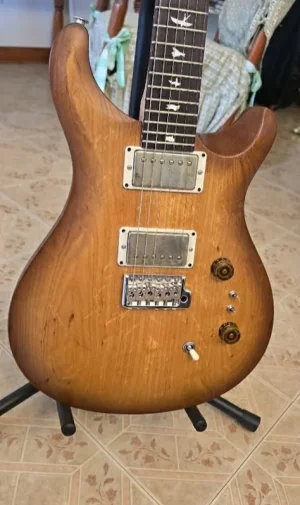
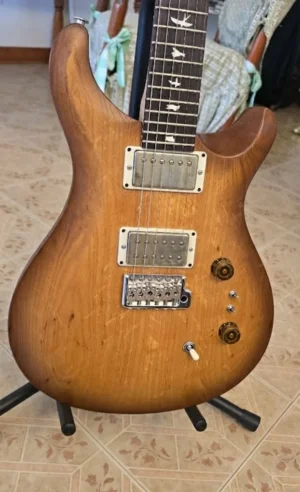
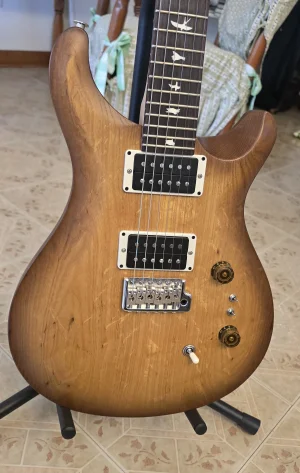
Google Nano Banana image AI allowed me to test out what aged nickel humbuckers would look like in my PRS. Unfortunately, they were unable to give me a covered dual hex pickup in the bridge, but I did that by hand easy enough


1000034154.webp1000034155.webp1000034153.webp
 
Well my day job is about 60% analyzing and curating datasets an AI models. When I say AI is plateuing, I am referring explicitly to LLMs

But, even then, are they?

Short-term trends are anecdotal at best. When we see a doubling or tripling on measures like ARC-AGI v2, isn't that proof that the tech is still advancing by leaps and bounds? We always think we've hit a wall...until something shows up and blows the wall apart!

Even within the world of "LLMs", there are structure and training approaches being explored right now that could make current ChatGPT, Gemini, etc. feel like a Ford Model T compared to a Corvette.

Also, cost shouldn't be a basis of measurement here. Costs to operate these models is coming down every day due to new energy infrastructure and improved model efficiency. Many of these shifts are happening as I type this and have yet to be fully realized. Just like computers, electric cars, and other "new" technologies, high performing options will become much more accessible as the technology matures.

Depending on the specifics of your "day job" activities, I could see how you might harbor a strong impression of "diminishing returns" with some of the current approaches. However, just like you're probably not doing the same thing today as you were 3-4 years ago, I suspect the landscape will continue to shift over the next few years.
 
Irony: As we go nuts on Global warming, we are full steam ahead with AI that consumes insane amounts of energy.

Meanwhile...

I am considering converting a Stratocaster to an Yngwie Malmsteen model. I know he has used a number of pickups over the years. If I am interested in the pickups he used to get the tones on his first groundbreaking Shred Album, Rising force, what would you suggest? This Strat is a Squire Classic Vibe with a Poplar body, and a Maple neck with rosewood fretboard (that I am scalloping, of course!). Please disregard his amp and effect choices. I have models or versions of all that.

ChatGPT said:​


Thought for 12s

Nice — scalloped neck + Strat = Yngwie vibes already. Below I’ll keep it focused only on pickups (you said ignore amp/effects) and give you historically accurate and practical options for nailing the tones on Rising Force (1984).

Short answer — the pickups to aim for​

  • Most historically accurate (what he used on Rising Force): DiMarzio HS-3 / early Dimarzio HS-series (low-output stacked hum) — especially in the bridge (this is the pickup most often cited for the Rising Force tone). Equipboard+1
  • Complement (neck/middle): early-era Yngwie also used DiMarzio FS-1 / YJM-style HS pickups in various positions; a DiMarzio YJM/HS in the neck gives the fuller, singing sustain he often used for leads. dimarzioforum.com+1
  • Modern one-stop option (signature set): Seymour Duncan YJM Fury / YJM Signature set — these are Yngwie’s modern signature single-coil/noiseless designs and will get you the YJM voice without swapping to vintage Dimarzios; they’re hotter and more modern than the original HS-3s. Seymour Duncan+1

Why those recommendations​

  • Contemporary sources and DiMarzio ads from the era point to the HS family (low-output stacked humbuckers) being used on the Rising Force recordings — they give more “humbucker power” with the single-coil clarity that suits Yngwie’s fast, articulate picking. Equipboard+1
  • Later signature gear swapped to Seymour Duncan YJM Fury pickups (which Yngwie helped design). Those are convenient if you want a ready-made Yngwie set and noise cancellation with modern build consistency. Seymour Duncan+1

Recommended pickup setups for your Squier Classic Vibe Strat​

Pick one of these three routes depending on how vintage-authentic vs. plug-and-play you want to be:

  1. Most authentic / vintage-correct (best for Rising Force tone):
    • Bridge: DiMarzio HS-3 (low-output stacked hum, single-coil footprint)
    • Middle & Neck: DiMarzio YJM/HS or FS-1 in neck (or leave middle as stock if you mostly use bridge/neck combos)
    • Why: replicates the low-output, articulate bridge bite heard on the 1984 record. Equipboard+1
  2. Signature modern convenience (one set, easy install):
    • Seymour Duncan YJM Fury set (three pickups matched)
    • Why: Yngwie-designed set, noiseless, and voiced for his style — simpler and reliable on a modern Strat. Seymour Duncan+1
  3. Budget / tonal alternative (if you want the sound but on a Squier price band):
    • Look for low-output stacked humbucker single-slot replacements (DiMarzio makes some economy options; other makers make “stacked” Strat replacements). Keep the voicing low-to-mid output and clear trebles. (No single perfect clone here, but aim for low-output stacked designs.)

Wiring / pot / installation tips (practical)​

  • Use 250k pots if you want more clarity and a slightly scooped mid that pairs well with high-gain settings; 500k will brighten — Yngwie’s tone is bright but focused, so 250k is a perfectly safe default for stacked hums in a Strat.
  • Bridge pickup is the star for the Rising Force lead tone — prioritize getting the bridge pickup right (HS-3 or equivalent).
  • If you want extra authenticity, use the bridge pickup alone for most leads and add neck for thicker harmonized lines — set your tone pot so you retain treble (don’t roll it off too much).
  • Scalloped neck: dig it — it helps note attack and vibrato technique, but won’t change the pickup tone — it willmake your playing feel more Yngwie-esque.

Final practical pick (my single recommendation)​

If you want one install that balances authenticity and modern convenience: DiMarzio HS-3 in the bridge + DiMarzio YJM (or FS-1) in the neck. If you’d rather drop in one matched modern set: Seymour Duncan YJM Fury (easier, signature-approved). Equipboard+1
 
Back
Top