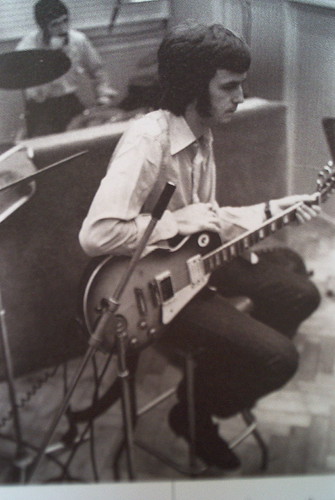
The Ultimate Les Paul Tone

Luke Duke

PRSlustologist
In the spirit of Lew's fantastic threads on the Ultimate tone I thought it was high time to start The Ultimate Les Paul Tone Thread. It is my sincere hope that this thread will be found informative by veterans and new guys alike all searching for the Ultimate Tone from their LPs.

Let's get specs up on pup height; what pup characteristics sound great for types of LPs and LP tones. Also string spacing nut and bridge, tuners. We can even stray a bit into the esoteric, but let's please keep it all on topic. Those of you with Vintage Les Pauls I'd like to get your specs and input as well.

Currently I've only got the Specs. on my guitar, not my dad's old 68/69 LP I should have those specs this weekend.

String Spacing at Bridge------------------------1 31/32"
String Spacing at 12th Fret---------------------1 3/4"
String Spacing at Nut--------------------------1 7/16"

Neck pickup height (Bass Side)------------------2/8"
Neck pickup height (Treble Side)----------------5/32"

Bridge pickup height (Bass Side)----------------1/16"
Bridge pickup height (Teble Side)---------------1/16"

I've got a Tone Pros bridge and Tone Pros aluminum tailpiece. I personally prefer the aluminum TP's on Les Pauls. The zinc plated has a steelier duller sound to my ears, whereas the aluminum has more chime and sparkle. Depending on style and which preference is which you should use since both are now available.

In Les Pauls and Les Paul style guitars I still tend to favor the PAF flavor, and clarity. Thus my choice of a Seth in the neck and a 78 in the bridge.

The guitar's formula is pretty much a necessity but there are spices you can add. Brazillian Vs. Indian Rosewood Vs. Ebony. The ebony will definitely give you a brighter, sharper attack than either rosewood. Another spice is the thickness of the top, which directly effects how bright the guitar is. This is also why some folks with thinner tops want a brighter pup.

More to come.

Luke
 
Last edited:
Re: The Ultimate Les Paul Tone

PART 1

Good job Luke!

Personally, for me, the Ultimate Les Paul would be one that can capture the tone of a genuine '58 or '59 Gibson. I like a Les Paul that takes me back to the very early 1970's when I actually owned several late 50's Bursts. I'll give you a few of my ideas and observations:

Hardware:

1. Featherweight Aluminum stop tailpiece...not ZINC, which is what Gibson switched to in 1962. Aluminum is a MUST! Whether a player likes to run the strings over the top or through the tailpiece is personal preference, but I like to screw the tailpiece studs down as far as possible as long as the strings do not contact the back edge of the base of the tune-o-matic bridge. If they do, you'll start to push the bridge forward over time and that's not a good thing.

I love the Tone Pros stuff...but that's a "better than vintage" tone and not a vintage tone. When I pick up my Les Paul I want to sound just like my heroes did in '67: Jeff Beck on Truth, Clapton on Fresh Cream, Peter Green on the Supernatural and Mike Bloomfield with Butterfield, Electric Flag and on Super Session.

2. Vintage style ABR-1 Tune-O-Matic bridge with the smaller screws for posts with the little ht. adjustment wheels that turn on the posts. I know it's a weaker design but I prefer it. Sounds less steely and most importantly: sounds like a 50's Les Paul.

3. Kluson Tuners! In the old days I used to always replace my Klusons with Grover Rotomatics. These days I prefer the tone of the lighter Klusons...maybe for the same reason I like the lighter aluminum tailpiece. Just seems to give a softer, more natural, more resonant tone.

Woods:

1. One piece Honduras Mahogany neck and body...Maple two piece top.
I've owned some nice Les Pauls with a maple neck...but it's not the 50's tone.

2. Brazilian Rosewood fingerboard is hard to find these days but it's the real deal. When I compared some great newer Les Pauls with Indian Rosewood fingerboards to my buddy's newish Gibson 58 Plain Top with the Brazilian fingerboard, I felt that guitar was the only one that really sounded like a 50's Les Paul. My Gibson 59 Historic RI is the best newish Les Paul I've ever owned, but Rondo's '58 Plaintop took me right back in time to the 50's Les Pauls I owned in the early 60's. Sounded just like I remember those sounding.

Brazilian gives the guitar more mids and midrange complexity.

Weight:

1. The lighter and more resonant the better!

Lew
 
Last edited:
Re: The Ultimate Les Paul Tone

PART 2

Pickups...my favorites for vintage tone:

First, I think alnico 2 HB's sound more like the 50's pafs I've owned...not alnico 5. To me, alnico 5 is the 60's tone...also a great, great tone but not the tone the old paf's I've owned.

Second: remember that the pickups in the Les Pauls used around 1967 by our heroes were not yet old pickups! In 1967, a '59 Les Paul was only an eight year old guitar. So those classic recordings by Cream, Jeff Beck, Peter Green, etc. were recorded on fairly new guitars.

1. Mine has Tom Holmes double cream alnico 2 humbuckers just like Tom said he'd wound for Billy Gibbons. What can I say? They're great. Haven't tried anything better...as good maybe, but not better.

2. Seth Lovers...I prefer them to the Antiquitys. Brighter and, to me, more the sound of the 8 year old pafs Clapton, Beck, Green and others used "back in the day".

3. Antiquitys...like the Seths but a little warmer and maybe a little lower in output.

4. Burstbuckers alnico 2. Say what you will, but they sound great to me.

4. Pearly Gates. Designed specifically for the Les Paul and some of my very favorite humbuckers of all time...especially the neck PG.

5. Alnico II Pros...excellant. Similar to the Pearly Gates but maybe a little less sizzle or aggression. Bell like highs...

6. Duncan 59's...I love 'em, but they remind me of my '60 ES-355...not my '58 and '59 Les Pauls.

Covered or Uncovered humbuckers?

1. I like 'em uncovered and always removed the covers on my old guitars. These days I wouldn't do that to a $50,000 Les Paul, but back then I always did. That's the way Jeff Back had his Les Paul when I met him at the Grande Ballroom in 1967 and Clapton had his that way too and that's what I like too. Just a little more prescence to the treble.

2. They sound fine covered though. Mike Bloomfield kept his covers on and got a spectacular tone. A little warmer and not quite as aggressive as uncovered. And when I saw Clapton playing his SG in 1967 I think he had the covers on...although he took them off on his Les Paul that he used for the Bluesbreakers album, and has been quoted back in those days as saying he prefered them off.


Pots, caps and wiring:

1. 500K all the way...CTS.

2. .02 Orange Drops sound fine to me. I don't hear any real diff between the Orange Drops and Mallory 150's or the super expensive Hovlands.

But I have to say this: my buddy's '58 Plaintop does have the bumblebees...and that guitar sounds the closest to a 50's Les Paul of any newish Les Paul that I've played. I don't really think the bumble bee caps have anything to do with it...but maybe.

The 50's Mod:

1. Some 50's Les Pauls (the ones that don't get muddy when you turn down the volume control:laugh2: ) have the tone caps connected to the middle terminal of the volume pots. All of my guitars have been rewired that way. I prefer it...keeps the highs bright when I turn down the volume control. But I don't think most Les Pauls were wired that way...just some.

Everyone should try the 50's mod and see if it's for you. It IS the right thing for me...but that doesn't mean it's for everyone. Some players find it to bright...but not me. I prefer the 50's mod.

Case:

1. Gotta be brown with a pink interior... :laugh2:

Lew
 
Last edited:
Re: The Ultimate Les Paul Tone

PART 3

Here's where the blasphemy comes in! Remember that shootout I mentioned where I compared a few Les Pauls to my buddy's '58 Reissue Plaintop and felt that his LP with the Brazilian Rosewood fingerboard has the most authentic tone?

That's true!

But the guitar that actually won that shootout and had the "best" tone was my Hamer Monoco Super Pro with a Seth Lover neck and Custom Custom bridge pickup. :smack: It beat them all.
 
Re: The Ultimate Les Paul Tone

I don't have my ruler out, but I can say what things I've found to be helpful in achieving a great LP tone.

1. The setup and intonation really need to be 'spot on' on a guitar with a shorter scale, like a LP. It's no secret that they come setup poorly from Gibson, so having the nut cut lower, and an absolutely perfect intonation job is paramount. Never judge a LP by how it plays at the store.....you can judge Gibson's setup techs, but not the guitar itself because the necks are usually very good otherwise.

2. The topic of pickups could take all day, but I'll just give my own rundown on my favorite Duncans for LP's
59 Model - vintage A5, tight and articulate. The best for clean LP tone.
Seth Lovers - vintage A2, warm and smooth. Great for midgain blues.
Custom 5 - like a hotter 59 with bigger bass. Articulate under gain, and nice cleans.
CC - kind of like a hotter seth w/the emphasis on thick lower mids. Buttery top - no icepick.
Custom - powerful, ballsy, great for highgain. Ruder than C-5. Only OK for cleans, great for metal.
JB - great for thick sounding single notes, emphasis on upper mids. Cuts!!!
Pearly Gates - great in darker Pauls or mahogany Customs, where you want high end sizzle and crunchy mids.

3. Hardware - I'm more of a fan of Klusons, only because I think they allow the neck to resonate better and if the guitar is setup good, they stay in tune fine. Personally, I think they make a LP sound better, but that's just my opinion. On the flipside, many feel that Gotoh/Grover type tuners stay in tune better, are higher in quality, and add more mass to the headstock, resulting in better sustain. This is a matter of preference to most LP players, so keep it in mind when shopping for a LP.

Regarding bridges, I'll leave the technical data up to others, but the stock zinc/alloy (steel) bridges/tailpieces are usually brighter and bolder in tone, while the aluminum ones have a smoother resonance, and thus a 'sweeter sound.'

4. Amps - While Leo Fender specifically designed his guitars to sound great with Fender amps, most feel that the "right amp" for a Les Paul is a Marshall.
Most of it has to do with the fact that they both had the same thing going for them....sustain! Also, the Gibson/Marshall sound was adopted by the pioneers of heavy rock ala Page, Kossoff, Duane Allman/ D.Betts, Peter Green, Joe Walsh, Clapton, and many other 70's arena rock guitarists.
Of course, many guitarists also used Fender or Vox amps, but IMO the traditional Les Paul sound has to have the Marshall as a main ingredient.
It's all about the LP, PAF's, EL-34's, and 4-12 Celestion cabs.
 
Last edited:
Re: The Ultimate Les Paul Tone

Great posts from Lew and Joe. :fing2:

All I want to say is that if you have a modern production Les Paul the single best mod you can do (IMHO) is to replace the 300K linear taper volume pots with 500K audio taper CTS pots. (May as well replace the tone pots too while you're in there, and change the caps to .02 Orange Drops). 500K audio taper volumes give you the versatility people so often accuse LPs of lacking.
 
Re: The Ultimate Les Paul Tone

You can't have a Les Paul thread without pictures!
23621900_232a1dd653.jpg

Young Eric Clapton with black and double cream!
 
Last edited:
Re: The Ultimate Les Paul Tone

If you need a picture to go with the "ultimate" late 50's LP, I own it. ;)
 
Re: The Ultimate Les Paul Tone

Lew....I went with the Hovlands because of my experience in high end audio. QC overkill. I know that every Hovland will be exactly the same. As for the Ultimate LP tone, I do believe I heard it this evening at the St Pete Times Forum.......Aerosmith!!!!!!!!!:banana: I have seen these old pharts 5 times and this was the best show yet. Lenny Kravitz bagged due to laryngitis, so they pulled out all the stops. Opened with Helter Skelter and even played Kings and Queens. One encore was Come Together with Robin Zander joining them on stage. Joe Perry was playing a Lester that looked very much like the infamous Penny. HUGE flame and a Bigsby. Played through what appeared to be Marshalls taken out of the boxes and vintage Marshall cabs. BUT the ultimate tone, to wit, the Les Paul tone I want, was the rythym tone he got from his black Standard that he used on "Train Kept a Rollin".....massive:bowdown: By the way.....he used a couple of ES335's extensively. Brad stuck with his flametop most of the evening and broke out the srat and the weird Steinberger looking strat type guitar for a few numbers.
 
Re: The Ultimate Les Paul Tone

Lewguitar said:
PART 1


1. Featherweight Aluminum stop tailpiece...not ZINC, which is what Gibson switched to in 1962. Aluminum is a MUST! Whether a player likes to run the strings over the top or through the tailpiece is personal preference, but I like to screw the tailpiece studs down as far as possible as long as the strings do not contact the back edge of the base of the tune-o-matic bridge. If they do, you'll start to push the bridge forward over time and that's not a good thing.

I love the Tone Pros stuff...but that's a "better than vintage" tone and not a vintage tone. When I pick up my Les Paul I want to sound just like my heroes did in '67: Jeff Beck on Truth, Clapton on Fresh Cream, Peter Green on the Supernatural and Mike Bloomfield with Butterfield, Electric Flag and on Super Session.

I'm wondering, WHOSE lightweight tailpiece do you like for Les Pauls--I know the Gibson Historic ones are VERY expensive--are there any bargains out there in tail pieces?

Bill

PS--And I have to agree with you on the Brazilian RW boards. Even though I'm sure that I have much less experience than you on this matter--I've noticed that the Re-Issue Historics I've played with BRW boards all seemed to have something special going on.

And I cry everytime I think about all those Les Pauls and '50s Strats and Teles that were selling for $150-$200 in the Seattle pawn shops back in the days when I still didn't have a clue....WAAAAAH! :smack:
 
Re: The Ultimate Les Paul Tone

didn't have a clue.......or $150-200 cash, right?:fingersx: It's all relative.......remember....in the early 60's. $150-200 was two weeks take home pay for someone with a pretty spiffy job. If you were looking for a used Fender today, what would two weeks take home pay buy you?
 
Last edited:
Re: The Ultimate Les Paul Tone

I've had some experience with Brazilian Rosewood boards, but not on LP standards mind you, so I can't do a direct comparison. The grain does seem slightly different on my 330 and my dad's old LP. Also the brazilian is a darker and prettier wood in my opinion of course.

As for wiring I prefer the more expensive caps, Sprague, Hovland whatever. They all have a smoother roll than regular ceramic caps.

I'm planning on replacing the PVC insulated wire with some cloth pushback. I'm sure that some people will think I'm crazy on this one, but I think it makes some difference. It was real strange we put it in my buddy's epi LP bass and it was like someone had taken a wet towel off the amp grill cloth. I'm not sure maybe it bleeds away certain frequencies, or doesn't but it was the strangest thing.

Hey have you guys been able to tell any tonal differences between the Nashville TOM and the original ABR? I know the original was skinnier, so less mass, maybe a different material? Also a thinner bridge is advantageous when a person wants to string their guitar the traditional way without the strings touching the back of the bridge.

Luke
 
Re: The Ultimate Les Paul Tone

Anybody for P90's?

Umm, why does the 'ultimate' LP tone revolve around 60's BritBlues players?

Freddie King, Jody Williams, Guitar Slim, Fran Beecher, etc etc etc didn't use Marshalls...if they could have bought Fenders in England back then, they would have (import restrictions)...
 
Re: The Ultimate Les Paul Tone

ES350 said:
Anybody for P90's?

Umm, why does the 'ultimate' LP tone revolve around 60's BritBlues players?

Freddie King, Jody Williams, Guitar Slim, Fran Beecher, etc etc etc didn't use Marshalls...if they could have bought Fenders in England back then, they would have (import restrictions)...

I'm waiting for the P90 pros to step up. My dad's is a 68/69 deluxe so I'll have some mini humbucker specs up this weekend.

As for other amps I think you made a good point. Lots of LPs got plugged into Blackface and Tweed amps as well. I've heard some great sounds from LPs into tweed style amps.

Luke
 
Re: The Ultimate Les Paul Tone

Good point on the amp issue.......most of what you hear from Peter Green post-Bluesbreakers was coming through either an Orange head or a blackface Twin. and a fair amount of the stuff Page did in the studio was through an old Supro combo.
 
Re: The Ultimate Les Paul Tone

As for wiring I prefer the more expensive caps, Sprague, Hovland whatever. They all have a smoother roll than regular ceramic caps.

I put a complete early 50's Gibson wiring harness (BB's, tigerback pots) in an R6 and it sounds pretty close to my old '56...the two 50's P90's (pulls from an old Special I got from Angela years ago) kinda help. I really like the BB's and the Sprague Black Cats (more of an early 60's tone). Astron pulls from old tweeds work pretty nice as well...

I'm planning on replacing the PVC insulated wire with some cloth pushback. I'm sure that some people will think I'm crazy on this one, but I think it makes some difference. It was real strange we put it in my buddy's epi LP bass and it was like someone had taken a wet towel off the amp grill cloth. I'm not sure maybe it bleeds away certain frequencies, or doesn't but it was the strangest thing.

I know what you mean---the tone with the old parts lost some highs and some lows, but only the ones I didn't really want anyway. Sweeter, more 'organic', less exaggerated frequency range...

Hey have you guys been able to tell any tonal differences between the Nashville TOM and the original ABR? I know the original was skinnier, so less mass, maybe a different material? Also a thinner bridge is advantageous when a person wants to string their guitar the traditional way without the strings touching the back of the bridge.

The ABR1 is the thing---too much metal on the Nashville and big studs are just not my cup of tea...the whole stability argument re the Nashville seems kind of silly. I use .012-.048 (or heavier) and have never seen ABR1 studs bend; ever, in 40 years. I doubt it's gonna happen with the string gauges most people use.
 
Re: The Ultimate Les Paul Tone

What do you guys like in a brighter LP? My '58 Reissue is on the bright side in the bridge position (I know, duh)...I'm currently running a set of PG's that I got from Lew with RS Guitarworks aged nickel covers and premium wiring kit. We play everything from GnR, The Cult, STP, Velvet Revolver, to Aerosmith, Bad Co., etc.
 
Re: The Ultimate Les Paul Tone

This be a damn good thread....def vault worthy!

I don't have much to add from the electronics/technical standpoint. I'm no guitar tech.

I have some of my own opinions/experiences (FWIW) regarding what to look/listen for in buying one to make sure ya get a good one to start with (god knows I've bought enough of them) that I can post later. Thing is, nearly ALL of them sound really good, but far fewer have THE tone. If you don't start with a really good one, all the pup/part swaps in the world won't help much.
 
Re: The Ultimate Les Paul Tone

SouthernShred said:
What do you guys like in a brighter LP? My '58 Reissue is on the bright side in the bridge position (I know, duh)...I'm currently running a set of PG's that I got from Lew with RS Guitarworks aged nickel covers and premium wiring kit. We play everything from GnR, The Cult, STP, Velvet Revolver, to Aerosmith, Bad Co., etc.

The PGs do have that extra bit of highs that some folks find annoying. I think Benjy runs either a 300k or 250K bridge volume pot to tame it down a bit. You could always go to a "heavier" cap if you like the PG tone.

Another thing about SD pups (some in particular) are very sensitive to height adjustments, so maybe try that? On bright pups I'm not changing I'll lower the screws and raise the entire pup, that helps out too.

Luke
 
Back
Top