Tips on Switching to Fingerstyle

Johnny the Kid

Shaunofthedeadologist
So I'm playing bass in a band that is more of a pop rock type sound (also has a hot girl on vocals, and my being in the band may or may not be solely influenced by that), and although it's not the thrash and metalcore that I love I'm still having a lot of fun. I've been playing the bass with my fingers as opposed to a pick because it's more fun. After about 2 hours of playing it that way one night, I had a blister on my index finger, and after two weeks of playing (and popping the blister) the calluses still have not made an appearance, which is weird because I had calluses on my fretting hand in about a week.

Anybody have any tips for something that can make some quick calluses on my plucking hand? I've heard super glue is a good one to try. I'm also planning on switching to flatwounds for some added warmth and less harshness on my fingers. Any other tips?
 
Re: Tips on Switching to Fingerstyle

Flat wound might help, but u might endup losing more highend than u bargain for. I've heard that surgical spirit (hydrogen peroxide) also helps
 
Re: Tips on Switching to Fingerstyle

To build the skin you just continue to damage it the way you do.

Daddario Chromes are relatively bright flats. I also like the DR Legends, in the rare case that their Silly Silk(tm) fits into the bridge.

Roundwounds are also differently bad on the fingers. Some are much less "sharp". What you do you have right now?
 
Re: Tips on Switching to Fingerstyle

I was looking at the DR Legends because they are in the same gauge as the Dunlops I use right now. And I don't mind losing any brightness. This band doesn't call for any real flourishes of playing, just for me to hold down the low end while the keyboard and guitars play over that.

How do you recommend using the hydrogen peroxide?
 
Re: Tips on Switching to Fingerstyle

I was looking at the DR Legends because they are in the same gauge as the Dunlops I use right now. And I don't mind losing any brightness. This band doesn't call for any real flourishes of playing, just for me to hold down the low end while the keyboard and guitars play over that.

If this is your first foray into getting flats, I would highly recommend you get one gauge lighter than you would get with rounds. Reason is that, due to the winding process, flatwounds are going to be thicker and stiffer feeling than their round counterparts.
 
Re: Tips on Switching to Fingerstyle

If this is your first foray into getting flats, I would highly recommend you get one gauge lighter than you would get with rounds. Reason is that, due to the winding process, flatwounds are going to be thicker and stiffer feeling than their round counterparts.

The only problem with that is that the DR's have the smallest gauge B string for a 5 string other than that, I would. I use 45-125 Dunlops, and the DR Legends are the same gauge.
 
Re: Tips on Switching to Fingerstyle

How do you recommend using the hydrogen peroxide?

Well this is not something I've done myself, but I've heard ppl have had results. So I quote;

" A tip from Eric Clapton supposedly: rub your fingertips with isopropyl (rubbing) alcohol three (3) times a day for a week or two for a beginner or someone who hasn't played for a while. This will
dry out the skin and help calluses build very quickly. I tried this after not playing for about a year and it worked for me.
By: Jef DeMarie"
 
Re: Tips on Switching to Fingerstyle

The only problem with that is that the DR's have the smallest gauge B string for a 5 string other than that, I would. I use 45-125 Dunlops, and the DR Legends are the same gauge.

Gauge is the diameter of the string; nothing more. With flats, there's going to be more tension per inch on that string over rounds, which is going to allow a lighter gauge B string to ring with authority over being choked. Lots of other things are going to factor in for sure, but flats are a different beast altogether.
 
Re: Tips on Switching to Fingerstyle

Gauge is the diameter of the string; nothing more. With flats, there's going to be more tension per inch on that string over rounds, which is going to allow a lighter gauge B string to ring with authority over being choked. Lots of other things are going to factor in for sure, but flats are a different beast altogether.

I understand that. Like I said, the DR Legends have the lightest low B string. I just bought them on MF or $35. I did try to find the lightest set I could and those DR legends were the lightest I found
 
Re: Tips on Switching to Fingerstyle

Play through. BECOME ONE with the pain. Your bass must trancend its form and become an appendage of you: an extention of your soul. The bass is rejecting your touch. It NEEDS to know that it can trust you. Keep trying and soon the bass will accept you and together, you shall be as a narrow stream joining a MIGHTY river. And that river's name is Post-Death Progressive Banjocore...
 
Re: Tips on Switching to Fingerstyle

Play through. BECOME ONE with the pain. Your bass must trancend its form and become an appendage of you: an extention of your soul. The bass is rejecting your touch. It NEEDS to know that it can trust you. Keep trying and soon the bass will accept you and together, you shall be as a narrow stream joining a MIGHTY river. And that river's name is Post-Death Progressive Banjocore...

Thanks. I think I needed that.
 
Re: Tips on Switching to Fingerstyle

Flatwounds help tremendously, I played them for years.
I'm switching back to Roundwounds for more textural sound and growl.

But Falloffthebonetone is right, play through the pain, sound is more important than your feelings
 
Re: Tips on Switching to Fingerstyle

Be careful about popping blisters; they can become infected if not treated properly.

The isopropyl alcohol or hydrogen peroxide should do nicely in that regard.

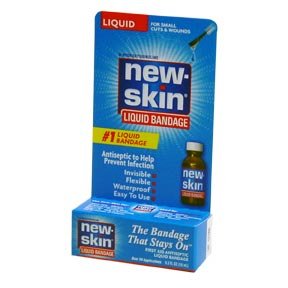
This product is available in the US; might be worth considering instead of superglue:

31HJ9FMMYPL.jpg
 
Re: Tips on Switching to Fingerstyle

Be careful about popping blisters; they can become infected if not treated properly.

The isopropyl alcohol or hydrogen peroxide should do nicely in that regard.

This product is available in the US; might be worth considering instead of superglue:

31HJ9FMMYPL.jpg

Yep, I've seen that stuff. I'm starting to build up callouses.
 
Re: Tips on Switching to Fingerstyle

I couldn't imagine switching to flatwounds because I just love that bright top end that roundwounds give. I'd just tough it out and sooner or later you will find that it's worth it. Maybe a coated roundwound won't eat you up as much.
 
Re: Tips on Switching to Fingerstyle

** Don't switch to flatwounds thinking it will be any easier on your fingers. There are other perfectly legitimate reasons to switch, but that isn't one of them. Yes, the surface is flatter instead of sharper, but the downside of that is there is always more surface area of both string and fingertip in contact with each other, which can cause more friction -- and if your bass playing style is the least bit active, that means it can build up heat quicker. I play on rounds. A few times I have gone to jams, and played someone else's bass with flats on it, and my existing calluses didn't keep me from getting new blisters. My fingertips just got hotter quicker.

** I love DR strings. Pretty much all I use are DR and D'Addario. DR makes a coated string that actually feels smoother on a roundwound, extends the life of the strings, and doesn't detract from the tone at all. Most of their coated strings are colored, but if you find the colors gimmicky, they have clear coats as well, called Dragonskins. I strongly recommend checking some out. (There's even a sound clip on the website.)

** The best thing to do once you actually get blisters is to carefully pop them, but leave all the skin in place. I have been popping blisters for over half a century, and have yet to get an infection from it. You might have to drain it a couple of times, but eventually it will dry out, the new skin will grow underneath, and the skin from the blister will just be an added layer of protection while the callus forms.

To develop calluses, the best thing to do is to practice just up to the point where you know if you play any more, you're going to get a blister, then rest until the next day (if that's an option).
 
Re: Tips on Switching to Fingerstyle

Well I already made the switch,to flat wounds which was something I wanted,to,do anyways whether I kept playing with a pick or not (played a Jack Cassidy bass with stock flats and loved the feel) and yeah I've noticed my fingers do heat up a bit more but my callouses are starting to come in now. I gotta be honest I still miss the pick sometimes so I've decided to use both. I play with fingers for the pop stuff but my metal is almost all pick.
 
Re: Tips on Switching to Fingerstyle

I've noticed that it depends on the flatwounds that that can happen, and also the fingers. Some flats it's a breeze and the fingers just glide right across smoother and faster than any round, others feel sticky and heavy.

Could have to do with the outer material. Sure there is more surface area, but still, what's going to wreck something more: sliding it across a flat floor or a bumpy/coarse one?

They do generally have higher tension as mentioned which is increased stress on the fingertips. I always found most flats I played easier on the hands than their roundwound equivalent.
 
Back
Top