Amplifier restoration thread. Tips, cleaners, supplies.

Gearjoneser

Gear Ho
This thread is dedicated to restoring worn amps and speaker cabs, featuring everything from gluing down a tear, to cleaning and rejuvenating vintage amps, all the way to changing grill cloth and tolex. Let's limit it to informational tips and tutorials, without dumb stuff please.

I'll start with some of the tricks that have worked for me, having done this since I was a teen on about a hundred amps.

First, remove the chassis and get the loose hardware off.

Use Murphy's Oil Soap and hot water with a brush to thoroughly clean out all the crevices in the tolex. I've used dish soap and hot water, and also Fabuloso kitchen cleaner and water. Have a dry towel handy as well.
You just need to get it as clean as possible.

In order to fully erase ALL traces of crevice dirt, and restore the tolex to dark black, use black shoe polish and a shoe brush. Make sure you don't let this get on light colored cloth like silver Fender cloth. As a matter of fact, you can use this same technique on faded Marshall grill cloth. Just do it very lightly. Brush the black polish onto the Marshall cloth and work it in, but don't make a gunky mess of it. Wipe off the piping and logo.

To remove something like paint, don't EVER use paint remover or acetone, or you'll smear the texture in the tolex smooth and it'll look terrible. You're better off using Goof Off and scrubbing with a stiff bristled brush, and even picking away at it with a knife.

Besides looking at the tubes, I take the chassis and spray contact cleaner into the pots and turn them 50 times or so. Replace if necessary, by looking up the amp schematic on Google and finding the pot values.

For gluing down torn flaps of tolex, I like Super Glue Vinyl and Leather Mender. I've had decent results with a clean wood glue job too, but NEVER use regular Super Glue. It leaves white residue in the surrounding area and can melt plastic.
41yDHac6xML._SL500_AA300_PIcountsize-12,TopRight,0,0_AA300_SH20_.jpg


Try not to cover torn out scuffs with a Sharpie marker. It cheapens the look of vintage amps that collectors would rather have unfixed. If you must, cut out a clean circle or square, and patch a piece in that you cut from an inside top flap. Nobody will notice it missing from there. If you do a clean patch job, the scuff will be gone.

To retension grill cloth, get the grillcloth frame out of the amp, pry the old staples out on one side, pull it tight from the middle out while stapling with a staple gun. Do the same on any side needed to make the cloth straight and tight. Pay attention to the cloth pattern so it's straight top to bottom and side to side.

And please...don't spray paint your amp or do irreversible mods to great vintage pieces.
 
Last edited:
Re: Amplifier restoration thread. Tips, cleaners, supplies.

Ultrasonic cleaners are awesome for guitar hardware, since the microbubbles will clean beneath saddles and stuff. I bet they'd be useful for amp hardware too, if there are any hard-to-clean stuff in there.
 
Re: Amplifier restoration thread. Tips, cleaners, supplies.

can you spray contact cleaner right into the pot shaft after the plastic knob is taken off or do you need to get to them from the back?
 
Re: Amplifier restoration thread. Tips, cleaners, supplies.

can you spray contact cleaner right into the pot shaft after the plastic knob is taken off or do you need to get to them from the back?

Either way. If there's a small opening in the body of the pot, shoot some in there. But yeah, you can spray or drop some contact cleaner like DeOxit or even Isopropyl alcohol down through the top. Then turn them back and forth to get the wipers deoxidized. Don't use lubricant or oil like WD-40. The pots will become sludgy inside.

Also, use a Q Tip to brush out all the input jacks on the front and back with contact cleaner. It's common for oxidation to build up in FX loop jacks that aren't used, and it creates an open circuit that causes no signal to pass from the preamp to the power section. If you have an amp that's not working, put a short cable in the FX loop and see if the amp starts working again. If so, the FX loop jacks are dirty.
 
Last edited:
Re: Amplifier restoration thread. Tips, cleaners, supplies.

Cool tips, thanks --

Ever use Goo Be Gone, do you know if it is safe for tolex?
 
Re: Amplifier restoration thread. Tips, cleaners, supplies.

Cool tips, thanks --

Ever use Goo Be Gone, do you know if it is safe for tolex?

Actually, Goo Be Gone is even better than Goof Off. I forgot about that. For really tough stuff like paint or sticker residue, that stuff works great.

Just never use something like brake cleaner, nail polish remover, acetone, oven cleaner. Some of that volatile stuff will melt tolex or erase the script on the chassis.
 
Re: Amplifier restoration thread. Tips, cleaners, supplies.

Ever replace the grill cloth on an old amp and find that that new grill cloth looks a little too new?

Glassman slick trick #32...

(1) remove the baffle board with the new grill cloth on it.
(2) remove speakers from the baffle board.
(3) procure a (formerly) white cigarette butt (used) by whatever means necessary.
(4) drive to your nearest home center (Lowes, Home Depot, whatever).
(5) go to the paint department, rip the cigarette butt open and have them scan the center (stained section) and make you a sample can (4 oz) of the color.
(6) buy a quart of clear semi-gloss water base polyurethane.
(7) go home.
(8) mix the cigarette butt colored paint with the polyurethane; 1 part paint to 4 parts polyurethane. Mix well.
(9) find an old atomizing spray bottle (like a Windex bottle) that has a nice, even fogging spray.
(10) mix your paint/polyurethane mixture with however much water it takes to get a good fog like spray pattern (approximately a 10 to 1 ratio). Once again, mix well.
(11) fog the mixture on the outside of the grille cloth evenly...go slow and let it build up to the color you want rather than trying to do it in one shot.
(12) congratulate yourself on your new "old" patina on you new grill cloth..it'll look like it's been slaving away in an old blues bar for decades.
(extra credit) you can do the same thing using a dark grey paint instead of the cigarette colored paint and spraying it through the speaker hole(s) from the back side to get that corona effect some amps get when the speaker cones dry up...go easy though...the effect should be subtle.

The water based polyurethane makes this extremely durable and will last for years. I did it to my Super Reverb (1966) about 15 years ago and it still looks awesome. The effect is very convincing and it's hard to tell that the cloth isn't the original. Remember, you are only trying to tint the cloth, not bury it in color. I DO NOT recommend using this on anything other than grill cloth though...it won't hold to tolex very long and you really don't want to lacquer your tweed with water based finish (use the real thing and darken it).

Enjoy!
 
Re: Amplifier restoration thread. Tips, cleaners, supplies.

Good info, Glassman. What do you think would be the best method for restoring black Marshall grillcloth?

You mentioned using a Windex bottle. I wonder if black Rit Dye mixed with water in a spray bottle would work....or would it dry all blotchy? Rit also makes the liquid version that could be slightly watered down.
 
Re: Amplifier restoration thread. Tips, cleaners, supplies.

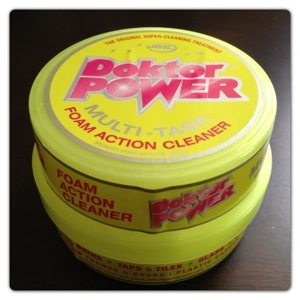
I've found that doktor power is excellent for clearning marks off tolex that wont come off with water/soap

Having white tolex on my amps requires ALOT of cleaning and this is the best way that i've found.
 
Re: Amplifier restoration thread. Tips, cleaners, supplies.

I'll keep my eyes open for Doktor Power. Is it a European brand?

20121104-122310.jpg
 
Re: Amplifier restoration thread. Tips, cleaners, supplies.

Good info, Glassman. What do you think would be the best method for restoring black Marshall grillcloth?

You mentioned using a Windex bottle. I wonder if black Rit Dye mixed with water in a spray bottle would work....or would it dry all blotchy? Rit also makes the liquid version that could be slightly watered down.

I've never done that so I can't comment from experience...but it might work. I'd experiment on a piece of test fabric before committing though. If you don't need to bring it all the way back to "new" condition, I've had luck just using ArmorAll on some fabrics...it'll darken the color somewhat without erasing that patina of time and all the character that comes from it. It also offers some protection against further fade.
 
Re: Amplifier restoration thread. Tips, cleaners, supplies.

My go-to cleaner for almost everything external on an amplifier is transmission fluid. If you've ever changed the fluid in your transmission, you'll notice that everything inside is clean, the metal surfaces are completely free of oxidation and the rubber parts are in excellent condition. Transmission fluid has a lot of detergent in it and additives that prevent oxidation. It also doesn't attack anything made out of rubber, vinyl, etc.

It is an excellent cleaner for tolex...rag it on and work it in...a little goes a long way. After about five minutes, I take a clean cotton cloth and buff it until no residue remains. It also works really good for taking the fade/chalkiness off of old Fender blackface control panels. I use transmission fluid to preserve/protect the laminations on transformers from rust; it also keeps rusty transformers from getting worse. I use a paint brush to apply it to the laminations but generally don't worry about removing the excess.
 
Re: Amplifier restoration thread. Tips, cleaners, supplies.

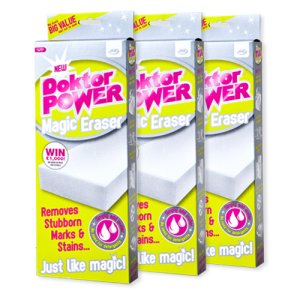
Its made by JML not too sure if its european only. The one i was meaning is pretty much a massive sponge

dpmetp_lalt1.jpg
 
Re: Amplifier restoration thread. Tips, cleaners, supplies.

I've found that doktor power is excellent for clearning marks off tolex that wont come off with water/soap

Having white tolex on my amps requires ALOT of cleaning and this is the best way that i've found.

I want to try the Magic Eraser on my Marshall Jubilee head and cabs. Over time, the gray tolex gets a slightly brown patina, and I'm not sure if it's dirt or oxidation in the covering. If you say the Magic Eraser does a good job on white, I'm sure it'll work perfectly on gray.
 
Back
Top