Smoothing grooves out of floyd nut

Re: Smoothing grooves out of floyd nut

NO don't glue crap in the nut slot, that's not fixing things, that's half assing them. I'm talking about sanding the rough area of metal on the nut that's causing the sitar sound with the sandpaper, not gluing the sandpaper paper into the nut.

Well I get the sitar sound even when the strings are clapped down....so doesn't that take everything from the clamp back out of the equation? If I get the sound when the strings are clamped, doesn't that mean the string isn't making contact with the bottom of the slot or something?
 
Re: Smoothing grooves out of floyd nut

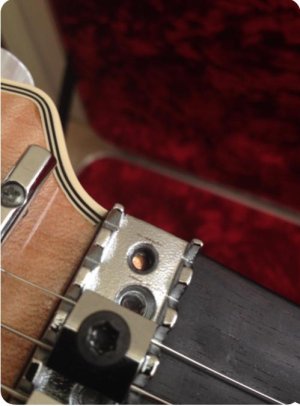
Here is a pic of the nut. The grooves are super small and not not very deep. I don't know if they are bad enough to be the cause of the problem, or if its a problem with the slot in the nut itself??
 

Attachments

  • Screen Shot 2014-11-20 at 3.20.27 PM.jpg
    Screen Shot 2014-11-20 at 3.20.27 PM.jpg
    34.4 KB · Views: 0
Re: Smoothing grooves out of floyd nut

Here is a pic of the nut. The grooves are super small and not not very deep. I don't know if they are bad enough to be the cause of the problem, or if its a problem with the slot in the nut itself??

TBH it looks like thats sort of a cheap nut you've got there. New Floyd nuts are cheap. Just take the proper measurements and buy a new one.
 
Re: Smoothing grooves out of floyd nut

TBH it looks like thats sort of a cheap nut you've got there. New Floyd nuts are cheap. Just take the proper measurements and buy a new one.

Its the stock nut and it says mode in germany on the bottom. I bought a new nut and the same thing happened because all the chrome pain starting chipping off. So I may just get some sand paper and sand the paint off the other one to the bare metal and put it on
 
Re: Smoothing grooves out of floyd nut

the nut should have a slight angle back towards the headstock

my buddy installed an new new in his and got that angle just a bit too high in back

it was vibrating at the clamp, not at the slot leading to the fret board

he got a ring
the ring says its hitting something in front of the nut

or the string is too high in back

you could be right
grooves in the nut may be an issue

but a vertical slot wouldnt do that

a horizontal ridge would
 
Re: Smoothing grooves out of floyd nut

Ive got the retainer bar cranked down pretty good so that the string lays against the nut all the way down towards the headstock
 
Re: Smoothing grooves out of floyd nut

Once the string is clamped down, doesn't that take everything behind the clamp out of the picture? so would the ring have to be coming somewhere between the clamp and the bridge?
 
Re: Smoothing grooves out of floyd nut

So I just put little slips of paper in the B and E slots....and the buzz is gone. So what does that mean? are the slots too big for the strings?
 
Re: Smoothing grooves out of floyd nut

So I just put little slips of paper in the B and E slots....and the buzz is gone. So what does that mean? are the slots too big for the strings?
Yes, it means that the string had enough room behind the slot's end was hiting the sides of the slot, giving this weak muffled numb sitar sound. Do what I described and you will never have to buy another expensive Schaller or Gotoh nut only to see that the muffled sound is just on the same or another string now.
My theory is this : nowadays most of players with locking nuts are the metal dudes right? And the kids nowadays play drop-G, drop-A, -> drop-C being the highest. So the thinnest strings kids today use are in the 11-54 range, going all the way up to 13's, or even baritone 14's++. So they target those thick strings and make the nut slots in such a way that the majority of players is happy. Which leaves us, the dinosaurs of the hair-metal 80s still using 9's or 10's with few options, like using creative methods to solve problems :)
The biggest advantage of the plain paper method is that it can be reverted (using plain women nail paint remover - acetyline) if the user chooses to go up in string gauge.
 
Last edited:
Back
Top