Re: The real influence of wood in tone
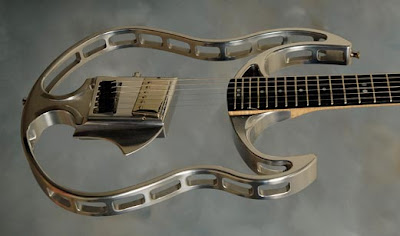
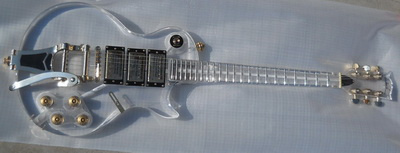
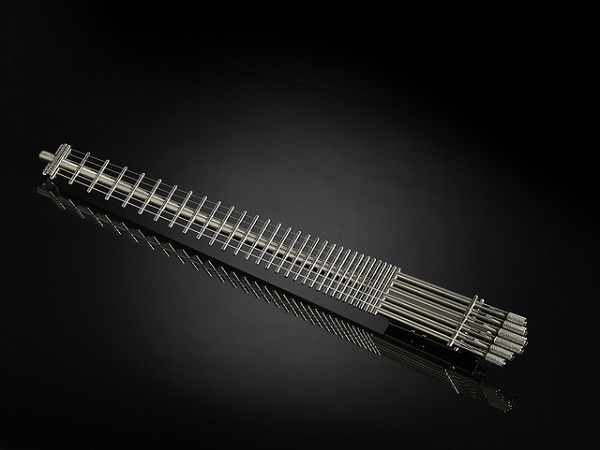
Do you still believe that wood is the primary source of electric guitar tone? Try the Gittler on for size. NO body, NO wood!
No body. No wood. No tone.
Zerberus said it all, really. In a guitar, the strings and the construction are in a constant feedback loop, feeding vibrations into each other. Not so much in a slab of stone with strings attached. The complexity of tone, that is, the interplay of individual harmonics, their proportions, phases and timing, is a function of what the guitar is made of, and how. It is a pretty subtle thing that requires sharp ears, a good amp and a fluent player to be appreciated or sometimes even noticed. But it is exactly what tells a gem from a dud.
Pickups are transducers. They are the source of voltage that controls everything down the amplification chain. That voltage is the consequence of the strings' moving within the magnetic field. Therefore, pickup tone is directly dependent on string tone, among other factors. An able player has the means to temporarily alter string tone, for example by palm muting the harmonics into a quick decay, et cetera. The pickup follows whatever happens with the string section within its sensing window.
Simplifying things a bit, string tone depends on how much give the tensioning element has. The tensioning element is the system consisting of the neck, body, bridge, tuners, nut and frets. It is the traditionally wooden parts that flex the most and because of that, neither end of a vibrating string is really stationary.
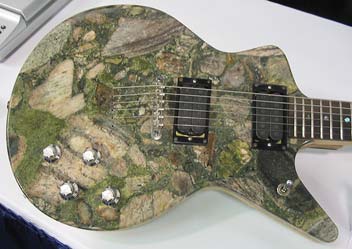
A stone guitar (shaped object) has hardly any flex, so it sounds awful (brittle and cold), though it might sustain for days. A rubber guitar shaped object is going to sound floppy and wonky, lacking definition and stability.
In the timber is the timbre. In the fingers is the blood. In the wallet is the money. Or it isn't.
The notion that "tone comes from electronics" is a theory based on a false assumptions and lack of understanding of the subject. How could one pickup sound different in a different guitar, even the same body with a swapped neck, if it were true?
A badly placed pickup sounds bad, even if you loved it in another guitar. You are a lucky man if you've never heard a JB do its worst. I've had just that happen, but did not even think about blaming Seymour or Maricela for "making a horrible pickup" because it was just an example of a bad match and entirely my own fault. FTR, the pickup has been transplanted into another plank and sounds **** (Uh, mammaries not allowed here?).
Putting "the best" pickup in "the best" guitar does not guarantee tonal nirvana, just like putting your favourite mustard on your favourite chocolate bar does not really make your favourite meal.
Matching is key.