The real influence of wood in tone

Re: The real influence of wood in tone

Going back to your original question, whether wood affects tone, I'm convinced that the body material doesn't affect tone as much as some hype would have us believe. I once read a dissertation by a professional physicist (Manfred Zollner) who also plays the electric guitar. I'm quoting from memory here, so I may be incorrect on minor details: He concludes that the material used on electric guitars is predominantly meant to give the strings a stiff base to attach to. Assuming the sustain guitarists desire means the duration of string vibration, he proves convincingly that the less resonant the material, the more energy remains for the string - that implies that resonant woods would reduce the sustain, because their resonance takes away energy from the strings' vibrations. He goes on to state that an electric guitar made of solid conrete would offer a given string the best chance of maximum sustain, as opposed to a rubber guitar, which would soak up a lot of string vibration and reduce possible sustain substantially. He proves all his findings empirically. Most of his maths was way beyond my scope. But I'm convinced by his conclusions. An electric guitar basically is a board for holding strings under tension. The electronics/pickups etc. will play the larger part in sound transduction.

BUT as I also read that the different woods, types of construction and all the other variables previously mentioned will most likely take away (rather than add) their own specific set of frequencies, I believe this all results in what some can hear as different 'sounding' woods. Scale length, construction type, cable lenghths, amp, cabs, settings, effects etc. will also influence the 'sound' to varying degrees. I would love to see a conclusive list, ranking what has how much influence in % on an electric guitar's sound, but I haven't seen one yet. My opinion is that what influences us to prefer a certain guitar FOR PLAYING are the way it looks, feels and 'sounds' - whereas what makes us prefer a certain electric guitar to LISTEN TO is influenced first and foremost by the player (style etc.), immediately followed by their chain of equipment, of which the wood seems to be merely one of very many variables. This might be why Vai's acrylic guitar sounds quite decent.

I plan to find out for myself, whether wood plays as minor a role as suggested by Zollner, by building a guitar body out of multiplexed birch and seeing if it makes much difference to the sound I hear in comparison to the ash strat and mahogany SG I have. The proposed increase in sustain would be especially interesting. Job and family permitting, I'd be happy to let you guess which guitar is which, should I ever get the body done ...
 
Re: The real influence of wood in tone

What you say about the string energy is true - the string's vibration is a negative reflection of what the body uses to 'power' its vibration.....however there is a reflection back into the string as the body will then transfer energy back into the supports etc until the energy dies away.

When we talk 'an organic tone' we tend to think of the think of the specific way organic materials (specifically solid pieces of wood) absorb/reflect vibrations. Everything will have a resonance, which is why guitars made from concrete/perspex etc will still produce a sound much like a wooden guitar with the same pickup. The small influence the supporting material has will of course produce a subtle change in the way guitar sounds. For some that may make no difference to the overall picture, for others it will ruin it.
 
Re: The real influence of wood in tone

Thanks mkxxx! :D It was a very clarifying post, you seem very wise! I would like to see that comparison chart. :P
 
Re: The real influence of wood in tone

A practical way of answering that question: find a guitar store where they have several of the same model of a guitar (with the same neck type and everything), and try them all. Even the same type of wood can sound different between two guitars.
 
Re: The real influence of wood in tone

It should be mentioned that different types of pickups will respond to the wood more or less as well. A wax potted high output duncan Invader will make the wood less of a factor in it's tone because it's frequencies are so isolated and compressed. On the otherside, something like a Seth Lover that isn't wax potted is a much cleaner and more dynamically open pickup that picks up more frequencies, some of which are undesirable to some players. Then there are microphonic pickups which literally pickup the sound of the wood vibrations and amplify them. It should also be noted that solid body electric guitars were created with the deliberate intention of factoring out the wood in the sound. It would prevent feedback from microphonic pickups because the guitar wasn't making as much acoustic noise. This also lended more sustain and a more attacky tone that changed a generation. So in a typical solid body, it's safe to say the wood doesn't effect the tone as much as the electronics, but it is significant enough to make or break an instrument's tone. It's an ELECTRIC guitar, that's where the majority of the tone lies. I only mention all of this because I know people that will say that wood is 99% of the tone and the only difference between pickups is whether or not they have hum and how loud they are.
 
Last edited:
Re: The real influence of wood in tone

.... I once read a dissertation by a professional physicist (Manfred Zollner) who also plays the electric guitar. ...

https://hps.hs-regensburg.de/~elektrogitarre/

That piece is required reading at Mittenwald and has been since the early `80s, but not so much becasue of it`s truth factor as much as to show how important it is to remember ALL aspects of the system as a whole. Zollner almost completely disregards that the body and neck do not just "take" vibrations from the strings, but that their mass amplifies the vibrations and feeds them back to the string, significantly increasing the time it takes for the note to decay, at least in the version I read in the 90s. It has since been updated, but I can`t tell you what the updates are since I haven`t looked at it in well over a decade. From what I gather he has revised come of his conclusions....

The "Stiff base" argument was always the fiorst one to come up in class.... and be more or less instantly countered by the example of Status /Modulus Graphite carbon fiber necks and their "cold" or "dead" tonality, which requires a nice chunk of warmer wood to make up for it. They`re stiff and stable enough to plow a frozen field with, but alone they sound like they were out ther when it froze and didn`t make it. ;)

In my experience, specifically on eletrics, it`s very much like a vocalist /microphone interaction, with the acoustic tone being the "voice".... You can give Frank Sinatra the cheapest POS mic in the world and he`ll still sound godly, wheras you can give me the most Hi Fi diamond encrusted, platinum plated, 0Hz-100000Hz mic, and run the signal through millions of dollars in studio equipment, and I`ll still sound like crap.

Same with guitars, the "wrong" pickup may not produce a tone that you want, since it can never fully mask the guitars inherent nature ("The voice always shines through"). but when you find one that plays off of that, the experience goes to a whole new level.

My master said it best: All guitars are acoustic. Some use an air filled box for amplification, some use a microphone and an electronic apparatus.
 
Last edited:
Re: The real influence of wood in tone

I think the biggest factor in "tone" is the mind. There is so much trickery that goes on in the mind, that I believe a lot of the nuances people hear are often perception and not really reality. There are so many factors in the signal chain that determining which one is directly related to the wood can be confusing and misleading. Can nuances exist? Sure. Can they be exaggerated or altered by the mind and preconceived ideas? You bet.

Ron Kirn has a really good write up on this: http://www.ronkirn.com/quest.htm
 
Re: The real influence of wood in tone

Once I conducted my own little experiment using my Charvel. I bolted on different necks. So it was the same body, same bridge, same electronics, through the same amp with the same settings. The change was not subtle but quite noticable from neck to neck.
 
Re: The real influence of wood in tone

Once I conducted my own little experiment using my Charvel. I bolted on different necks. So it was the same body, same bridge, same electronics, through the same amp with the same settings. The change was not subtle but quite noticable from neck to neck.

Which has to do largely with energy transferance, etc.

In my own opinion ('cuz I'm the only one with one of those around here...ha ha!), the neck contributes significantly to the tone and response. Yet, the majority of players have this mindset that the body is the primary source of tone.

While I give at least as much value, if not more, to the neck material as the body, the first and foremost factor in the overall tone of an electric is clearly the electronics, followed by its construction characteristics and setup (bridge and nut type, bolt-on vs. set-neck/neck-through, solid vs. chambered. vs. hollow, scale length, pickup height, etc.).
 
Last edited:
Re: The real influence of wood in tone

Yet, the majority of players have this mindset that the body is the primary source of tone..

An interesting experiment would be one neck and different bodies, with the same pickups/electronics and bridge in each case. That would help answer that question a little better. If wasn't so much of a hassle I could do that using swamp ash, alder, mahogony, and basswood bodies.
 
Re: The real influence of wood in tone

I've had numerous occasions where I've swapped necks and the tone has changed....going to a thicker one made the guitar sound much better. My most current of these is a Squier CV 50's body....went from a Warmoth thin profile maple neck to a B.Hefner 56 'v' profile and the guitar has come alive.
 
Re: The real influence of wood in tone

I crack up when I see people get so insistent and heated or freaked out about wood choices in a guitar and the last thing they consider is the neck. However, I can't stress enough that even the neck material and construction isn't the most important aspect in the chain of variables that determine how a guitar sounds and responds to actual playing.

It's also interesting that most experienced players are quick to agree that no two guitars sound the same, yet almost all of them buy into the compartmentalizing of so-called "tonewoods" - putting each wood type into categories with very distinct characteristics, when their own guitars with the same woods, construction and hardware sound vastly different.

Mahogany LPs "must" be dark and middy, right? Alder Strats "must" be bright and crisp. Swamp Ash Teles "must" be twangy, etc. It's a great marketing angle if you're selling guitars, bodies and necks, but it's tragic in other ways. Lots of bad pickup suggestions are thrown around daily (and not just here) because FAR too much focus is placed on the wood composition.


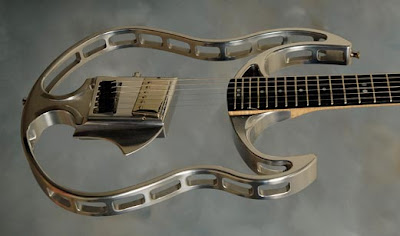
steinberger_white_1.jpg
frame02.jpg


107158216-studio-still-life-of-a-1992-alvarez-dana-gettyimages.jpg
StoneTone.jpg


12385d1298853510-sexiest-guitars-ever-rks-_body.jpg
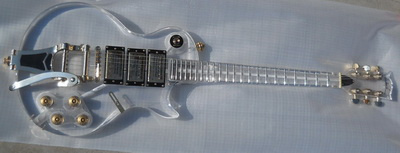
Acrylic-Electric-Guitar-YFG-302N-.jpg


DSCN2221.jpg


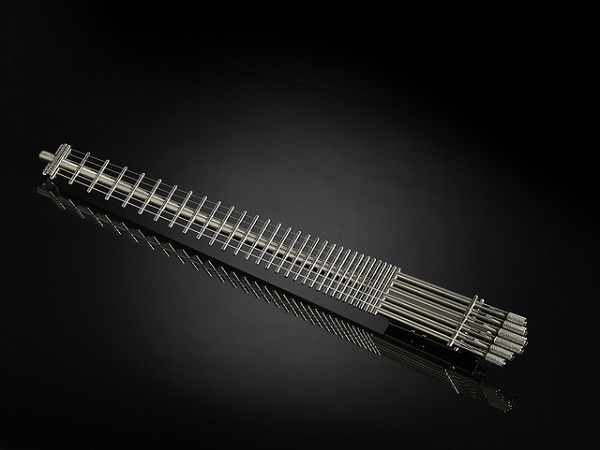
Do you still believe that wood is the primary source of electric guitar tone? Try the Gittler on for size. NO body, NO wood!


Gittler-Guitar.jpg


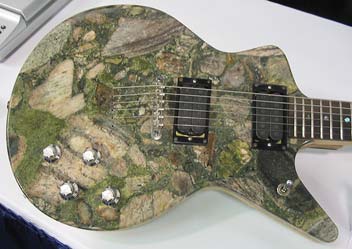
Or a 28-30" scale guitar made completely of stone (body AND neck!):


Or this one (they make stone fences with this stuff!):

 
Last edited:
Re: The real influence of wood in tone

ONE MORE THING...don't overlook the AMP!


The interaction between your fingers and the strings, the strings and the pickups and the pickups and the amp is 99% of what we know as "TONE" ;)
 
Re: The real influence of wood in tone

ONE MORE THING...don't overlook the AMP!


The interaction between your fingers and the strings, the strings and the pickups and the pickups and the amp is 99% of what we know as "TONE" ;)

To be COMPLETELY fair. Tone is defined as the characteristic quality of a timbre of a musical instrument. So the TONE is in all of your gear. But the SOUND is where your fingers come in. Think of it like this: saying tone is in the fingers when playing an instrument is like saying color is in your hands when painting a picture. The COLOR is in the palette, but how you manipulate what you have creates the art.

You can get get your favorite guitarist's TONE by using their gear, but you still won't SOUND like them.

And yes, the amp actually matters more than the guitar in the whole electric guitar package.
 
Re: The real influence of wood in tone

I'm simply using the term "Tone" in the vernacular, which is why I framed the remark with "...what we know as...".

Yes, indeed, "Timbre" is what most are actually referring to when their brains are thinking about "Tone".

However, most here can't get their heads around more basic misconceptions like the impact of "tonewoods", so it's pointless to argue "tone" vs. "timbre" just yet :)
 
Re: The real influence of wood in tone

Anything will resonate to a certain degree, thats just basic physics and logic. But how it resonates is the main thing. I'm not sure if its just the recordings, but I certainly wouldn't want to own any of the concrete or stone guitars....very harsh and metallic for mine.
Hence there is a 'tone' (for want of a better word) to wood that is different to other materials.....but that is just logic and physics too.
 
Re: The real influence of wood in tone

Do you still believe that wood is the primary source of electric guitar tone? Try the Gittler on for size. NO body, NO wood!


Gittler-Guitar.jpg

No body. No wood. No tone.

Zerberus said it all, really. In a guitar, the strings and the construction are in a constant feedback loop, feeding vibrations into each other. Not so much in a slab of stone with strings attached. The complexity of tone, that is, the interplay of individual harmonics, their proportions, phases and timing, is a function of what the guitar is made of, and how. It is a pretty subtle thing that requires sharp ears, a good amp and a fluent player to be appreciated or sometimes even noticed. But it is exactly what tells a gem from a dud.

Pickups are transducers. They are the source of voltage that controls everything down the amplification chain. That voltage is the consequence of the strings' moving within the magnetic field. Therefore, pickup tone is directly dependent on string tone, among other factors. An able player has the means to temporarily alter string tone, for example by palm muting the harmonics into a quick decay, et cetera. The pickup follows whatever happens with the string section within its sensing window.

Simplifying things a bit, string tone depends on how much give the tensioning element has. The tensioning element is the system consisting of the neck, body, bridge, tuners, nut and frets. It is the traditionally wooden parts that flex the most and because of that, neither end of a vibrating string is really stationary.
A stone guitar (shaped object) has hardly any flex, so it sounds awful (brittle and cold), though it might sustain for days. A rubber guitar shaped object is going to sound floppy and wonky, lacking definition and stability.

In the timber is the timbre. In the fingers is the blood. In the wallet is the money. Or it isn't.

The notion that "tone comes from electronics" is a theory based on a false assumptions and lack of understanding of the subject. How could one pickup sound different in a different guitar, even the same body with a swapped neck, if it were true?
A badly placed pickup sounds bad, even if you loved it in another guitar. You are a lucky man if you've never heard a JB do its worst. I've had just that happen, but did not even think about blaming Seymour or Maricela for "making a horrible pickup" because it was just an example of a bad match and entirely my own fault. FTR, the pickup has been transplanted into another plank and sounds **** (Uh, mammaries not allowed here?).
Putting "the best" pickup in "the best" guitar does not guarantee tonal nirvana, just like putting your favourite mustard on your favourite chocolate bar does not really make your favourite meal.
Matching is key.
 
Re: The real influence of wood in tone

Do you still believe that wood is the primary source of electric guitar tone? Try the Gittler on for size. NO body, NO wood!


If that's a woody sound, i seriously need to reassess my concepts of good sound. Of course it might help in these circumstances to actually hear a guitar without all the damn processing. That was truly horrible and didn't even have the resonance of two mosquitos in a tin can.

Anyway, sorry for the interuption, back to the scientists .....
 
Back
Top