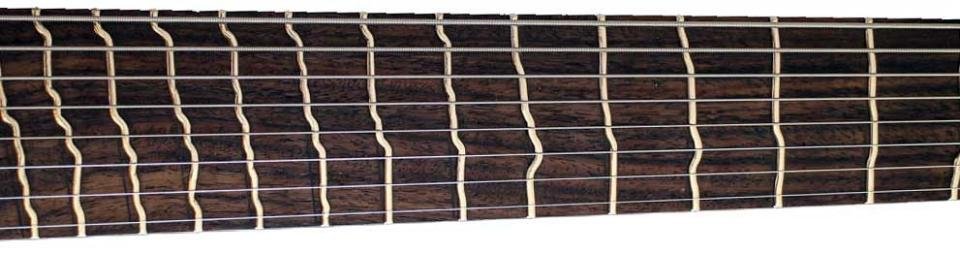
I love this topic. I’m just happy that I am able to discuss it on the internet and not get so obsessed that I spend my family fortune trying to “correct” it where there is an exceedingly small market.

There are several issues at play.
1. The physics of the guitar. The unwound G shifts the most in pitch with the least tension change. This is a positive trying to play those blues and Chuck Berry bends on the G string, but also a massive negative when trying to tune. It amplifies poor technique (if you fret to hard it’ll go much more sharp than surrounding strings) and if anything in the system allows the tension to change (tuner, nut, bridge, string) you’ll hear it as out of tune.
2. The physics of a major third. Many times the G ends up playing the major third. With 12 tone equal temperament a major third is about 13 cents sharp from a beat-less major third using just intervals. A piano, organ or any other pre-tuned instrumentalist just becomes accustomed to the sharp major third. A string or woodwind player becomes accustomed to lowering the pitch to the just interval. Guitar is tough because you can learn to raise a pitch with extra pressure but you can’t lower it easily.
3. Guitar players use distortion. Distortion amplifies the tuning issues from the above two reasons. Since we love the way distortion sounds guitar players consciously and unconsciously do things to mitigate the issues from above. We use root-fifth power chords instead of full Major/minor chords. We tune the G and B by ear instead of with a tuner, and subtly adjust the fretted notes with finger pressure. (EVH and Frusciante famously did this) Some don’t hear it at all and play out of tune.
I’ve never experienced Perfect Pitch. Does your ear want to hear the just intonated or the equal tempered major third? Does a piano sound in tune to you? If so, does a lowered major third also sound in tune to you?
One simple solution to the first problem is to swap to a wound G. (Alternatively you could swap to a very heavy plain G) You lose everything cool about bending a slinky G, but chords will be closer to in tune. You can buy a devices that attempts to compensate for the issues (Earvana, Buzz Feiten, True Temperament and Evertune, heck even a double locking tremolo) are all things that address the first or second and sometimes both issues.
Another solution is to setup the guitar as good as possible, get your technique sharp and accept that a guitar is imperfect as GuitarStv says above.