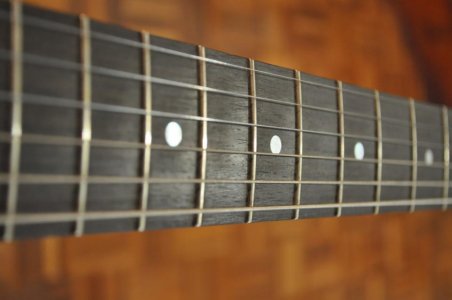
I PREFER BUILDING PARTSCASTERS RATHER THAN BUYING REAL FENDERS.......................

Re: I PREFER BUILDING PARTSCASTERS RATHER THAN BUYING REAL FENDERS...................

the short answer is no. there are varietys of both woods and quality of boards as well as drying methods, tolerances of manufacture, fret/nut work which can make a huge difference.
 
Re: I PREFER BUILDING PARTSCASTERS RATHER THAN BUYING REAL FENDERS...................

the short answer is no. there are varietys of both woods and quality of boards as well as drying methods, tolerances of manufacture, fret/nut work which can make a huge difference.

That being said then is it not foolish to think think that an individual could compete with Fender or Gibson etc...in obtaining the quality of materials that a large company can obtain with the enormous resources they have available?
So it may be satisfying to build your own guitar but one should not be deceived into thinking that they are building something as good as a real Fender.
 
Re: I PREFER BUILDING PARTSCASTERS RATHER THAN BUYING REAL FENDERS...................

I obviously do not want a turd. But isn't an ash body an ash body and a maple neck a maple neck as far as tone and sustain go?
Please bear with me I am a complete novice, have never built a guitar before.

I once acquired a flamed Maple capped Mahogany Zola Soloist body. No matter what pickups and hardware I installed in this particular body, it certainly didn't sound up to my standards. I had to let it go. If you have a 12 foot plank of any kind of wood and make several solid guitar bodies out of it, they will all vary in tone. They will be similar but different and maybe some will not sound as good or as resonant as the others. Testing the tone and sustain of the tonewoods is your best bet for building a great guitar.
 
Re: I PREFER BUILDING PARTSCASTERS RATHER THAN BUYING REAL FENDERS...................

I obviously do not want a turd. But isn't an ash body an ash body and a maple neck a maple neck as far as tone and sustain go?
Please bear with me I am a complete novice, have never built a guitar before.

one imperfection in the choice or installation of the truss rod can kill the neck -> full of dead frets.
 
Re: I PREFER BUILDING PARTSCASTERS RATHER THAN BUYING REAL FENDERS...................

I once acquired a flamed Maple capped Mahogany Zola Soloist body. No matter what pickups and hardware I installed in this particular body, it certainly didn't sound up to my standards. I had to let it go. If you have a 12 foot plank of any kind of wood and make several solid guitar bodies out of it, they will all vary in tone. They will be similar but different and maybe some will not sound as good or as resonant as the others. Testing the tone and sustain of the tonewoods is your best bet for building a great guitar.

Hi Jeff,
out of all experiments you have done, what's your opinion on maple/walnut multi-piece necks and basswood bodies? IMHO they sound great except maybe for sustain in the very last 1-2 frets. (which in my case only happens *occasionally* - one time I get full 4 seconds on 24th fret, the other I might get 2-3)
 
Re: I PREFER BUILDING PARTSCASTERS RATHER THAN BUYING REAL FENDERS...................

Hi Jeff,
out of all experiments you have done, what's your opinion on maple/walnut multi-piece necks and basswood bodies? IMHO they sound great except maybe for sustain in the very last 1-2 frets. (which in my case only happens *occasionally* - one time I get full 4 seconds on 24th fret, the other I might get 2-3)

To be honest, I have never used walnut as a tonewood or multi-piece necks. Personally, I think walnut looks better than it sounds. I don't have much experience with basswood either. My favorite tele build is a Warmoth Black Korina body capped with Bloodwood, a Bloodwood neck with a Rosewood fretboard and a Canary skunk stripe. I find that I like Black Korina better than Mahogany. I have prototype guitars that are Mahogany topped with Lacewood which sounds really good. I also have a prototype guitar that has Mahogany topped with Purpleheart which has an extremely wide frequency band and has a sustain longer than any guitar that I have ever played. (A very,VERY heavy guitar). Just my 2 cents worth, there are other tonewoods that you should try on your next build that will give you much greater results as far as sustain and tone are concerned. If you would be interested, I could share ideas about pickups and hardware you could use for better results.
 
Re: I PREFER BUILDING PARTSCASTERS RATHER THAN BUYING REAL FENDERS...................

That being said then is it not foolish to think think that an individual could compete with Fender or Gibson etc...in obtaining the quality of materials that a large company can obtain with the enormous resources they have available?
So it may be satisfying to build your own guitar but one should not be deceived into thinking that they are building something as good as a real Fender.

Of course. In fact, if you have the skill and the right equipment, you can build guitars a lot better than real Fenders/ Gibsons. The problem is you don't have the brand; nobody knows you. You can't put a high price tag on it. That's why it is a loss in terms of investment.
 
Re: I PREFER BUILDING PARTSCASTERS RATHER THAN BUYING REAL FENDERS...................

one imperfection in the choice or installation of the truss rod can kill the neck -> full of dead frets.

I don't know about choice but more correct fit. I have used 4 or so different types/brands now and they all seem great.

Not sure what the rule of thumb is with gibson and fender trussrods. Do they make them or import them?
 
Re: I PREFER BUILDING PARTSCASTERS RATHER THAN BUYING REAL FENDERS...................

Hi Jeff,
out of all experiments you have done, what's your opinion on maple/walnut multi-piece necks and basswood bodies? IMHO they sound great except maybe for sustain in the very last 1-2 frets. (which in my case only happens *occasionally* - one time I get full 4 seconds on 24th fret, the other I might get 2-3)

I have a Prestige with that neck and body structure but never test the sustain. You seem to be obsessed with sustain. Of course at the 24th fret the note doesn't ring like hell cause the string is so short...doh...

And does sustain matter when you play with distortion and gain?
 
Re: I PREFER BUILDING PARTSCASTERS RATHER THAN BUYING REAL FENDERS...................

That being said then is it not foolish to think think that an individual could compete with Fender or Gibson etc...in obtaining the quality of materials that a large company can obtain with the enormous resources they have available?
So it may be satisfying to build your own guitar but one should not be deceived into thinking that they are building something as good as a real Fender.

I can't see why not. Do you think that Fender is the only company that can ID 'good' wood for a guitar. Or that every last scrap of 'awesome sounding wood' is bought by them......of course not!

I think you have a slightly misinformed idea of how these companies select wood - they don't! They have a contract with a supplier where they specify numbers of board feet and dimensions. The mills or the felling companies select what wood is sent. The first selection by Fender or Gibson is when it arrives in the factory. And even then the only selections are for weight (light goes to custom shop, the rest to factory floor), and for flame with maple tops. Both of them would be getting the most economical wood they could to keep the pricepoint well under control.

There is not one test in history nor will there ever be that will tell you final tone, nor will tell you what bit will match another. Not what top will suit a back, nor what fretboard will match a neck blank.

And both Gibson and Fender just pick necks and bodies at random to make into final guitars. It is a pure lottery if they are suited or not.

My experience of 'luthier' grade wood from my last years of scratch builds is that you are WAY more likely to get consistent wood from LMII, Stewmac, Curlymaple, Northridge etc etc than I've seen on G or F guitars hanging on the wall. As all the clients of these luthier supply businesses are boutique builders, or people who will simply send subpar wood back, the standard is VERY high. And these are the woods you would be using if you built from scratch as I have done. Wood from Warmoth and similar also would come from more select sources - they would deal with a more local supplier and would be much more hands-on and strict in their QC.

So I can't see an issue matching or surpassing a custom shop instrument if you were a decent builder.

A example of luthier grade wood - a 2nd grade rosewood fretboard
 

Attachments

  • DSC_0798.jpg
    DSC_0798.jpg
    44.9 KB · Views: 0
Last edited:
Re: I PREFER BUILDING PARTSCASTERS RATHER THAN BUYING REAL FENDERS...................

Here's the solution to you all your sustain problem, people. Now you can play a note, go to the kitchen to fetch a beer or make a cup of coffee, and come back and that note is still ringing like crazy...lol...

fsk101.jpg
 
Re: I PREFER BUILDING PARTSCASTERS RATHER THAN BUYING REAL FENDERS...................

I may do a Warmoth 12-string Strat someday, but I've never really been interested in partscasters.

Sure, when I had my 1960 Strat there were things about I that I would've liked changed, but never did. I sold it after my divorce, and when I went looking for a new Strat, the salesman showed me a G&L Legacy and that guitar had all the mods I wanted to make to the old Strat. Every single one. So it isn't necessary to build one when I can buy exactly what I want off the shelf.

Bill
 
Re: I PREFER BUILDING PARTSCASTERS RATHER THAN BUYING REAL FENDERS...................

^ I think your last sentence sums up the whole thread nicely.....from both sides.
 
Re: I PREFER BUILDING PARTSCASTERS RATHER THAN BUYING REAL FENDERS...................

I have built half a dozen partscasters, and they are my #1 main gigging guitars. The advantage for me was that I got all of the options that I wanted, such as: woods, weight, radius, frets, neck-width, hardware, pickups, finish, etc. Will they "retain their value" or sell for a high price? Of course not. But that's not why I build them - I built them to do what I wanted them to, and to serve my needs as a working musician. After a lot of soul searching, I opted to create my own company name and design my own logo rather than try to obtain a (probably illegal...or at least certainly frowned upon) fake Fender logo. I must admit to a certain amount of pride whenever people ask what kind of guitar I'm playing, and I tell them I made it...usually, they say something like "You MADE that??" If they're interested, I'll tell them about the process: no, I did not cut the wood, but I did all of the finishing, wiring, installing, screwing, bolting, etc. If you have the patience and the inclination, I highly recommend it. :)
 
Re: I PREFER BUILDING PARTSCASTERS RATHER THAN BUYING REAL FENDERS...................

I obviously do not want a turd. But isn't an ash body an ash body and a maple neck a maple neck as far as tone and sustain go?

That's one very good question. The answer is "no".
 
Re: I PREFER BUILDING PARTSCASTERS RATHER THAN BUYING REAL FENDERS...................

I like making my own peanut butter and jelly sammiches, I'll put my PB&Js up against any restaurant PB&J...
 
Re: I PREFER BUILDING PARTSCASTERS RATHER THAN BUYING REAL FENDERS...................

LOVE THE RESPONSES HERE! :drill: lol

I prefer partscasters because it is hard to find guitars with specs I like (Straight 9.5" Radius, 1-11/16 Nut, Medium Jumbo SS Frets) and really hard to find guitars such as Fender with Roasted Maple necks.

That being said, I spend way too much time worrying about how the guitar feels in my hands than how it plays...reading about guys like BB King and Phil Keaggy starting out on cheap guitars from Sears is kinda a rebuke to me because I've spent majority of my life fussing over how comfortable the guitar is to play than actually practicing.

In regards to Walnut, I think it makes a great guitar but it is a hard wood that is hard to cut so I can see it being cost prohibitive on a large scale.

View attachment 72652

 
Back
Top