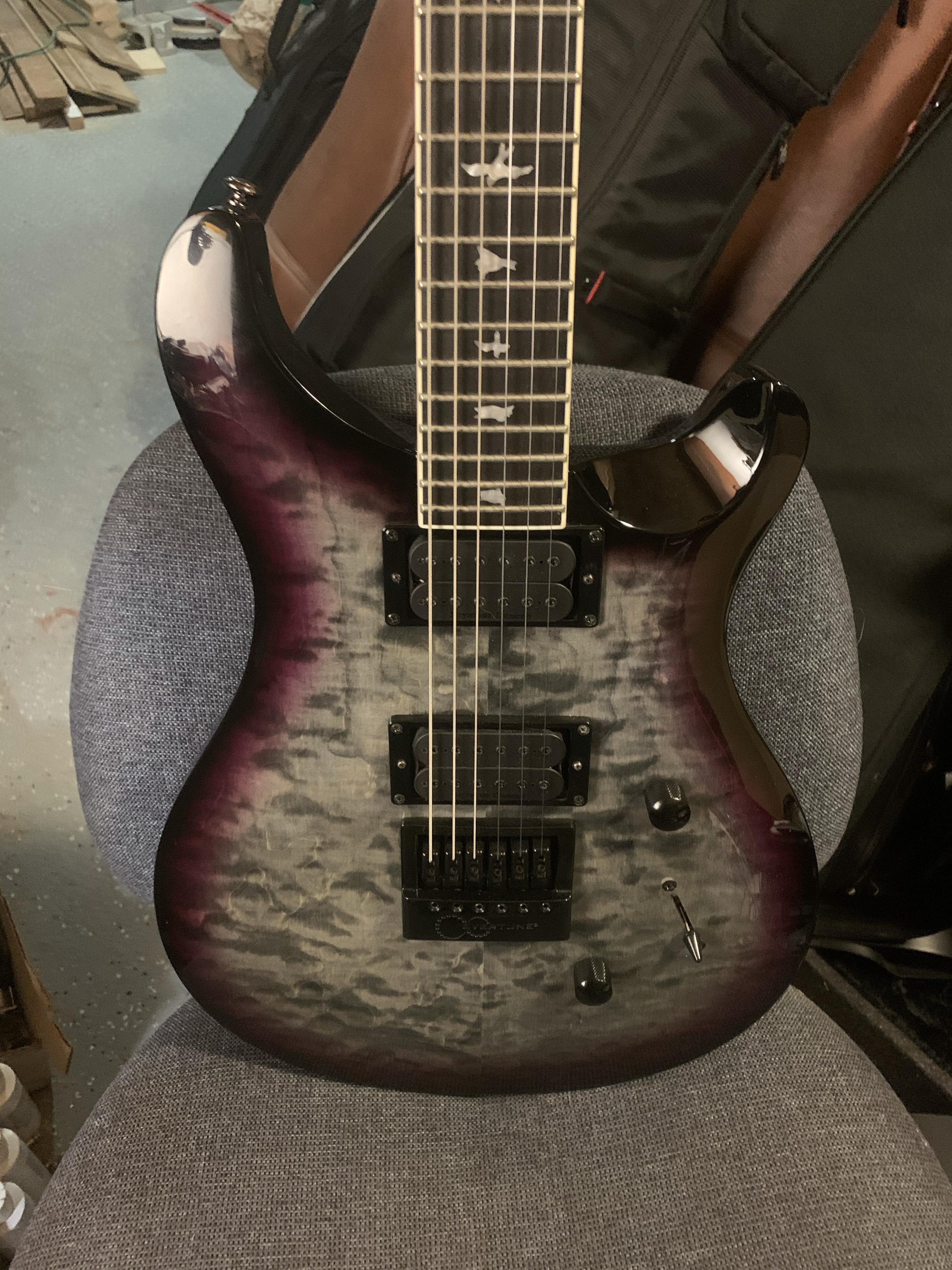
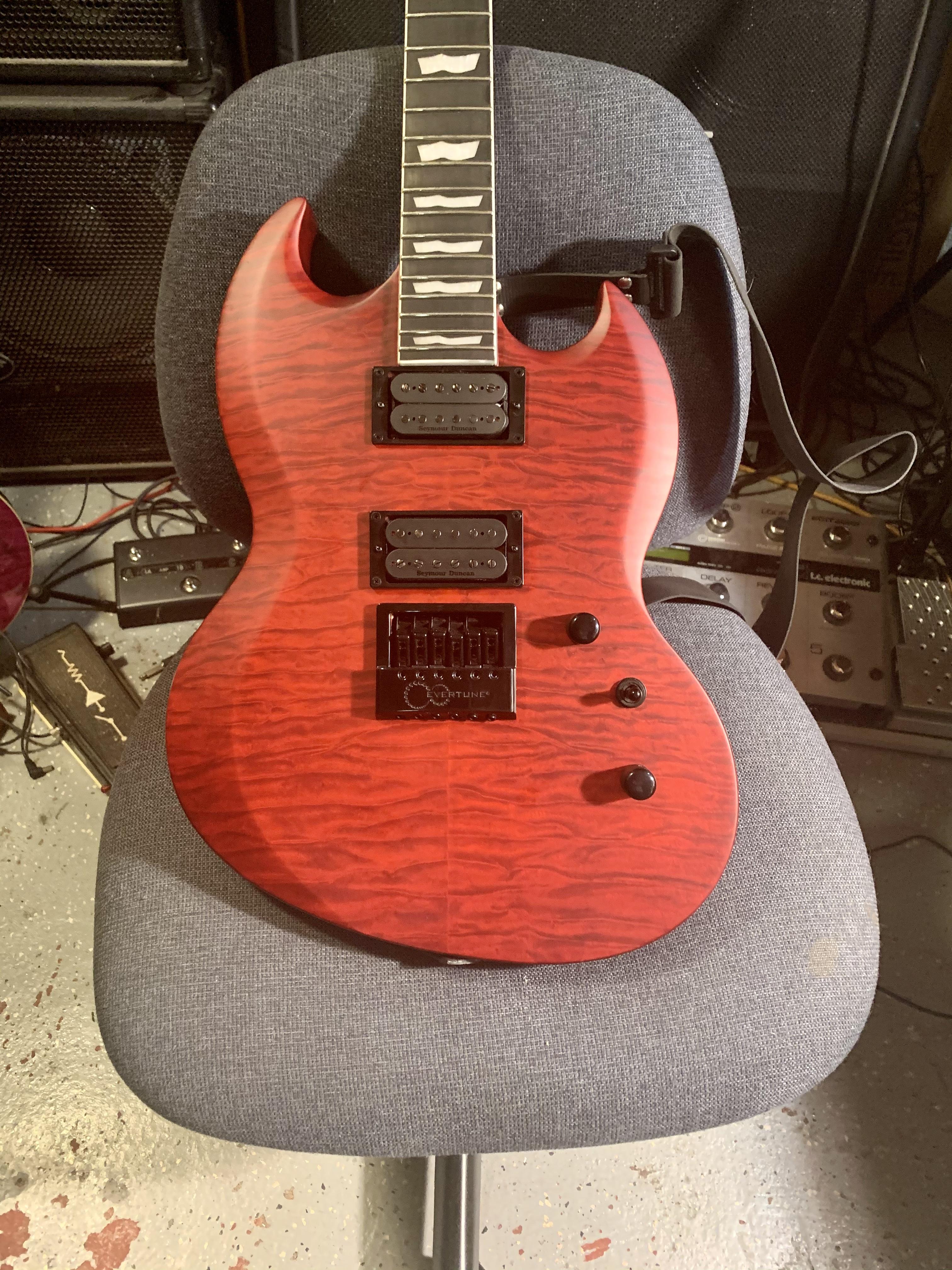
Why Does This Not Feel Right?

Jeez, I hate myself for not being able to let go of things...

Just two quick shower thoughts:

- when you bend on a Floyd, the saddle (actually the whole bridge) tilts forward, yet noone bats an eye. "Yeah but it returns to the original position." Except when it doesn't, because it's poorly setup or maintained. Just like the ET, or any other bridge for that matter - when you set the intonation, you fret the 12th and 24th in the process and hit some corresponding harmonics of the in tune open string, at least I do. The length of the string is set so that when the 12th and 24th frets are played the notes are in perfect tune. That means that the saddle (et) or bridge (fr) tilting is already accounted for in the setup.

Now off to start my weekend...

Well, I'm much more informed now than I was when I started the thread. And while I wouldn't purchase either of the guitars at those prices, I do think the price difference for the Evertune is fair.
 
I don't understand the fixation in this thread between using an Evertune and a Floyd. They are two completely different animals, intended to do two totally different things, and using two totally different approaches.

Nexion is correct, a Floyd rotates up and forward. The string length remains EXACTLY the same when using the bar because it's locked at the saddle and the nut. The tension changes, not the string length. Harmonics do not move when the tension changes.

On a Kahler, the actual string length changes between the saddles and wherever it string is locked when the bar is used. There is no vertical movement of the strings when using the bar. You can hear the harmonics move on the string as it gets longer or shorter.

I can't speak to Evertune operation at all. Never played a guitar so equipped or even seen a unit to examine and determine its function.
 
I don't understand the fixation in this thread between using an Evertune and a Floyd. They are two completely different animals, intended to do two totally different things, and using two totally different approaches.

Nexion is correct, a Floyd rotates up and forward. The string length remains EXACTLY the same when using the bar because it's locked at the saddle and the nut. The tension changes, not the string length. Harmonics do not move when the tension changes.

On a Kahler, the actual string length changes between the saddles and wherever it string is locked when the bar is used. There is no vertical movement of the strings when using the bar. You can hear the harmonics move on the string as it gets longer or shorter.

I can't speak to Evertune operation at all. Never played a guitar so equipped or even seen a unit to examine and determine its function.

Ive never used a Kahler -very interesting.
 
I have 4 evertune guitars, 3 are factory installed and one is aftermarket. They are rock solid. No tuning up between songs sets or practices. I find if I leave the strings on long enough they change ever so slightly as corrosion adds mass to the strings. They are in tune no matter what I do to them. They are better in tune anywhere on the neck as the bridge keeps them in tune for any fret regardless of how hard I press or how hard I pick the strings. They are easier to change tunings on than a Floyd as the strings are isolated so you set it once and move on.

I also several Floyd Rose guitars. One is an OFR and several Floyd 1000’s. They are always out a few cents. If left alone between seasons they need a full tune up as they move out a bit more. They are more solid than my floating prs bridges or my ebmm bridge which need tuned, then retuned after bends or bar use. Even the OFR is no match for the evertune though.

The only thing stopping me from installing Evertunes in all may guitars is cost and the large footprint they need. I will probably get 2 or 3 installed in the future, I was sort of waiting for the version 2 to come out with a smaller foot print. I won’t be putting one in my les Paul standard or my prs 594 because of how intrusive the install is, but I may get a studio or an S2 standard and have them installed where they aren’t cutting into my flame top.

If you get a chance try out an ESP/Ltd with one factory installed. They are very nice if you don’t need deep whammy dives. They are also pretty affordable, the Ltd’s come with Duncan’s and nice tuners. Try one out before you comment on the limitations, they work better than you would think. I can keep one in tune for a 4 hour set and not look at the tuner once.

c29576fe6f48c63021eb5bc8dd98777a.jpg
26dfeed4acd569df70296a08cc64a88c.jpg
 
A blocked FR is certainly rock solid. Except that's not what a FR is meant to do. If that's what you want, you're better off just running a hardtail.

I disagree. A blocked floyd is WAY more stable than a regular hardtail . . . it prevents string slippage over the nut from being a problem. Take any hardtail Les Paul and do a bunch of deep two step bends on the G string. Then check your tuning . . . it's going to be slightly out because of string slippage over the nut. Same things is prevented from being an issue with a blocked floyd. A blocked floyd will also never go out of tune due to not perfectly returning to tune on the knife edge. It's the original ever tune! :P
 
I disagree. A blocked floyd is WAY more stable than a regular hardtail . . . it prevents string slippage over the nut from being a problem. Take any hardtail Les Paul and do a bunch of deep two step bends on the G string. Then check your tuning . . . it's going to be slightly out because of string slippage over the nut. Same things is prevented from being an issue with a blocked floyd. A blocked floyd will also never go out of tune due to not perfectly returning to tune on the knife edge. It's the original ever tune! :P
That could easily be achieved by using a locking nut with a hardtail.
But whatever.

Sent from my SM-A115A using Tapatalk
 
That could easily be achieved by using a locking nut with a hardtail.
But whatever.

Then you’d need a fine tuner tailpiece. A better solution would be a headstock with straight string paths, utilized on guitars by Fender, PRS, and most Ibanez, Schecter, LTD, Solar, etc...
 
That could easily be achieved by using a locking nut with a hardtail.
But whatever.

Sent from my SM-A115A using Tapatalk

It could! But as mentioned, then you run into problems with being slightly out of tuning when locking the nut down. You need fine tuners in the bridge to get things perfect.


Then you’d need a fine tuner tailpiece. A better solution would be a headstock with straight string paths, utilized on guitars by Fender, PRS, and most Ibanez, Schecter, LTD, Solar, etc...

It still happens (although not as badly) on guitars with a straight string path - the string still needs to apply downward friction on the nut. (Also there's the whole string tree issue with Fender style guitars as well). The real problem is that the string is free to move past the nut, as long as that's the case you're going to get some friction and therefore have less stable tuning than a double locking system.
 
It still happens (although not as badly) on guitars with a straight string path - the string still needs to apply downward friction on the nut. (Also there's the whole string tree issue with Fender style guitars as well). The real problem is that the string is free to move past the nut, as long as that's the case you're going to get some friction and therefore have less stable tuning than a double locking system.

I don’t disagree, but I think that when setup properly, the straight string path and putting the appropriate amount of string on the post is good enough. For most applications, I’d much rather have that than a blocked Floyd.

Having said all that, I’ll likely get an Evertune-equipped guitar at some point.
 
Back
Top